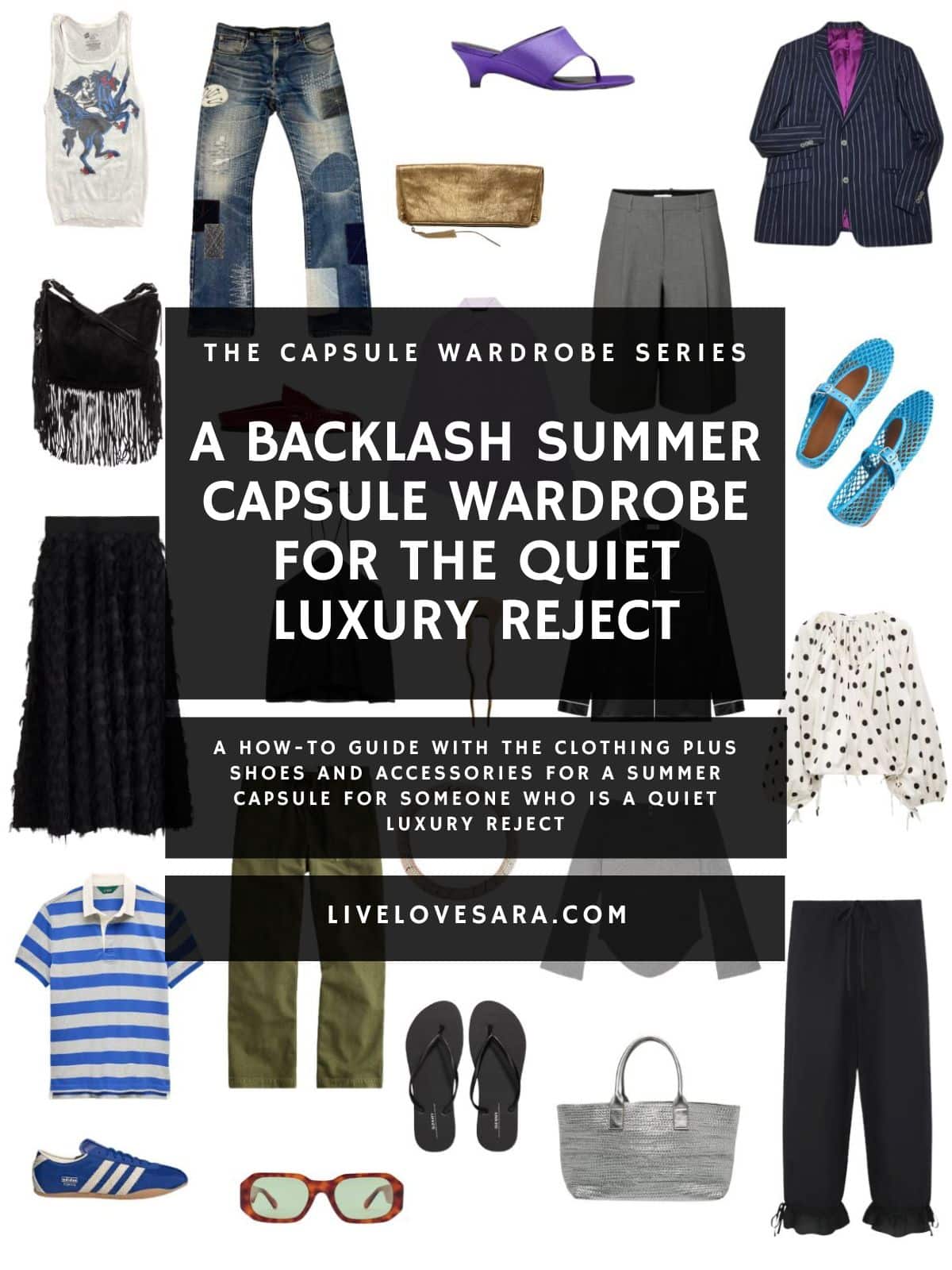
TL;DR
Quiet luxury asked you to spend money, proving you didn’t need to try. The industry’s proposed replacement, louder and more maximalist, just asks you to spend money proving you’re not afraid to be loud. This capsule rejects both: faded fabrics, vintage pieces, visible repairs, and personality in place of perfect beige, untouched white trousers, and the handbag-as-credential.
You have probably noticed a theme within the wardrobes and posts I have been making lately. I think I have fully entered the “I fully no longer give any fucks about much of anything anymore” stage of ageing womanhood, and my attitude towards dressing is very much showcasing that.
So once again, we are going to talk about dressing for yourself and your life. Hence, being a quiet luxury reject.
Because for the last few years, the dominant version of “good style” has remained consistent. So much so that it has become almost like a uniform.
It often is made up of the right beige, white trousers without a single mark of having been worn, and a bag from the list of bags you’re supposed to want.
The whole point was that it didn’t look like a trend. It looked like money had just always dressed this way.
The colours were soft, the branding was subtle, and the message was unmistakable.
That was the trick, and it worked for a while.
The appeal wasn’t difficult to understand. After years of micro-trends moving at the speed of social media, quiet luxury promised a relief we were subconsciously seeking.
Instead of chasing every new silhouette or viral accessory, it suggested investing in timeless pieces that would supposedly outlast fashion itself. It wasn’t presented as another aesthetic, but instead almost like the absence of one.
That was the clever part.
It didn’t look like a trend. It looked like timelessness. It looked like the kind of wardrobe someone had simply accumulated over decades without ever thinking too hard about it.
Except, of course, everyone was thinking very hard about it.
Eventually, the internet did what it always does. It turned a philosophy into a checklist.
Good taste, apparently, had a dress code.
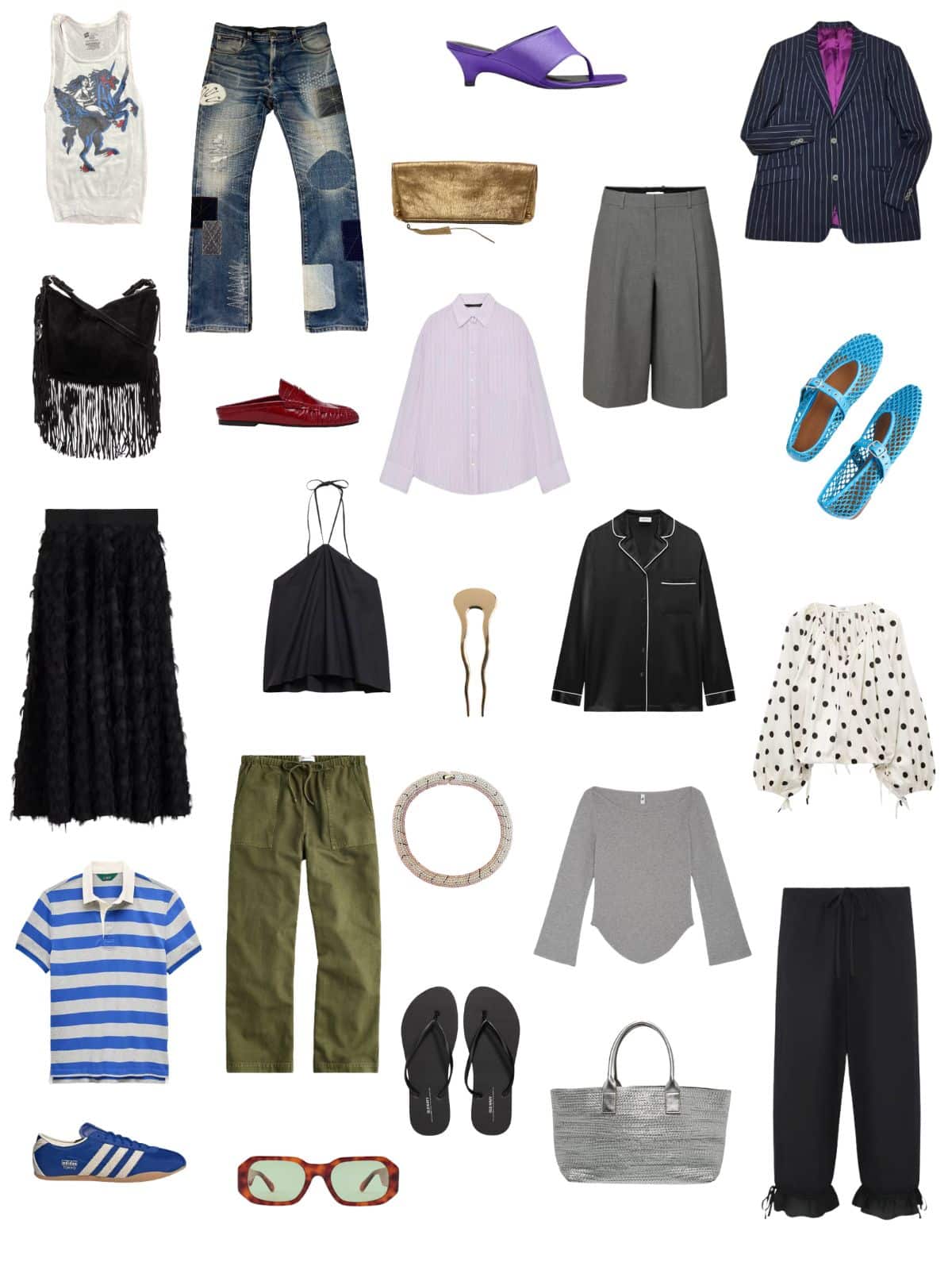
Graphic Tank Top | Sashiko Patch Vintage Levis | Gold Clutch | Purple Heels | Bermuda Shorts | Men’s Blazer | Blue Mary Janes | Purple Button Up | Red Mules | Fringe Bag | Midi Skirt | Black Halter | Hair Stick | Silk Pyjama Shirt | Polka Dot Blouse | Grey Long Sleeve | Vintage Necklace | Green Utility Pants | Striped Polo | Sneakers | Sunglasses | Flip Flops | Silver Tote | Cotton Bloomer Pants

When Looking Expensive Became a Uniform
You will notice that there is an irony in quiet luxury. The aesthetic was built around looking as though you weren’t trying.
Yet achieving that effortless appearance often required considerable effort, significant expense, and a surprisingly detailed understanding of which supposedly timeless items were currently considered the right timeless items.
Looking effortlessly wealthy became just as trend-driven as looking fashionable.
The logos disappeared, but the signalling didn’t.
Instead of announcing status through obvious branding, clothes began communicating it through immaculate tailoring, untouched fabrics, perfectly coordinated neutrals, and handbags that only needed to be recognised by people fluent in luxury fashion.
It was still a performance though, just a bit quieter than the previous ones.
The problem wasn’t the beige. Beige is just a colour.
The problem was expecting a colour palette to communicate virtue.
But a uniform is still a uniform, and the moment everyone is wearing it, “understated wealth” stops being understated. It becomes its own kind of branding, just with the logo removed and the price tag implied instead.
The Quiet Luxury Backlash Isn’t the Point
Predictably, fashion has already started offering a replacement.
Suddenly, magazines are declaring maximalism’s return. Colour is back. Jewellery is bigger. Prints are louder. Individuality is apparently having a moment again.
But if the solution to one shopping list is simply another shopping list, has anything really changed?
Replacing understated luxury with conspicuous eccentricity still asks us to perform. It simply changes the costume.
One aesthetic tells us to buy expensive cashmere.
The other tells us to buy statement coats and oversized necklaces.
Both quietly suggest that if we purchase the correct collection of things, we’ll become the kind of interesting, stylish person we imagine ourselves to be.
That’s an exhausting way to get dressed.
This capsule isn’t rejecting quiet clothing.
It’s rejecting the idea that clothing should function primarily as evidence of belonging to whatever aesthetic currently dominates the algorithm.
Replacing it with a performance that’s expensive in a different direction doesn’t fix that. It just changes which closet you need money to fill.
Good Taste Isn’t the Same Thing as Personal Style
Fashion often treats these as interchangeable.
They aren’t.
Good taste can be learned surprisingly quickly. It involves understanding proportion, colour, quality, and balance. You can study it. You can observe it. You can become very good at recognising it.
Personal style takes much longer. It develops accidentally.
It’s the jacket you inherited from your father because it happened to fit perfectly. The band T-shirt you bought after a concert fifteen years ago and still haven’t managed to wear out.
The men’s shirt you found in a charity shop because the sleeves were exactly the right length. The handbag you almost donated until you wore it one more time and remembered why you’d kept it.
None of those pieces was purchased because they belonged to an aesthetic. They belonged to your life.
That’s why genuinely personal wardrobes often resist neat categorisation. They contain contradictions. They mix decades. They pair expensive shoes with faded jeans and inherited jewellery with a canvas tote bag.
They’re difficult to summarise because they weren’t assembled from a mood board. They accumulated instead.
That’s the difference between a collected wardrobe and a curated one (which I talked about in this post).
One reflects a life. The other reflects an aspiration.
Style Icons Who Never Played the Game
A few reference points make this easier to picture than the principle alone.
It’s worth remembering that many of the people celebrated for their personal style have never dressed particularly predictably.
The Olsen twins have had access to immaculate luxury wardrobes for decades, yet they consistently choose clothing that looks lived-in.
Oversized coats, vintage tailoring, worn leather, mismatched layers, and scarves that appear to have travelled through several different winters before arriving on their shoulders.
Money gave them access to perfection, but their style comes from choosing not to chase it.
Then there’s Vivienne Westwood, whose entire career challenged the assumption that polish automatically equals good taste. For her, personality wasn’t something to smooth away. It was the point of getting dressed.
The same philosophy appears in traditions that seem completely unrelated.
Japanese boro and sashiko mending celebrate visible repair, allowing stitches and patches to become part of a garment’s beauty rather than something to disguise.
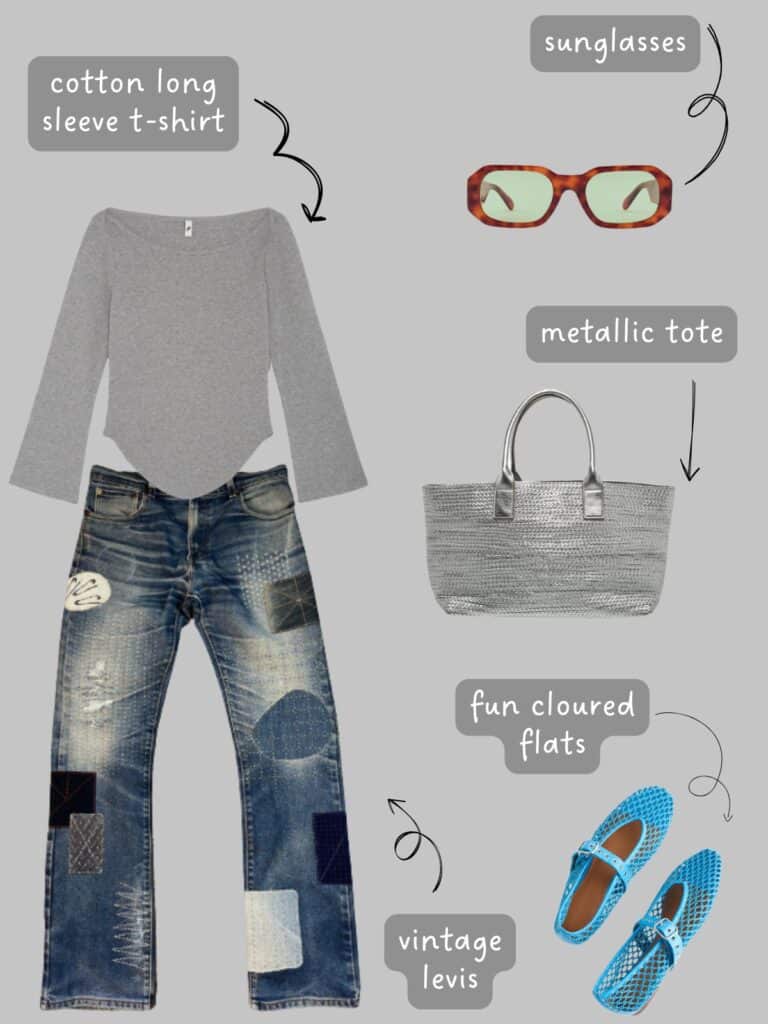
Like the sashiko patched jeans that I included, which are Levi’s 517s, which happen to be Carolyn Bessette’s favourite style, but these aren’t the 517s that she would wear. That’s where personal style comes in.
Western punk arrived at a remarkably similar conclusion from an entirely different direction. Safety pins, patches, handwritten slogans, and repaired denim transformed wear into identity.
Neither tradition treated damage as failure.
Both understood that clothes become more interesting once they’ve actually been lived in.
What a Quiet Luxury Backlash Capsule Wardrobe Actually Looks Like
This isn’t a capsule built around perfection. It’s built around evidence.
Choose faded over flawless. A black T-shirt softened by years of washing often has more character than one that’s just come off the shelf.
Choose texture over polish. Linen that wrinkles. Denim that’s softened naturally. Leather that’s developed creases because someone carried it through ordinary life instead of storing it carefully for special occasions.
Choose mismatched combinations over perfect coordination. If every piece appears to have been purchased together, the outfit begins to feel like a display rather than a person.
Allow repairs to remain visible. A contrasting patch. Rows of sashiko stitching. A replacement button that doesn’t quite match. These details don’t diminish a garment. They document its history.
Finally, leave room for one genuinely unexpected piece.
An old silk scarf tied somewhere unconventional. A brooch inherited from a grandparent. A faded canvas bag covered in museum pins. Shoes that don’t belong to any obvious aesthetic.
These are the details algorithms struggle to recommend because they aren’t products. They’re memories.
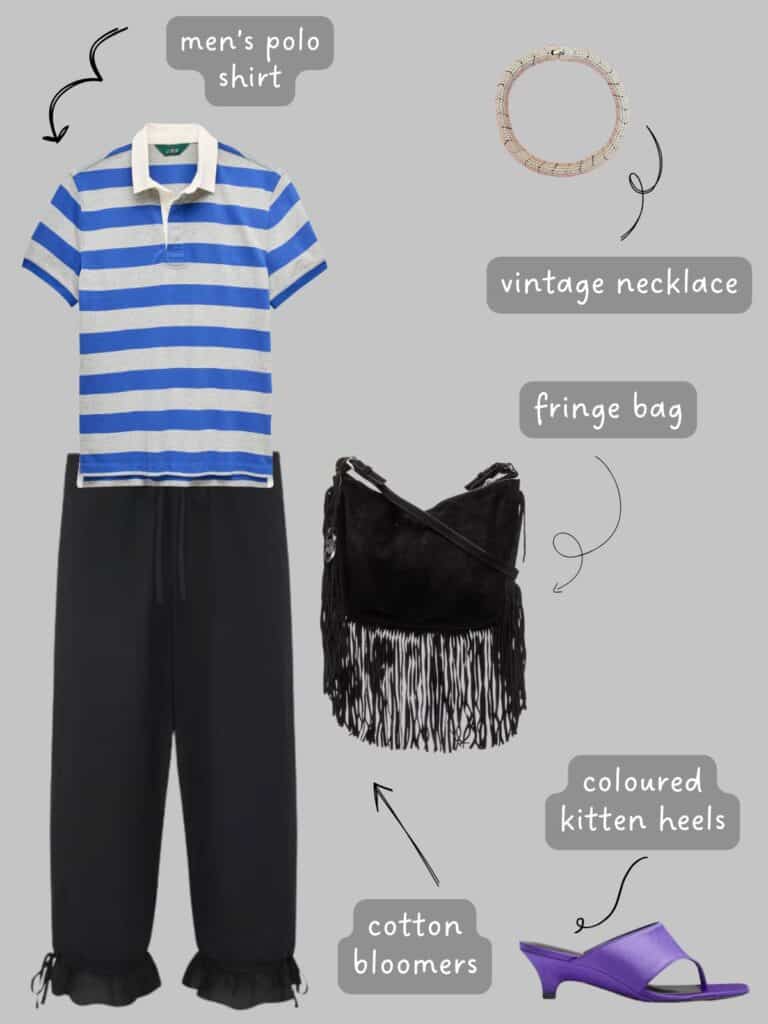
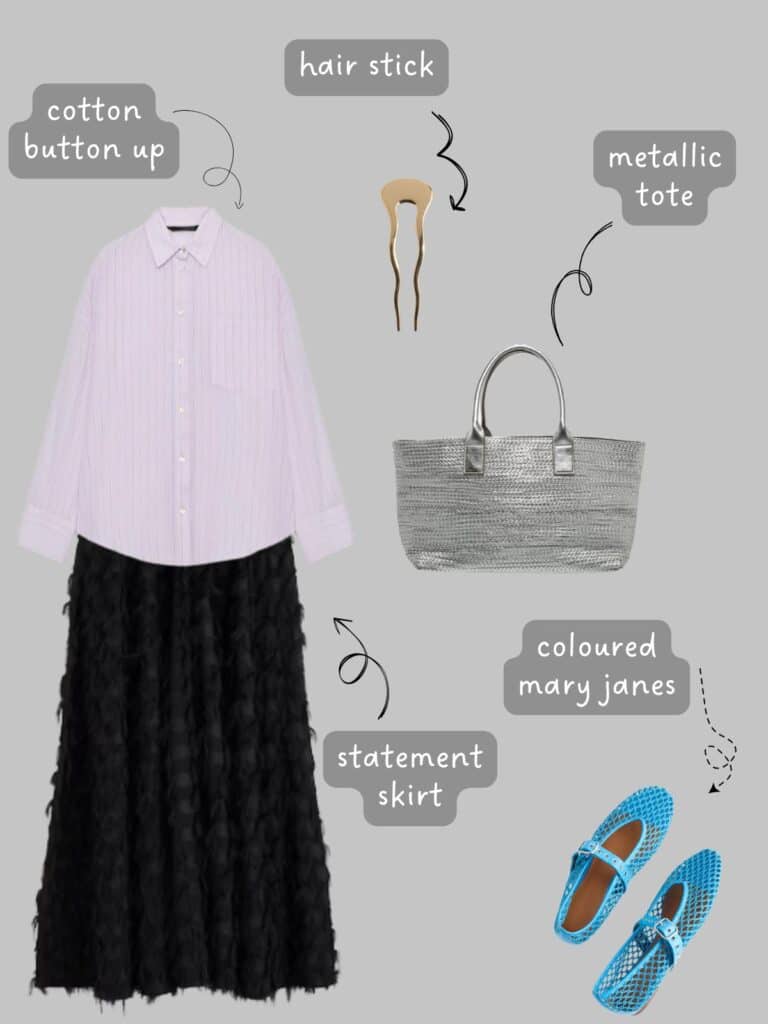
I always take these things into consideration when I am visualising these capsules. I generally start off with a few pieces and then build it around them.
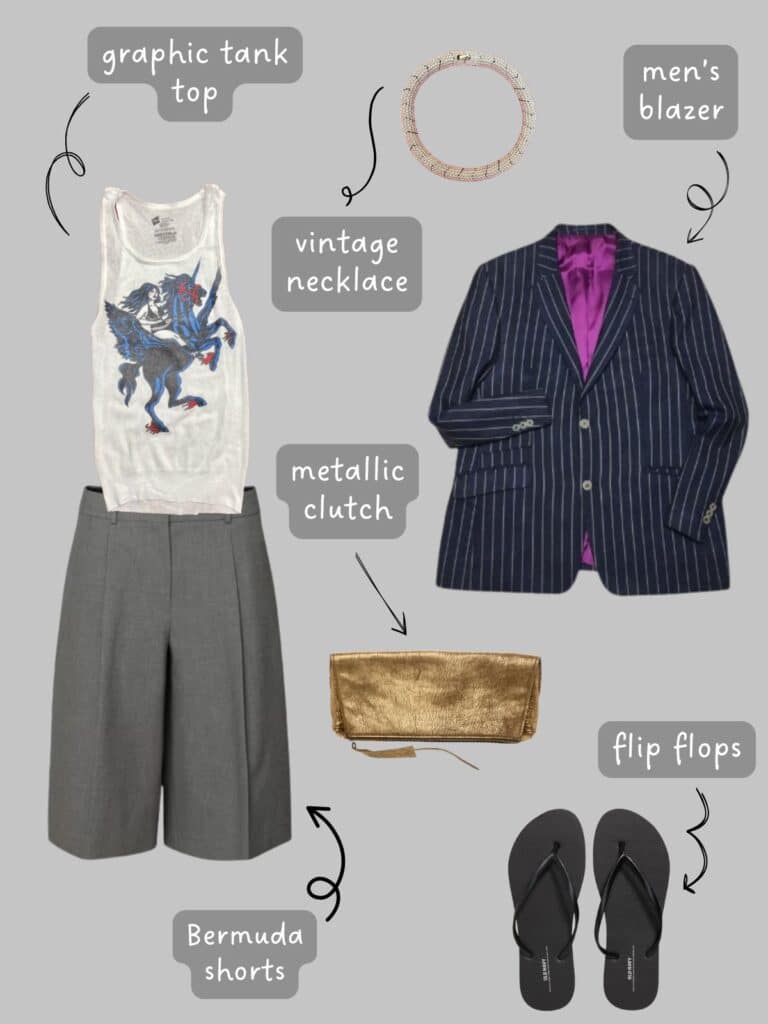
This week I started with the jeans because they are so interesting and cool. And the art of Sashiko is just beautiful. Then I came across the graphic tank. Usually, I go for a t-shirt, but this one was badass, plus the weather has been in the 40s with the humidex.
Searching for light summer jackets, I saw the blazer and its purple lining, which just made sense to me, and then the last piece was the purple shoes because of the colour, and I thought they would look good with anything (and they have a walkable heel).
Throw in the gold clutch or silver tote, and you have a great outfit that the whole wardrobe branches off of.
Just in case you wanted to see inside my brain with this wardrobe.
How to Thrift Without Recreating the Same Trend
The temptation, sourcing this secondhand, is to look for vintage versions of quiet luxury: the same beige, the same restraint, just older and cheaper. Resist that.
The point isn’t to thrift your way into the same costume for less money.
Look instead for the pieces other people would pass over precisely because they have a flaw: a repair already done by someone else, a colour faded unevenly, a cut that’s slightly wrong for the current moment.
The oddly proportioned blazer. The bag with softened handles. The striped shirt that’s clearly been washed a hundred times because someone loved it enough to keep reaching for it.
Those pieces already have a story. Your job isn’t to erase it. It’s to become the next chapter.
The Real Luxury Is Personal Style
Fashion has always moved in cycles. Minimalism replaces maximalism. Maximalism replaces minimalism.
One season asks us to disappear into timeless elegance. The next encourages us to stand out through fearless self-expression.
Both can become uniforms if we stop paying attention.
But when you think about it, maybe the real backlash isn’t against quiet luxury at all. Perhaps it’s against the idea that personal style can ever be purchased in a single trend.
Because the most memorable wardrobes rarely look finished. They contain mistakes, experiments, sentimental attachments, unexpected combinations, and pieces that no stylist would have recommended but usually end up being your favourite.
They’re evidence that someone has lived a life in their clothes instead of simply posing in them.
The irony is that once you stop trying to communicate status, your wardrobe usually becomes far more interesting.
Not Quiet Luxury Summer Outfit Ideas
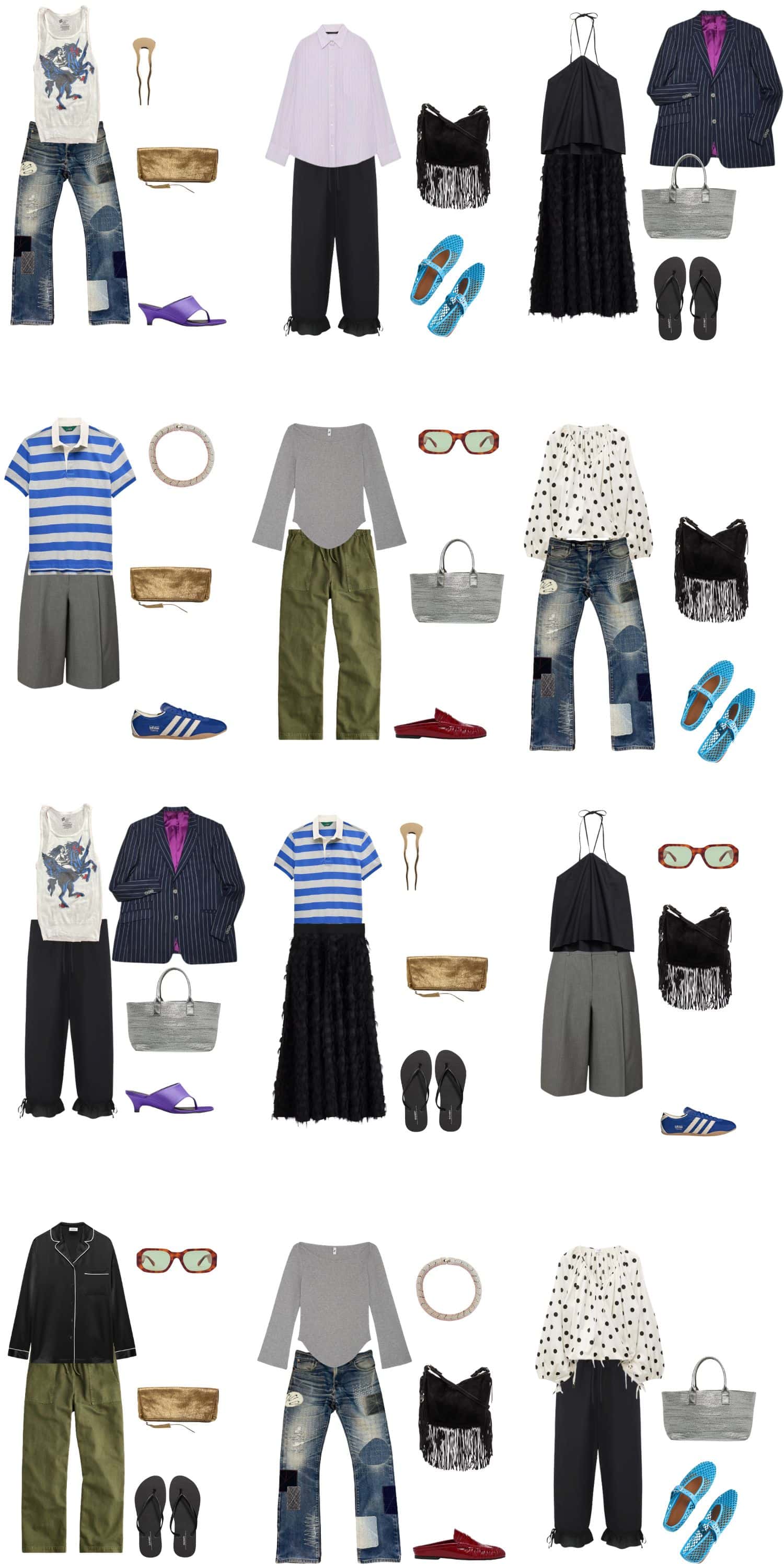
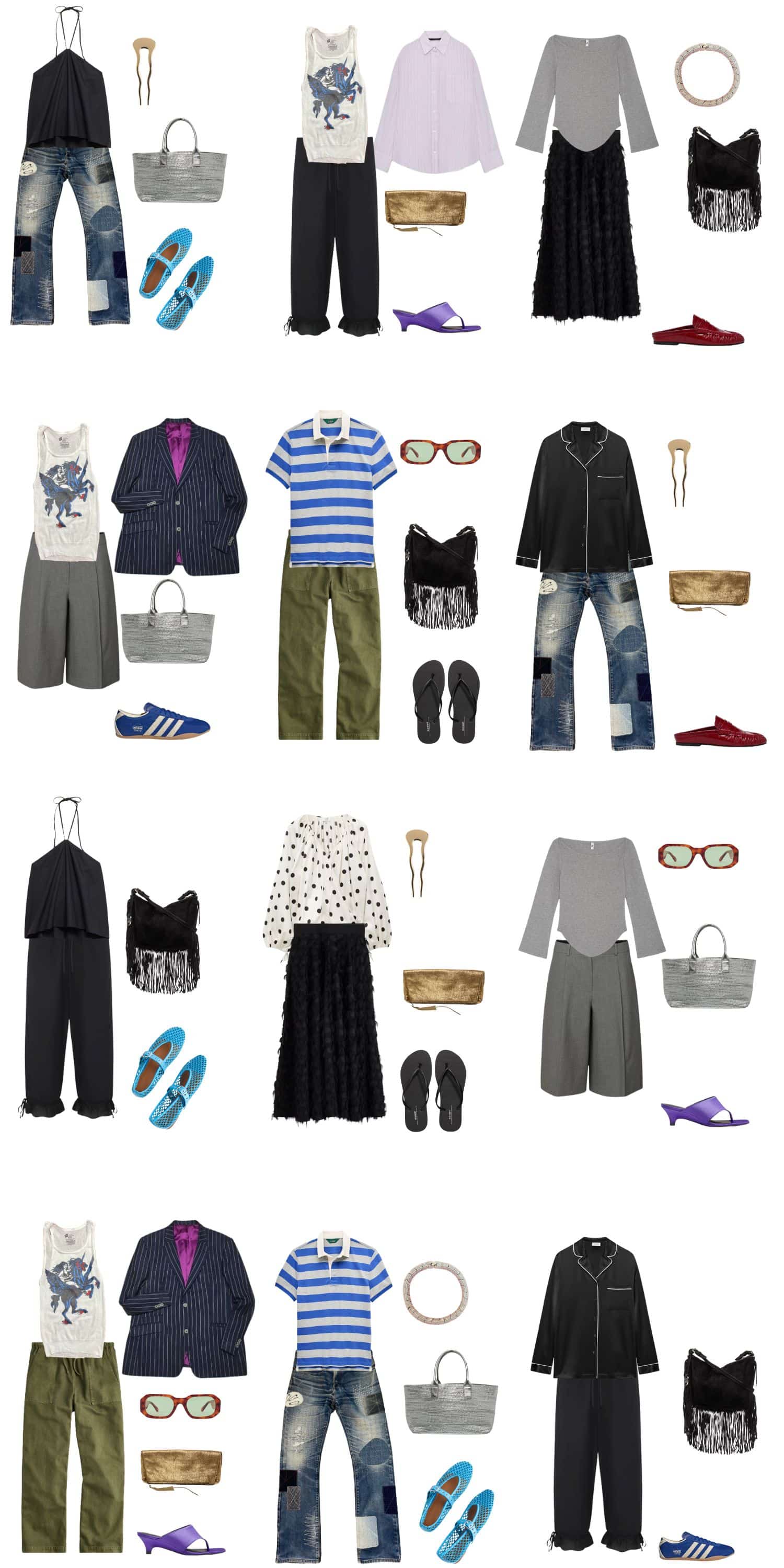
Graphic Tank Top | Sashiko Patch Vintage Levis | Gold Clutch | Purple Heels | Bermuda Shorts | Men’s Blazer | Blue Mary Janes | Purple Button Up | Red Mules | Fringe Bag | Midi Skirt | Black Halter | Hair Stick | Silk Pyjama Shirt | Polka Dot Blouse | Grey Long Sleeve | Vintage Necklace | Green Utility Pants | Striped Polo | Sneakers | Sunglasses | Flip Flops | Silver Tote | Cotton Bloomer Pants
SHOP THE UK LINKS
This post contains affiliate links. By using my links to shop I may receive a small commission (at no cost to you). Thanks for supporting what I do