TL;DR
This guide explores the psychology behind trend fatigue and offers practical ways to build a secondhand wardrobe with confidence rather than consumption.
For the past few years, I have had this strange feeling, like a shift, and it has really intensified over the last year. I also suspect I’m not the only one feeling it.
It feels something like guilt and despair.
It’s like the daily headlines about record-breaking heat, floods, fires, and complete destruction of the earth are our daily reminder that the world seems to be straining under the weight of our collective choices.
It’s watching grocery prices climb beyond affordability while closets overflow. It’s knowing, at least on some level, that endless consumption isn’t sustainable, while being surrounded by an economy that depends on convincing us to consume endlessly anyway.
And it leaves me feeling caught between two uncomfortable truths.
On one hand, I know our individual shopping habits aren’t going to solve climate change on their own. On the other, I also know that our choices matter, even if only in small ways.
I also know that we want to do better, but we also live in the real world. Sometimes the item you need isn’t available secondhand. Sometimes you need something specific by the weekend. Sometimes buying new is simply the practical option.
Perfection has never been the goal.
For me, this shift toward shopping secondhand wasn’t born out of wanting to be the “perfect” ethical consumer. I don’t think such a person exists.
I just want to do better and make a tiny difference.
This shift changed how I think about clothing altogether, because the problem lies within a system that encourages us to believe that we always need newer clothes.
Fashion has stopped being about replacing things that were worn out and started becoming about replacing perfectly good things.
The trend cycle is remarkably effective at creating the feeling that something is missing. Not because your wardrobe has actually failed you, but because it profits from keeping you slightly uncertain.
Every season introduces a new silhouette, a new colour, a new “essential,” while last season’s essentials quietly disappear from the conversation. Clothes don’t become unusable nearly as quickly as they become unfashionable, and those are two very different things.
I don’t think most of us are chasing trends because we’re shallow. I think we’re chasing reassurance. We buy hoping that this will be the piece that finally makes our wardrobe feel complete, current, or enough.
The trouble is that “enough” is a difficult thing to sell. If everyone felt satisfied with what they already owned, the trend cycle would grind to a halt.
Secondhand shopping didn’t solve every problem, and it certainly didn’t make me stop buying new altogether. What it did was make me stop and think. Take a breather and reevaluate before adding to cart.
That’s what this article is really about.
So now we jump into it with something that I have noticed in modern fashion.
There is almost like a constant buzzing in your head with questions that make you doubt yourself and your clothing choices. We used to just ponder What should I wear? And that has changed to something more like, Am I still getting this right?
Which is where the doubt comes in, and that small shift can cause a lot of problems.
It doesn’t always sound quite so dramatic, though. More often it appears as a passing thought while scrolling Instagram, watching someone unpack their latest “must-have” purchase, or walking into a clothing store only to discover that everything has subtly changed…again.
But then BAM, suddenly the jeans you’ve loved for three years seem a little questionable. Trainers that looked perfectly modern last autumn now appear suspiciously absent from everyone’s outfit posts.
A handbag you’ve carried for years hasn’t become any less functional, yet begins to feel a bit blah and you wonder why.
But nothing has actually changed about the clothes; only the conversation around them has.
That’s an important distinction, because most of us think we’re responding to clothes when we’re actually responding to narratives.
Fashion doesn’t simply present garments anymore; it presents a continuous story about relevance.
Every new season arrives with an implied message that what came before has quietly expired. Not because it wore out, but because the conversation has moved on to something else.
The internet has accelerated that feeling in ways fashion magazines never could. Trends used to arrive a few times a year. Now they appear, peak, and disappear before many of us have even decided whether we liked them in the first place.
One week it’s ballet flats, the next it’s boat shoes, then suede bags, then oversized tailoring, then something else entirely.
None of these pieces is inherently good or bad. The exhausting part is the expectation that we should keep evaluating ourselves against an endlessly moving benchmark.
And then slowly, getting dressed starts to feel less like self-expression and more like maintenance.
We become caretakers of our own relevance, quietly checking whether we’ve fallen behind or are we still “cool”, and it starts to feel less like choosing clothes and more like updating software.
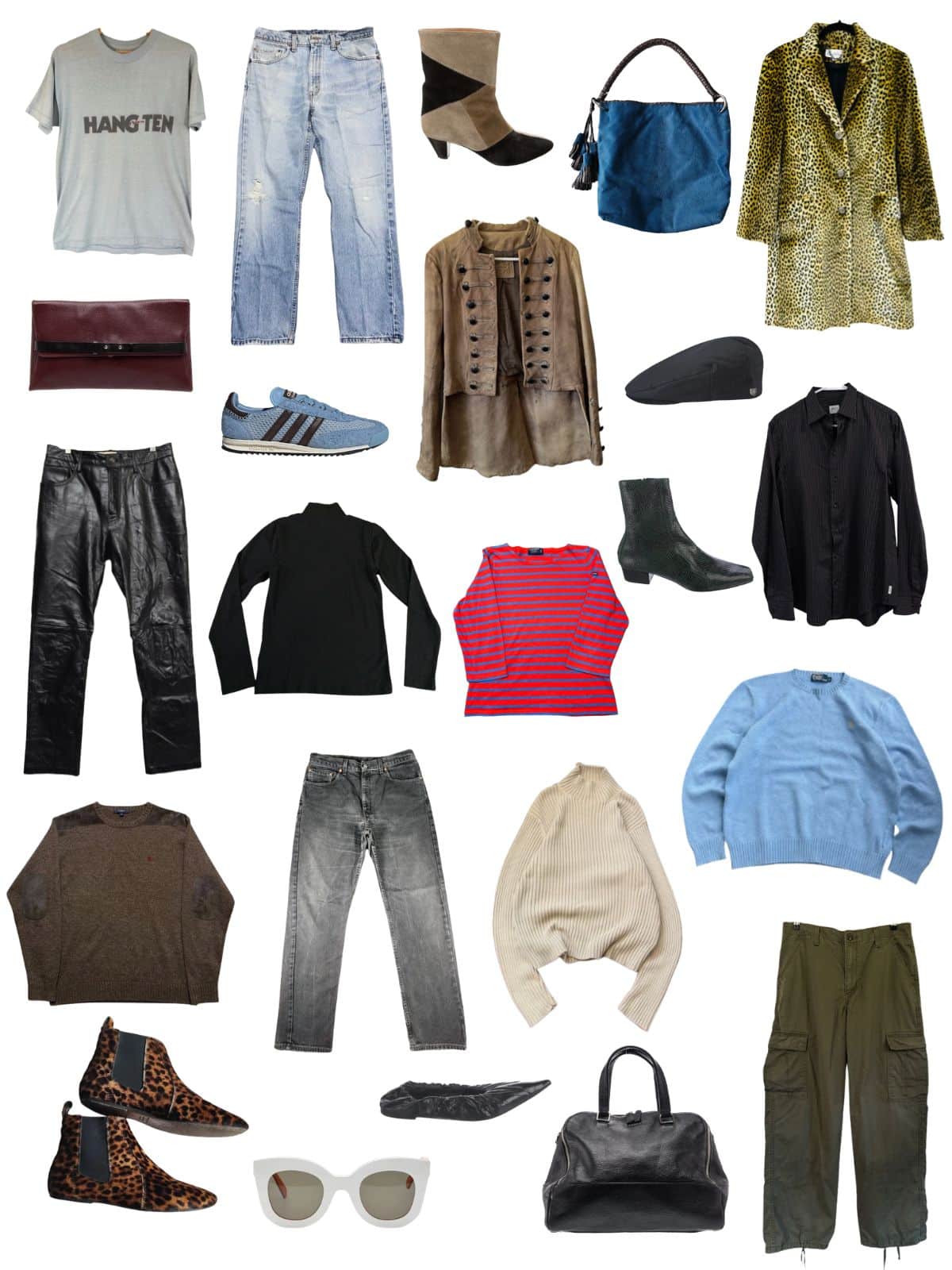
Graphic T-shirt | Blue Jeans | Patch Boots | Blue Bag | Animal Print Coat | Flat Cap | Napoleon Leather Jacket | Blue Sneakers | Burgundy Clutch | Leather Pants | Black Turtleneck | Striped Shirt | Dark Green Boots | Black Button Up | Light Blue Sweater | Cream Turtleneck Sweater | Grey Jeans | Dark Brown Sweater | Animal Print Boots | White Sunglasses | Pointy Flats | Black Bag | Cargo Pants

The Psychology of Never Feeling Finished
This is why I don’t think trend-chasing is really a shopping problem.
It’s an uncertainty problem.
Human beings dislike uncertainty. Psychologists have known this for decades.
When we aren’t sure whether we’re making the “right” decision, our brains naturally look for shortcuts. We copy the people around us. We look for expert opinions. We search for signals that reassure us we’re on the right track.
Fashion provides those signals constantly.
- Best-dressed lists.
- Trend forecasts.
- Everyone is wearing…
- The new it-bag.
- The shoe replacing last year’s shoe.
Each one promises to answer the same question I asked above:
Am I doing this correctly?
The relief is real, but it’s temporary. Because the answer only lasts until the next trend report arrives.
What feels like shopping is often something much deeper. We’re buying a brief sense of certainty.
Unfortunately, certainty is difficult to sell if people are allowed to keep it. Fashion, by its nature, depends on novelty. If everyone felt completely content with what they already owned, there would be very little left to market.
That doesn’t make fashion malicious. It’s simply the business model. Newness is easier to sell than enoughness.
Recognising that can be strangely liberating. It means the constant feeling that you’re one purchase away from finally “getting it right” isn’t a personal failure.
It’s the predictable result of participating in a system built around perpetual updates.
The Dopamine Trap of the New
One of the reasons trend-chasing feels so compelling is because it genuinely feels good. At least for a little while it does.
Our brains are wired to enjoy novelty. New experiences, new purchases, even new ideas can trigger a release of dopamine, the neurotransmitter associated with motivation and anticipation.
Contrary to popular belief, dopamine isn’t just about pleasure. It’s also about pursuit. It encourages us to keep seeking, keep exploring, keep clicking “add to cart.”
And that anticipation is often more exciting than the actual item.
Think about how much time can be spent researching a purchase: comparing reviews, watching styling videos, reading comments, imagining all the outfits you’ll wear.
The purchase becomes a tiny future full of possibility. Then the parcel arrives. You wear the item once or twice. The excitement fades, and almost imperceptibly your attention shifts to the next thing.
This isn’t because you’re shallow or easily influenced. It’s because novelty has a remarkably short shelf life.
Secondhand shopping interrupts this rhythm in an unexpected way.
It slows the process down.
You aren’t waiting for the next collection to drop because there isn’t one. You aren’t comparing ten identical versions of the same blazer because each one is unique.
Instead of anticipating what might appear next week, you’re paying attention to what exists today.
That subtle change moves your attention away from chasing and toward noticing.
Why Secondhand Changes the Conversation
This is where secondhand becomes more than a place to buy clothes. It becomes a different way of thinking about them.
Walk into a typical clothing store, and almost every decision is framed by time. What’s new? What’s arriving next? What’s selling quickly? Which colour is this season’s version?
Walk into a thrift store and time behaves differently.
A linen shirt from 2023 might be hanging beside a wool coat from 1987, a leather belt from the early 2000s, next to a men’s Oxford shirt that’s old enough to have been your grandfather’s. They coexist without attaching themselves to the same trend cycle.
That changes your criteria almost immediately.
Instead of asking whether something is current, you begin asking whether it’s good.
- Good fabric.
- Good construction.
- Good proportions.
- Good design.
These are slower questions. They require observation instead of imitation. But more importantly, they require your own judgment.
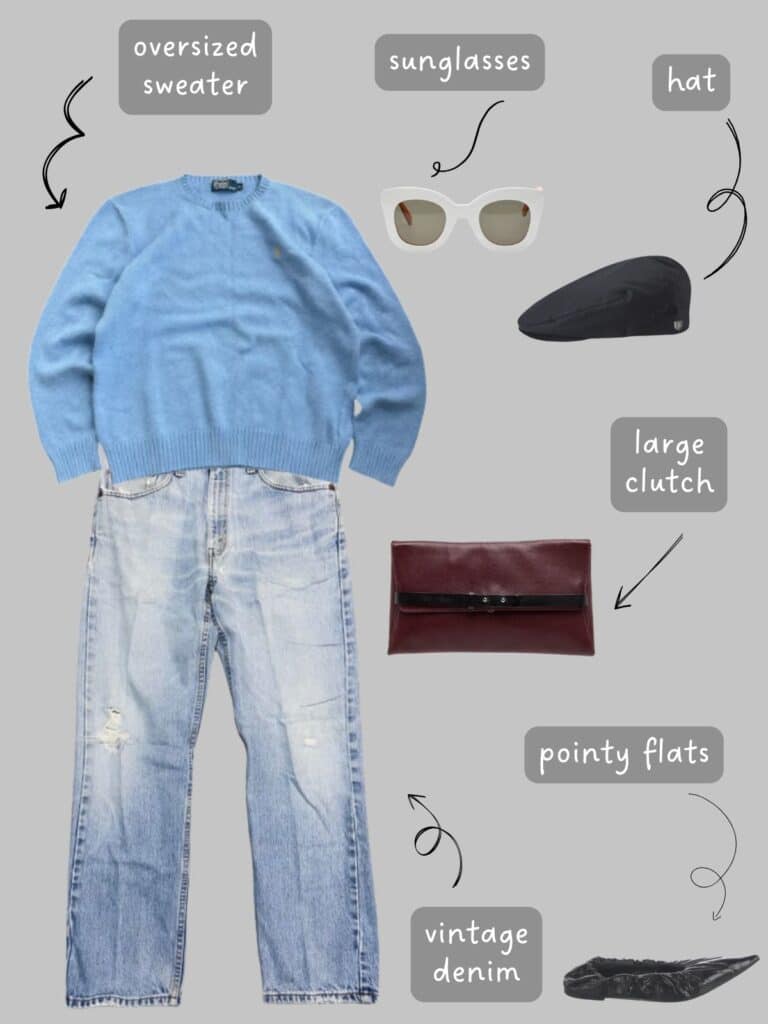
Learning to Build an Eye Instead of a Wishlist
Most of us shop with a want-list, even an unspoken one. A mental inventory of gaps to fill, silhouettes we’ve been told (by an ad, a feed, a friend’s closet) that we’re missing.
Secondhand shopping asks you to set that list down, because inventory is unpredictable by nature.
You cannot walk into a vintage shop looking for “the exact camel coat I saw on Pinterest” and expect to find it. You have to walk in looking for nothing in particular, and let your eye do the work instead.
This, I think, is the greatest gift secondhand shopping offers. It teaches you to trust your own taste.
When we shop primarily through social media, we often develop what could be called borrowed taste. We become excellent at recognising what other people have already decided is desirable.
And if I am being honest, a lot of the time these people don’t even find the piece desirable because they are in it for the clicks and sales, and then they often return it never to be seen again.
And liking what someone told you to like is not the same thing as knowing what we actually like.
Developing an eye is different, and it happens gradually.
You notice that certain collars always appeal to you. You realise you consistently reach for heavyweight cotton instead of lightweight synthetics. You begin recognising beautiful tailoring before you notice the brand name.
You discover that your favourite colour isn’t black or beige or burgundy. It’s simply the colour that works with the rest of your wardrobe, and that might change periodically, and you don’t need to justify it.
These observations sound small, but together they form something much more significant.
They form judgment. And judgment is far more durable than trends.
A shopping guide, for the eye you’re building
Once the essay resolves into practice, here’s where to actually put your hands.
Go in without a list, but with a silhouette in mind. Not “I need a blazer.” More like: “I want something structured through the shoulder.” Specificity of feeling over specificity of item leaves room for the unexpected find, which is where the good pieces are.
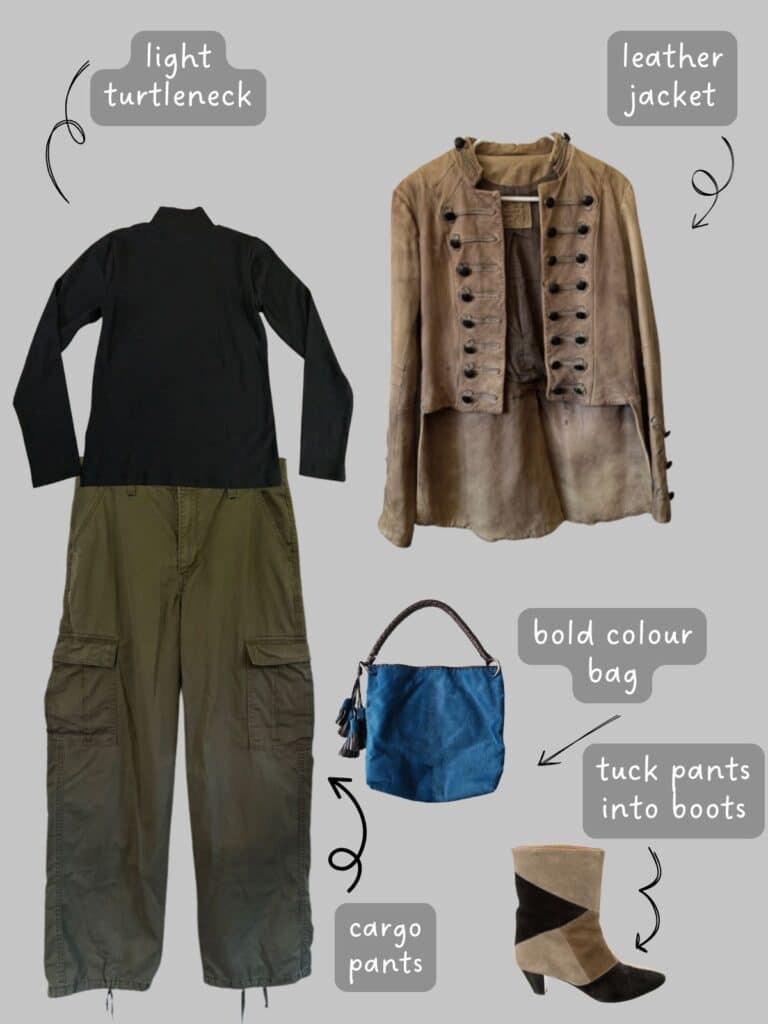
Like currently, that All Saints leather jacket is something I plan to hunt down. I saw it and immediately knew I wanted it for my wardrobe, without knowing that it was what I was looking for to begin with.
Touch fabric before you look at cut. Natural fibers like wool, cotton, silk, linen, tend to be the ones that survived decades in someone else’s closet for a reason. If a piece has already lasted this long, that’s data, not decoration.
Check the seams, not the label. French seams, flat-felled seams, actual buttonholes rather than glued ones. These tell you more about a garment’s real quality than any name sewn into the collar.
Buy for the fit you have, not the fit you’re working toward. Secondhand pieces are rarely simple to alter without real tailoring, so the freedom only holds if you’re buying for your body now, not an aspirational one.
Let one piece be the whole trip. You don’t need a haul. A single coat, found because you were paying attention and not because an algorithm served it to you, will outlast ten pieces bought to fill a list.
Try the thing you wouldn’t normally try. The want-list is the enemy of discovery precisely because it protects you from surprise. Secondhand racks are disorganised by nature, so let that disorganisation introduce you to a colour or cut you’d never have searched for.
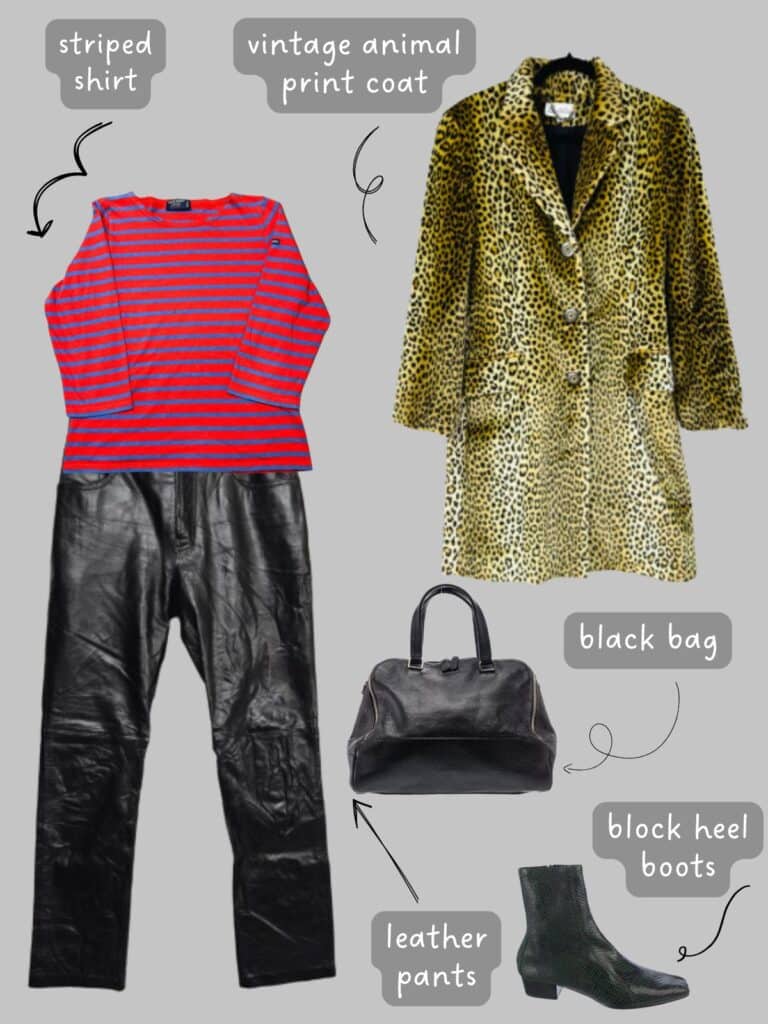
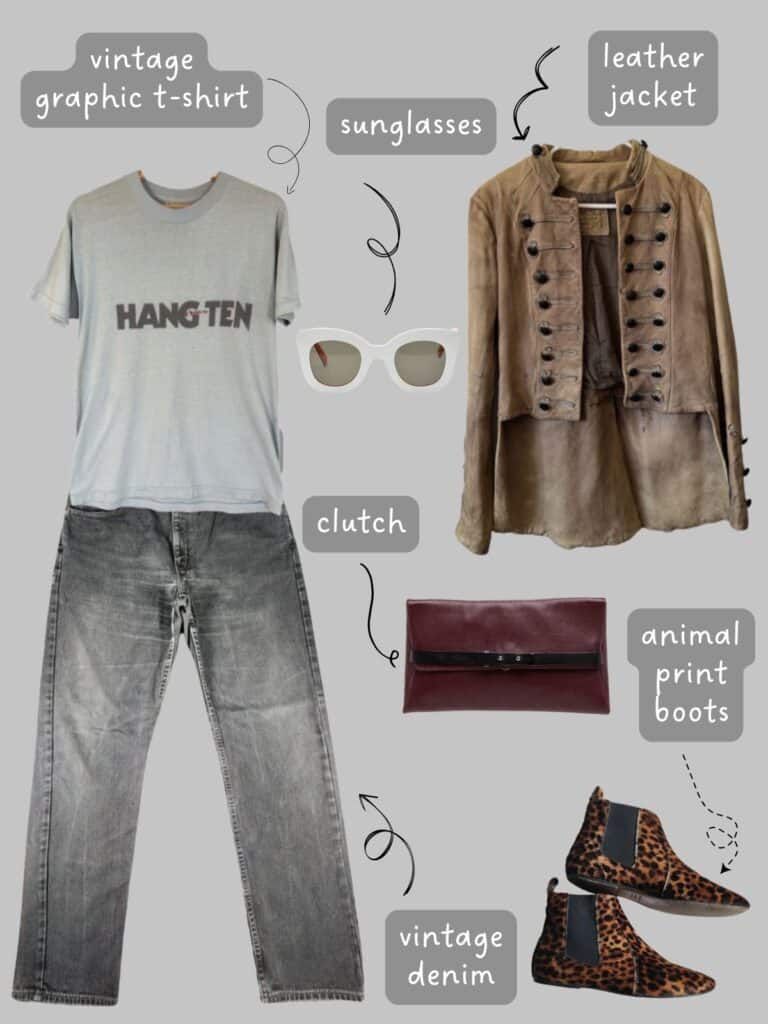
Collecting Versus Consuming
Another meaningful psychological shift happens when you stop thinking like a consumer and start thinking like a collector.
Consumers are always replacing. Collectors are always refining.
A consumer asks, “What’s next?” A collector asks, “Is this worth keeping?”
Those are profoundly different relationships with clothing.
Collectors don’t need every beautiful object. They appreciate craftsmanship, history, rarity, and personal meaning. They are willing to leave something behind because another remarkable piece will eventually appear.
Scarcity doesn’t create panic. It creates patience, and that patience eventually changes the wardrobe itself.
Instead of looking like it was assembled during one shopping trip, it begins to resemble a life lived over time. Every piece has a reason for being there. Every piece survived because it continued earning its place.
The wardrobe stops documenting shopping habits and starts documenting experiences.
The Freedom of Becoming Harder to Market To
For all the discussion about building personal style, I wonder if the real goal is something slightly different. Perhaps the goal is becoming harder to market to.
Not because buying things is inherently bad. We all need clothes. We all enjoy discovering something beautiful from time to time.
But there is something that happens when your decisions no longer depend on someone else’s trend forecast. When you can walk through an entire shopping centre and leave with nothing because nothing felt right.
When you can find a twenty-year-old blazer in a thrift shop and recognise that it belongs in your wardrobe regardless of whether anyone online is talking about blazers this month.
When you stop confusing popularity with quality.
That confidence can’t really be purchased, because it has to be practised.
Which I feel is one of the deepest freedoms secondhand offers. Not simply a less expensive wardrobe or a more sustainable one, but a gradual return to your own judgment.
Shopping becomes observation instead of urgency, making style something you build rather than something you keep chasing.
We live in a world that profits from making us question ourselves every season, so learning to trust your own eye may be the most radical thing that you can do for your wardrobe.
Secondhand Fall Outfit Ideas
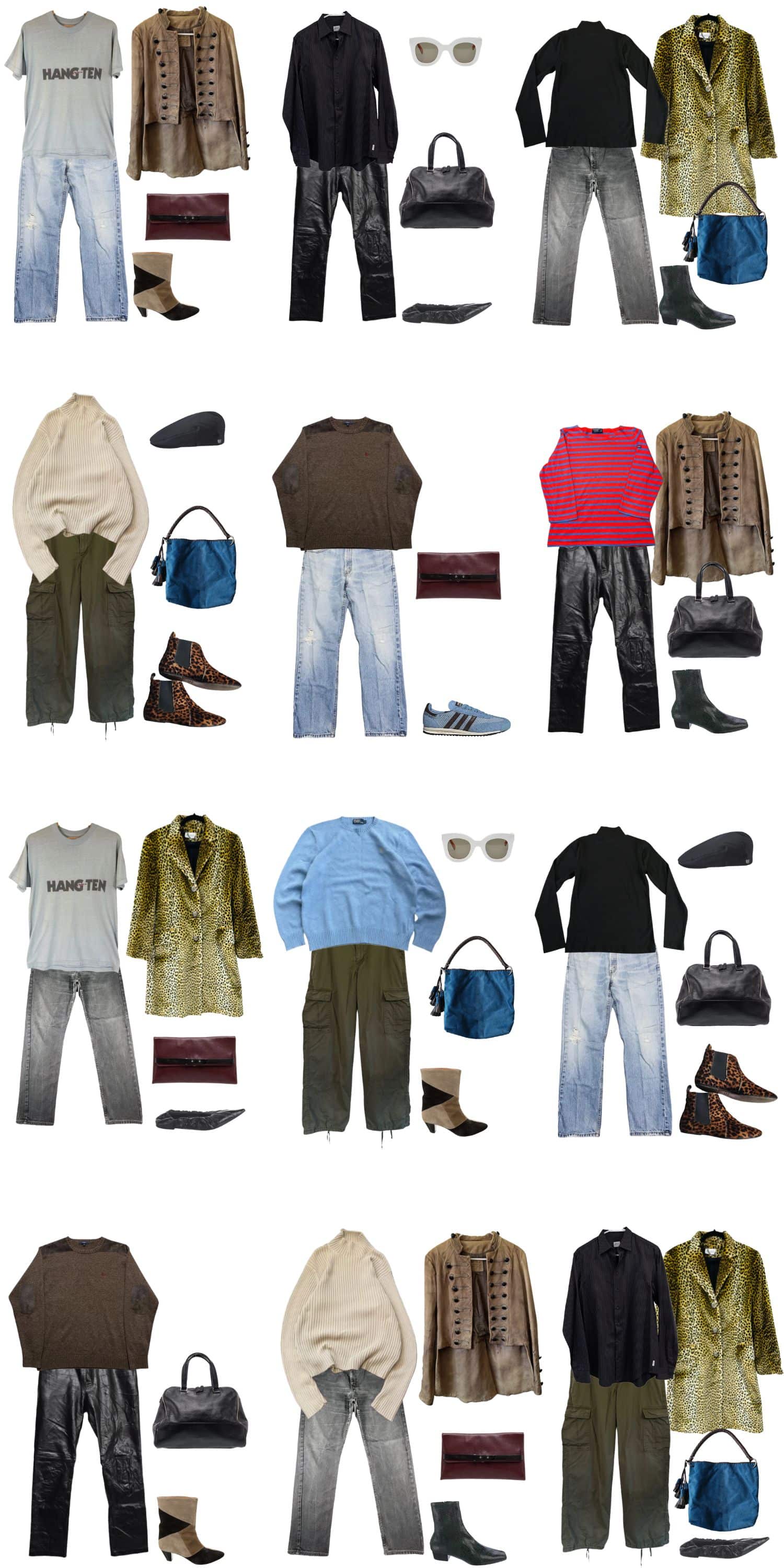
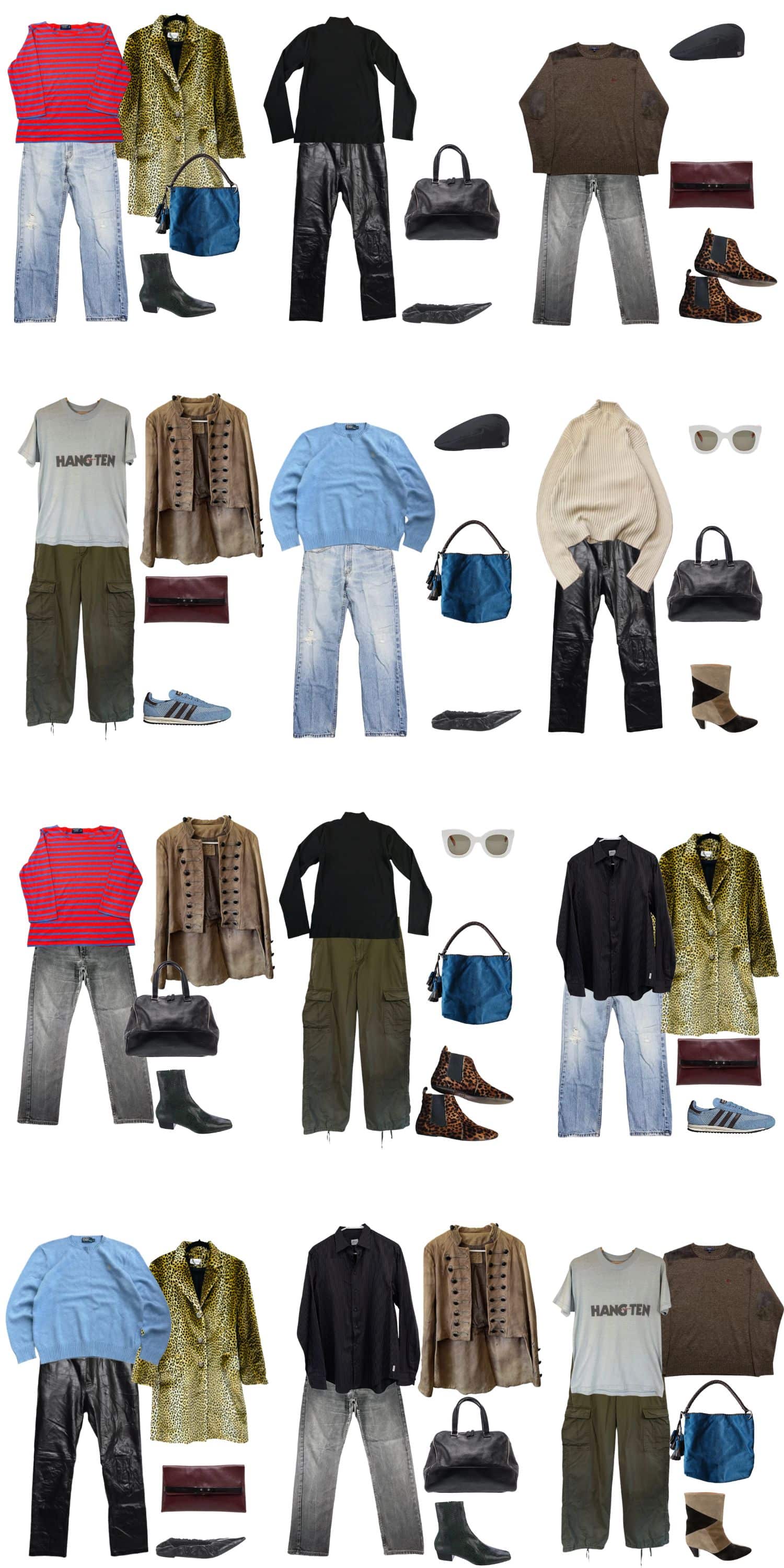
Graphic T-shirt | Blue Jeans | Patch Boots | Blue Bag | Animal Print Coat | Flat Cap | Napoleon Leather Jacket | Blue Sneakers | Burgundy Clutch | Leather Pants | Black Turtleneck | Striped Shirt | Dark Green Boots | Black Button Up | Light Blue Sweater | Cream Turtleneck Sweater | Grey Jeans | Dark Brown Sweater | Animal Print Boots | White Sunglasses | Pointy Flats | Black Bag | Cargo Pants
SHOP THE UK LINKS
This post contains affiliate links. By using my links to shop I may receive a small commission (at no cost to you). Thanks for supporting what I do 



Great article! I love your writing!
love how you make me think!
I agree with the ☝️, you have changed my entire life, by helping me think differently about my clothes I have become a more authentic, happier version of me. Grateful.