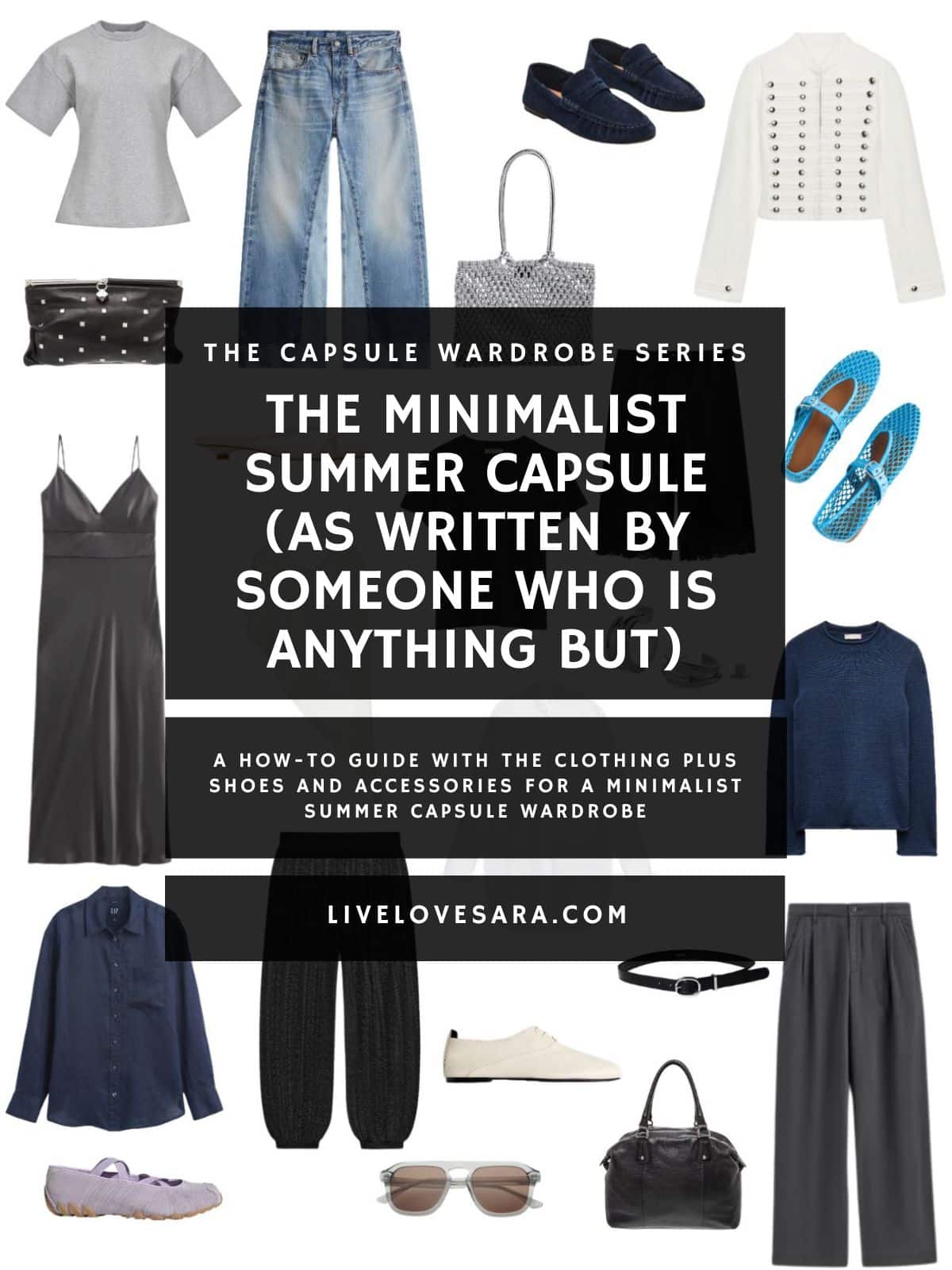
Sometimes I want to be a minimalist. I really do.
It is like this internal battle of how I visualise myself dressing versus what comes out when I actually get dressed.
In my head, I am always the woman in the crisp white shirt. The one with the single good watch, clean straight-leg trousers and the confidence of someone who has never once stood in front of a mirror thinking “but what if I added the hat.”
She is serene. She is unencumbered. She looks like she makes very good decisions about things other than clothes, too. Her email inbox is probably manageable. She sleeps well.
That woman is not me.
I am, in practice, much more artsy. I actually never realised this about myself until I heard my style of dress being described as artsy on more than one occasion, much more than one.
More like a dozen or more times.
Which brought forth some serious self-reflection.
I leave the house planning to be minimalist and arrive having somehow acquired visual texture along the way, like a ship collecting barnacles.
Minimalism The Lifestyle vs. Minimalism The Look
There is a version of minimalism that is about owning thirty-three items and feeling cleansed.
It involves capsule wardrobe challenges and a very specific kind of influencer who photographs their entire wardrobe laid flat on a white bed.
It is, broadly speaking, an organisational philosophy about how little you can own.
That is not what we’re doing here.
What we’re doing is talking about minimalism as a design language. A visual aesthetic with a very specific and very rich history.
One that peaked in the 1990s with designers who were making some of the most quietly radical clothes ever produced, and that has never actually gone away because it is that good.
This version of minimalism doesn’t ask how little you own. But instead it tosses around questions like: What does a garment look like when you remove everything unnecessary from it? What’s left? What does that remainder do?
The answer, when you get it right, is: a lot. An enormous amount, actually.
The right minimalist piece in the right fabric with the right seam placement and the right silhouette does more work than a maximalist piece covered in detail, because there’s nowhere to hide.
Every decision is visible. Every choice is the choice that everyone will see.
This is the minimalism I am in love with. This is also the minimalism I consistently undermine by adding a third layer, but that’s a personal problem we’ll address later.
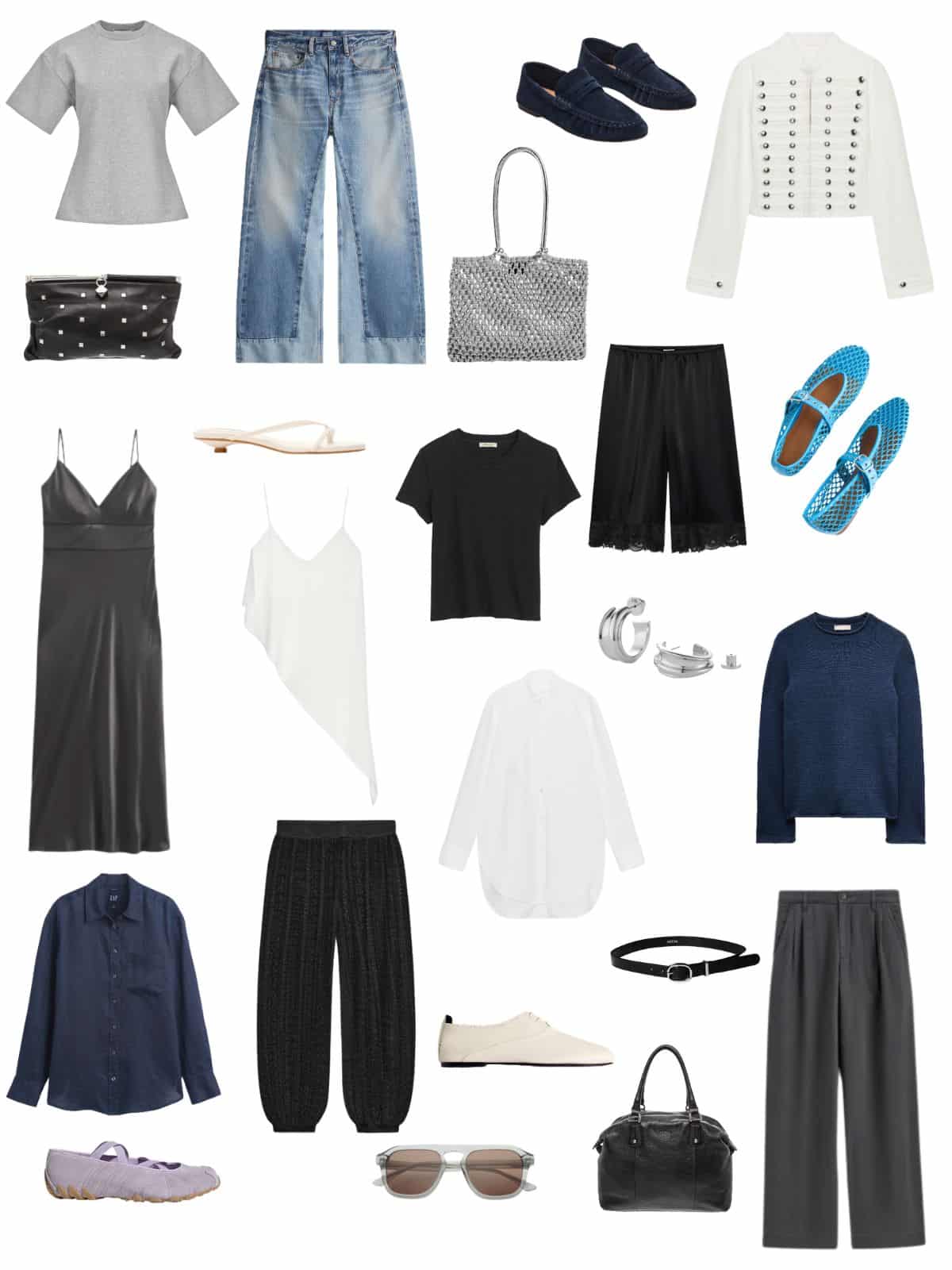
Scultpural Grey Tee | Blue Denim | Silver Net Bag | Navy Loafers | Napoleon Jacket | Blue Mesh Flats | Bermuda Shorts | Black T-shirt | Kitten Heels | Studded Clutch | Grey Slip Dress | Asymmetric Camisole | White Button Up | Silver Earrings | Navy Linen Sweater | Grey Trousers | Black Belt | Black Bowler Bag | Cream Oxfords | Sunglasses | Balloon Pants | Navy Linen Shirt | Purple Sneakerinas

The 90s Reference Point (And Why It’s Just The Beginning)
If you want to understand minimalism as a design language, the 1990s are the obvious place to look. Not because it started there, but because that’s where it became fully itself.
Jil Sander was making clothes that looked like they’d been solved rather than designed.
Helmut Lang was doing something architectural and slightly confrontational with the most basic shapes imaginable.
Calvin Klein was proving again and again that something basic, executed with absolute precision, was more powerful than you could imagine.
Donna Karan was dressing women like they were serious and yet didn’t need to announce it to anyone.
These weren’t boring clothes. This is the thing that gets lost when people talk about 90s minimalism as if it were simply the absence of decoration.
These were clothes with enormous presence.
Clothes that worked because of proportion and fabric weight, and the exact angle of a lapel, because the designer had thought about negative space the way a sculptor thinks about it.
The absence of excess was itself a form of expression.
And what’s interesting, what makes this relevant right now rather than just nostalgic, is that this design thinking has never stopped existing. It just moves around.
You find it in contemporary Japanese labels doing things with drape and seam structure that make you stand in a store for ten minutes trying to figure out how a shirt is constructed.
You find it in vintage Scandinavian workwear, where the function produced the form, and the form turned out to be beautiful.
You find it in a thrift store blazer from 1994 that fits like it was made with the specific intention of being worn open over everything.
The 90s are a reference point, not a destination. The aesthetic is bigger than the decade.
What The Minimalist Look Actually Is
Let me give you the design principles, because I think this is where people get lost and start thinking minimalism means buying a grey t-shirt and calling it a philosophy.
The minimalist look is built on four things: silhouette, fabric, proportion, and detail. Not decoration. Detail. There’s a difference.
Silhouette is the shape of the garment in space. Minimalist silhouettes tend toward the clean and the geometric, like a straight line, a precise curve, a volume that’s intentional rather than incidental.
This doesn’t mean shapeless. It means the shape is the point. A wide-leg trouser that falls in a perfect column. A blazer that has a very specific relationship with the shoulder.
A dress cut on the bias so it moves a particular way. The silhouette is doing the work that decoration would do in a different kind of garment.
Fabric is everything in minimalist dressing because there’s nothing to distract from it. The weight of a fabric, the way it holds shape or releases it, the subtle texture of a good linen versus a cheap one.
These are the variables that separate a minimalist outfit that reads as intentional from one that reads as underdressed.
A good minimalist piece in a beautiful fabric looks expensive in the way that actually costs something to replicate.
A poor fabric in a good silhouette always gives itself away.
Proportion is the relationship between pieces. Where things sit on the body, how they interact with each other, and what they do to the perceived shape of the wearer.
Minimalist dressing is largely a conversation about proportion. A cropped top with a wide trouser. An oversized shirt with a narrow skirt. A coat that’s precisely one size larger than the garment underneath.
These are proportional decisions, not decorative ones.
Detail — and this is the part I want to linger on, because this is where the aesthetic stops being boring and starts being fascinating.
It is the small, considered decision that reveals itself on closer inspection. Not embellishment. Not print. Not embroidery.
The detail of a seam placed three centimetres from where you’d expect it, creating a fold that catches light differently. The detail of a hem that’s been finished raw. The detail of a button that’s slightly larger than standard, or slightly smaller, or a different material than the garment itself.
These are the details that make someone stop and ask, “Wait, what are you wearing?”
This is where you, me, and every other potential recovering maximalist-ish can live inside the minimalist aesthetic without actually suffering. The pieces are interesting. They just aren’t loud about it.
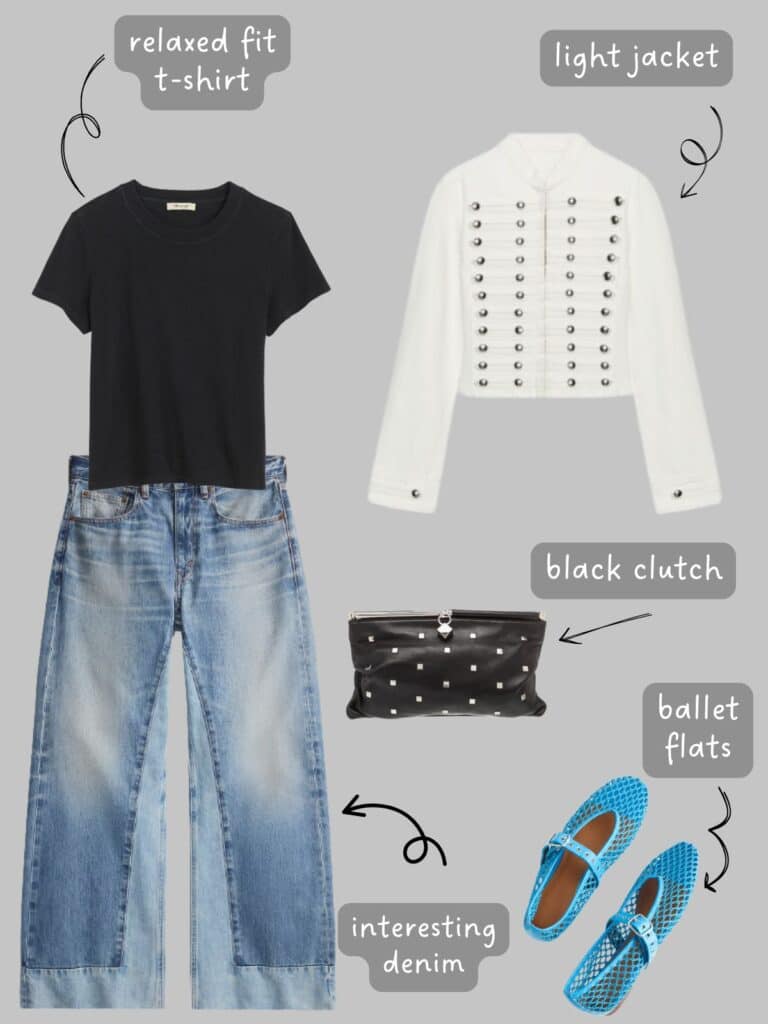
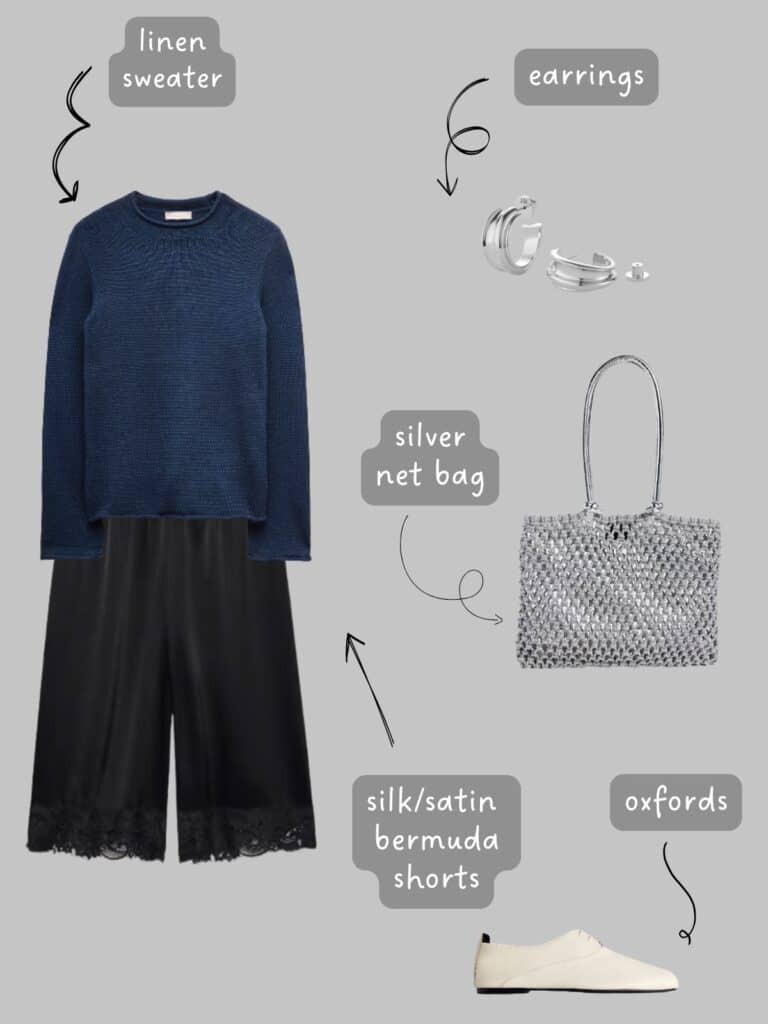
Building The Look: Cool, Slightly Monochromatic, And Full Of Quiet Opinions
For this wardrobe we’re working in a cool, slightly monochromatic palette, greys from pale silver to deep charcoal, navy in all its registers, stone, slate, and obviously black and white.
Here’s what this looks like in practice.
The Sculptural Top
Not a plain grey tee, though a genuinely great plain grey tee in a heavy cotton with a perfect weight is not nothing. The one I included in this wardrobe, has a very strong shape.
What I’m after is a top where the silhouette or the construction has something to say. A top with a seam placement that creates an unexpected fold at the shoulder.
An asymmetric hem that sits longer at the back. A slightly exaggerated collar on an otherwise simple body. A pleat that’s purely structural, it doesn’t add volume, it just creates a shadow, a line, a reason to look twice.
This is the piece that converts people. The person who picks it up in a store and thinks “it’s just a grey top” and then puts it on and can’t explain why it’s working.
That’s the minimalist magic trick. The work is invisible, but the effect isn’t.
Thrift it: Look for structured tops in vintage menswear sections. A men’s poplin shirt in pale grey worn open or half-tucked is doing all of this already, and the construction will be better than almost anything on the contemporary high street.
The Wide-Leg Trouser
I’ll make the case for this as a summer piece every single time because it’s correct.
A wide-leg trouser in a lightweight fabric like a fine wool, a linen blend, a cotton with some body is cooler than shorts, more interesting than jeans, and the single piece most likely to make you look like you have your life together, regardless of what’s actually happening.
The details that matter: the waistband (a wide waistband with topstitching, a slightly higher rise than expected, a waistband that sits with some structure rather than rolling over), the break (just at the ankle or slightly above, not pooling), and the fabric weight (heavy enough to hold the line of the leg, light enough to move).
Stone or slate. Either. Both if you can manage it.
Thrift it: Men’s dress trouser sections and vintage suiting. 80s trousers frequently have a more interesting waistband and a better drape than contemporary options at three times the price.
The Navy Linen Shirt
The most versatile piece in the wardrobe and the one most likely to be worn in four different configurations before the end of the week.
Oversized, in navy linen, worn open as a layer, belted as a tunic, thrown over a slip, rolled to the elbow with the collar up on a hot day when you’ve given up on everything except looking like you haven’t.
Thrift it: Men’s section, summer months, always. Vintage linen softens through washing into something better than its original state.
The Lightweight Knit
A lightweight knit in fine cotton, linen, or a slubby yarn, not for warmth, for texture.
A knit top with a twisted shoulder seam or an open construction, a neckline that does something slightly unusual, or is semi sheer.
The piece that adds dimension to a monochromatic outfit without adding colour, because the texture itself is doing the visual work.
This is also, incidentally, the piece I’d most recommend for the recovering art teacher in all of us. It’s interesting enough that you don’t need to add anything else. It is itself the thing.
Practice letting it be the thing.
Thrift it: Vintage 90s knitwear is peak minimalist construction and costs almost nothing secondhand. It’s out there. Look in the women’s knitwear and the men’s sweater sections equally.
The Bias-Cut Dress
The piece that requires the least effort and reads as the most. A bias-cut dress in pale grey or slate — something silk or silk-adjacent, something that moves, works as a single garment, as a layering piece under the navy shirt, as the base of any number of proportional conversations.
The cut does all of the work. You just have to put it on.
Detail: a raw hem, straps that cross at the back, a slit that falls at an angle. Small decisions. Large effect.
Thrift it: Silk slip dresses and bias-cut pieces turn up in thrift stores with remarkable frequency because they were made in enormous quantities in the 90s and 2000s and have been donated by people who didn’t know what they had.
You will find one. It will cost you eleven dollars.
The Denim Piece
Denim belongs in this wardrobe because denim is grey and blue and stone and has been since it was invented.
Some in an interesting shape or wash, or a denim skirt with a sculptural quality, a wrap that sits asymmetrically, a midi with a kick pleat, something that isn’t just a tube of denim with a zip in it.
Denim is the utilitarian anchor. It makes everything else feel like it has a life outside of being stylish, which is ultimately what makes it stylish.
Thrift it: Always, always thrift denim. The best denim in any thrift store has been worn to the precise point of perfection and hasn’t been destroyed in the process.
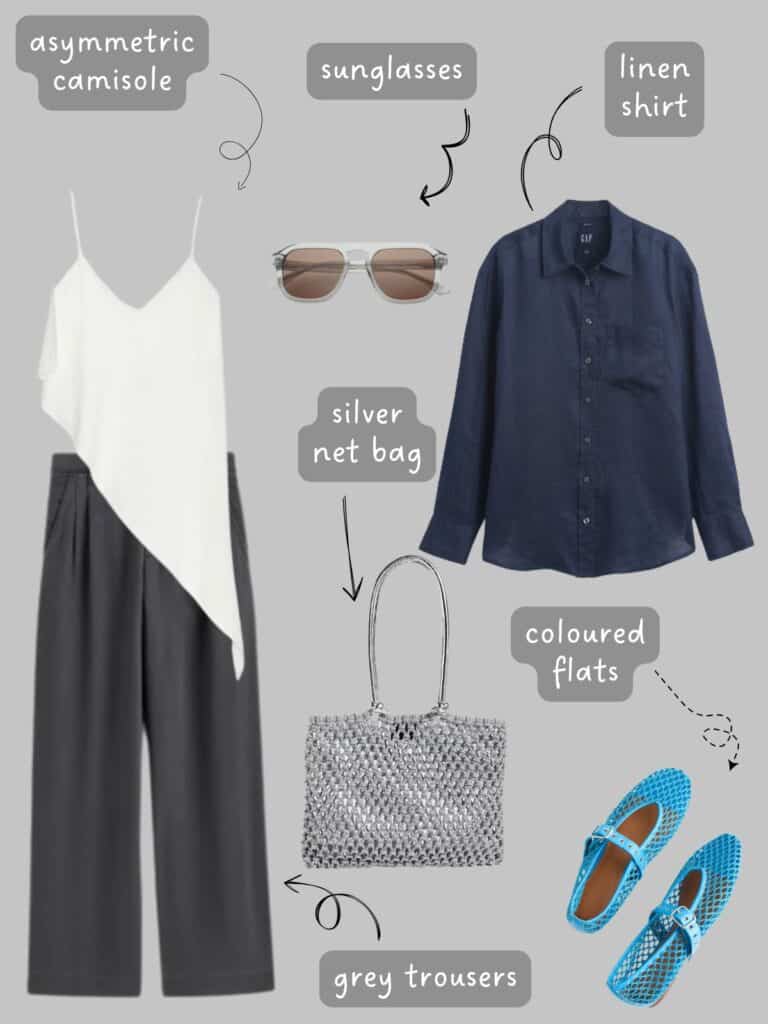
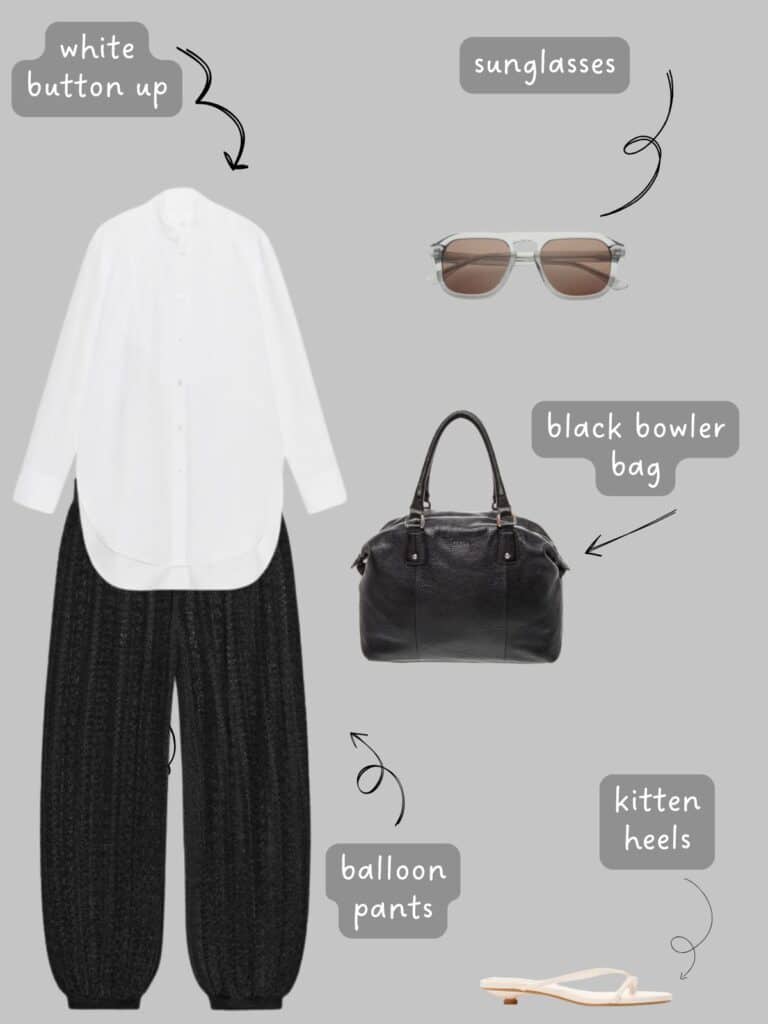
The Art Teacher Addendum
Here’s what I’ve figured out, after many years of leaving the house in a white shirt and arriving places in what can only be described as a look: the minimalist aesthetic is actually more accommodating of a strong personality than it gets credit for.
The art teacher doesn’t look the way she does because she’s trying to be maximalist. She looks that way because she keeps responding to interesting things: the sculptural earring, the market bag, the jacket that has good bones.
The mistake isn’t the instinct. The instinct is correct. The mistake is thinking you need all of it at once.
What minimalist dressing as a design language offers is this: pieces that are interesting enough to be the thing.
Not the backdrop for the thing, not the context for the accessories, but the thing itself.
When the trousers have the right construction and the top has the right seam detail and the fabric is doing real work, you don’t need to keep adding.
The adding was always compensating for pieces that weren’t quite doing enough.
Which means the minimalist look isn’t actually about restraint, at its core. It’s about choosing better. Choosing pieces that are quietly extraordinary so that you can stop reaching for the next thing.
I’m still working on it. I left the house today in a grey sweater and grey trousers, and I looked exactly right for about 7 minutes before I added a scarf.
But it was a good scarf. And the base was solid. And honestly, for me, that’s progress.
And then I proceeded to add a jacket…
Minimalist Summer Outfit Ideas
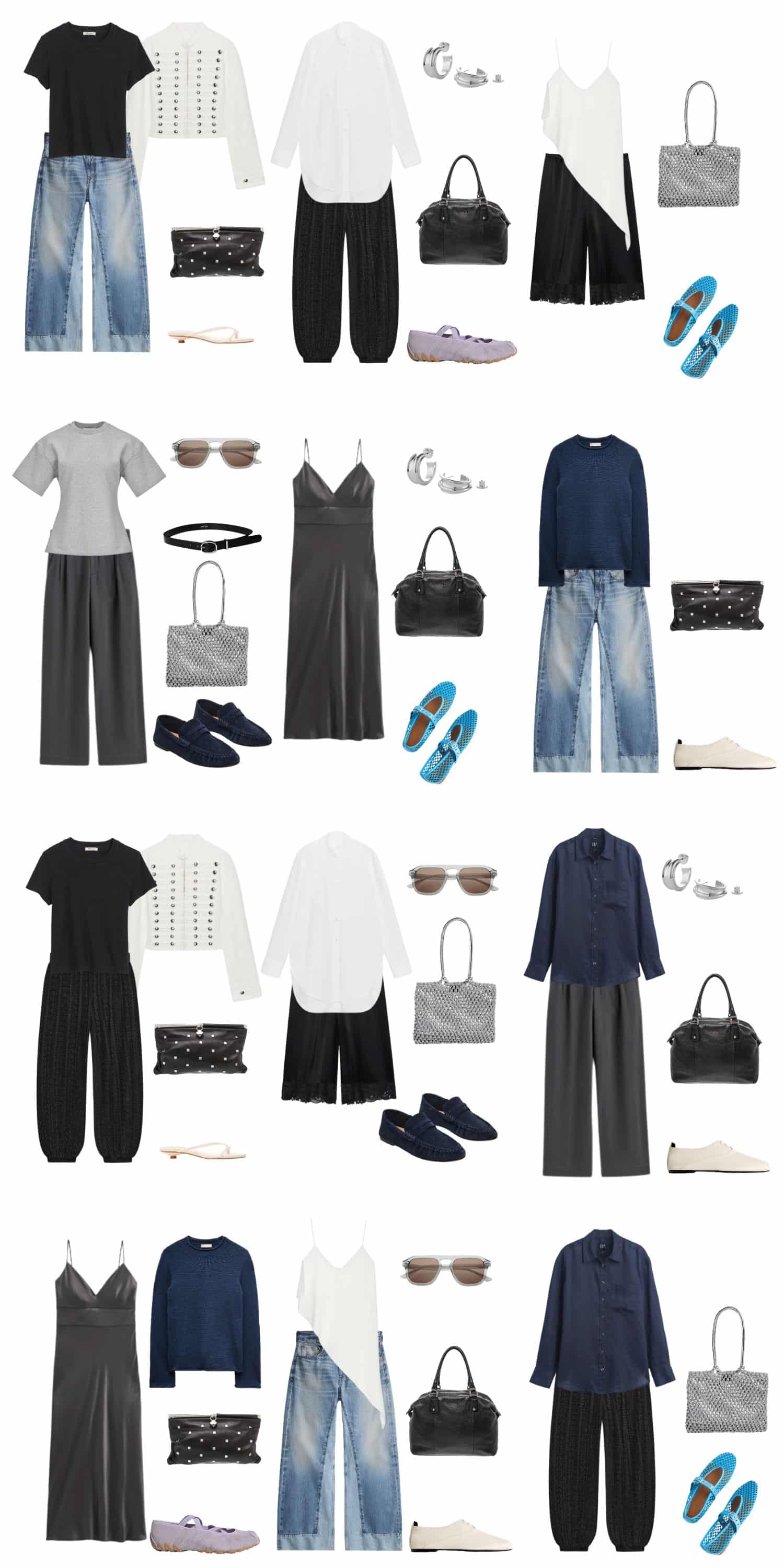
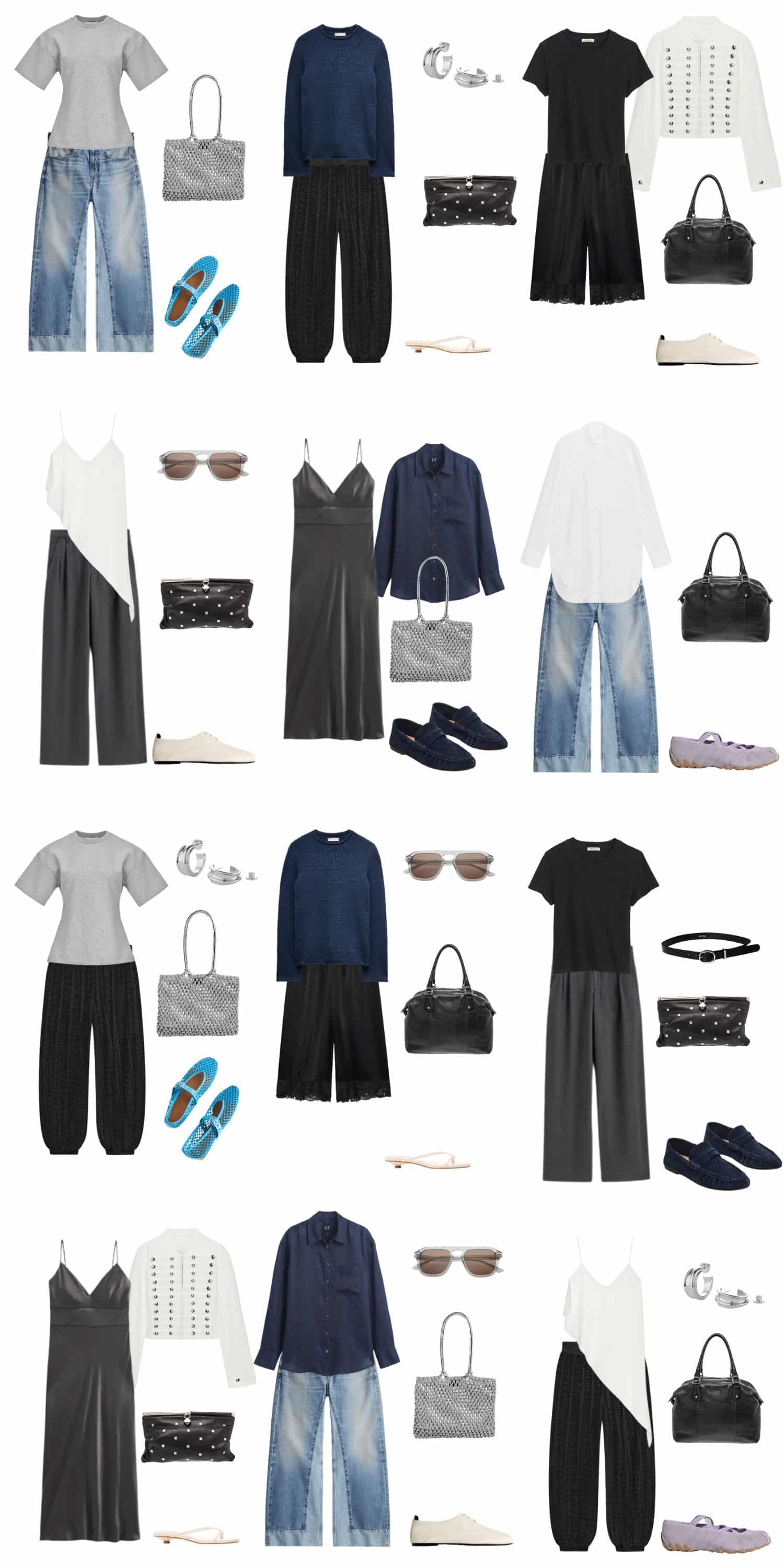
Scultpural Grey Tee | Blue Denim | Silver Net Bag | Navy Loafers | Napoleon Jacket | Blue Mesh Flats | Bermuda Shorts | Black T-shirt | Kitten Heels | Studded Clutch | Grey Slip Dress | Asymmetric Camisole | White Button Up | Silver Earrings | Navy Linen Sweater | Grey Trousers | Black Belt | Black Bowler Bag | Cream Oxfords | Sunglasses | Balloon Pants | Navy Linen Shirt | Purple Sneakerinas
SHOP THE UK LINKS
This post contains affiliate links. By using my links to shop I may receive a small commission (at no cost to you). Thanks for supporting what I do