TL;DR
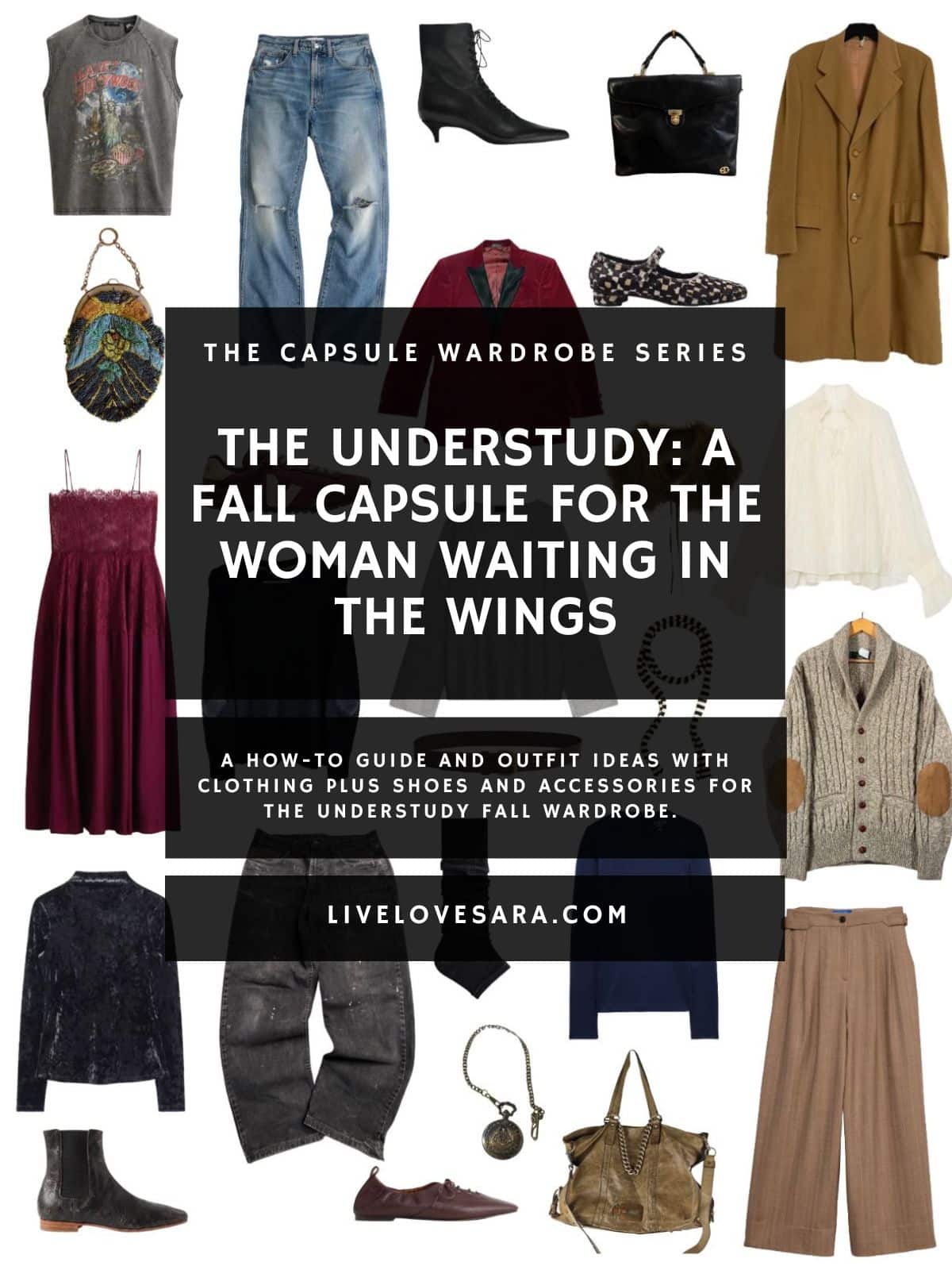
The Understudy is a character-driven fall capsule wardrobe about reaching midlife and realising that no longer being cast as the ingenue is not the tragedy we were told it would be. Built from velvet, distressed denim, softened tailoring, patched knits, lace and practical shoes, this wardrobe lives between rehearsal and performance. It belongs to a woman who has spent years learning the lines, watching how the production works and slowly understanding that she may not want the leading role she was taught to pursue. She may want to rewrite the entire play.
I really enjoyed writing the character-driven post from last week. I like to think about and imagine the variety of people who walk this world. Each person has their stories that you may or may not relate to.
So I decided this week I would talk about another kind of woman. One that will probably resonate with many of you.
Especially us over 40s. Because somewhere in the last decade, the casting notice changed. You are no longer being auditioned for the ingenue, and the culture has not written many parts for what comes after, so you find yourself backstage: still in the building, still fully off-book, no longer the one the lights are aimed at.
You are told this is a loss. It is presented as a loss with tremendous confidence.
There are entire industries devoted to helping women postpone this supposed demotion. We can tighten, brighten, lift and disguise ourselves in the hope that nobody notices time has passed.
Although time has been passing quite openly and was not being very discreet about it.
We are encouraged to remain visible, by which the culture often means visibly young, visibly pleasing and visibly grateful to have been permitted another scene.
But backstage is where you learn how everything works.
You know which entrance everyone misses, which seam will split under pressure and which supposedly indispensable person has never learned her own lines.
You can see the pulleys, the tape marks and the people doing the actual work while someone more photogenic accepts the applause. You are no longer so dazzled by the production that you mistake it for reality.
And that is where The Understudy begins.
The Understudy Is Not Waiting to Be Discovered
The familiar version of the understudy is a hopeful figure standing in the wings, waiting for one fortunate illness to transform her life.
She knows the role perfectly but cannot claim it until someone else steps aside. Her talent is provisional. Her future depends on being chosen.
That is not this woman.
She may once have believed in the audition. Most of us did. We learned the appropriate costumes for attractiveness, competence, marriage, motherhood, professionalism and ageing well.
A phrase that has always pissed me off and sounds a lot like a performance review.
We tried to become legible within every role while appearing as though none of it required effort. Then we reached our forties and discovered that the casting department had lost interest just as we became far more interesting.
The Understudy is what happens when a woman stops interpreting that loss of attention as a loss of value.
She does not spend the remainder of the play trying to prove that she could still pass for the ingénue under forgiving lighting. She begins wandering through the rest of the theatre.
She has access to the costume room now. She knows what is fake, what has been repaired and what looks magnificent only from the fifth row.
She can borrow from any role because she no longer needs to convince the audience that she is one coherent, easily summarised thing.
Romantic one day, severe the next, practical by afternoon and slightly overdressed in the dairy aisle by evening: she contains a whole repertory company, in which none of the parts requires a permanent contract.
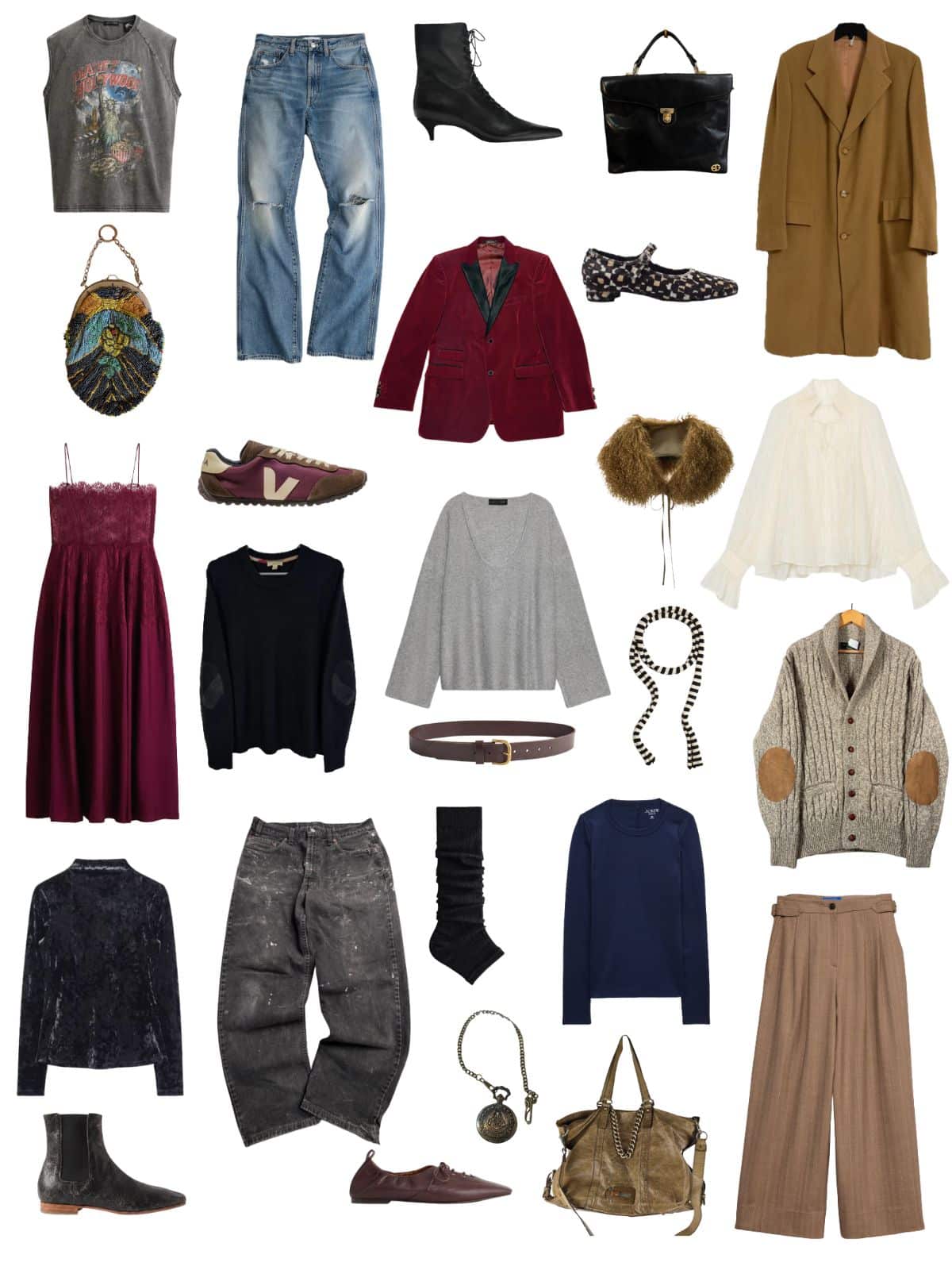
Graphic Shirt | Bootleg Denim | Heeled Boots | Black Satchel Bag | Camel Coat | Mary Janes | Velvet Smoking Jacket | Sneakers | Antique Beaded Bag | Burgundy Dress | Black Sweater | Grey V-neck Sweater | Faux Fur Collar | Lace Blouse | Grandpa Cardigan | Striped Knit Skinny Scarf | Brown Belt | Velvet Mockneck | Paint Splatter Jeans | Leg Warmers | Navy Blue Long Sleeve | Wide Leg Pants | Tan Slouchy Bag | Vintage Pocket Watch | Jazz Shoes | Flat Black Boots

A Wardrobe Caught Between Rehearsal and Performance
The clothes in this fall capsule occupy the strange interval between dressing and being dressed, between the ordinary work and the illuminated result.
Velvet, lace and a tuxedo lapel belong to the stage. Faded denim, softened sweaters, a souvenir tee and sneakers belong to everything that happens around it.
The wardrobe becomes interesting where those worlds overlap.
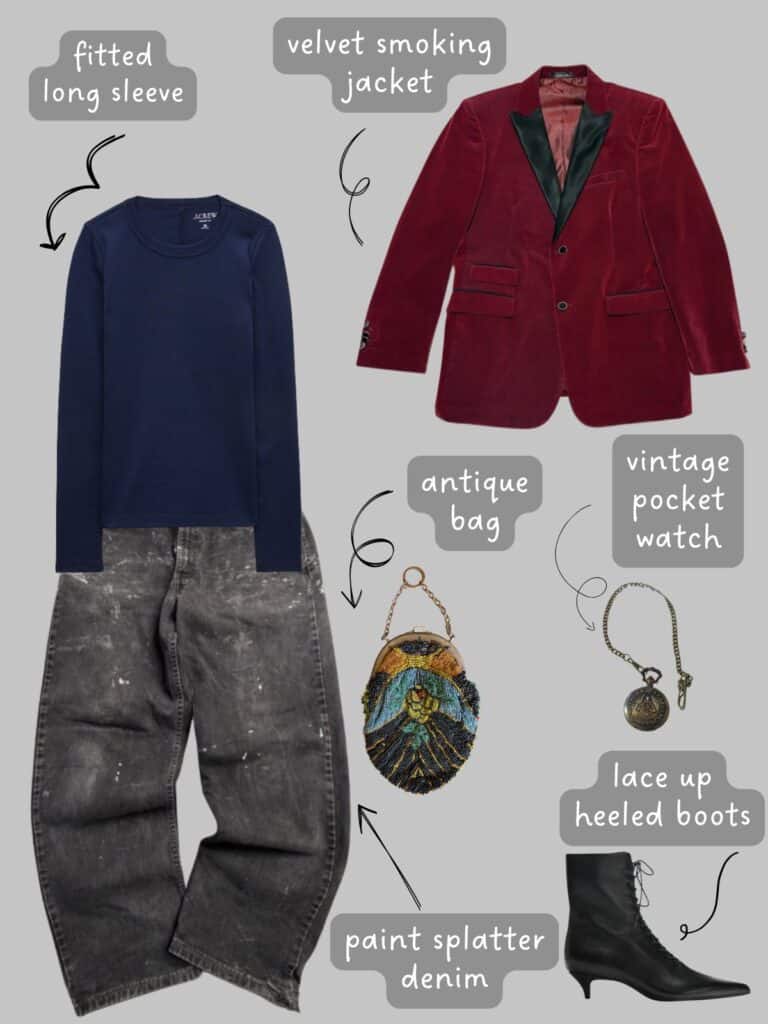
The burgundy velvet tuxedo jacket is the most obvious performance piece, but it does not need to behave like formalwear.
Worn over the washed Planet Hollywood tee and paint-marked black jeans, it feels less like an occasion jacket than something pulled from the costume rail because the rehearsal room was cold.
With the wide brown trousers, it becomes relaxed evening tailoring. Over the burgundy lace dress, it is gloriously excessive, which is sometimes the only reasonable response to having spent years being advised to keep things tasteful.
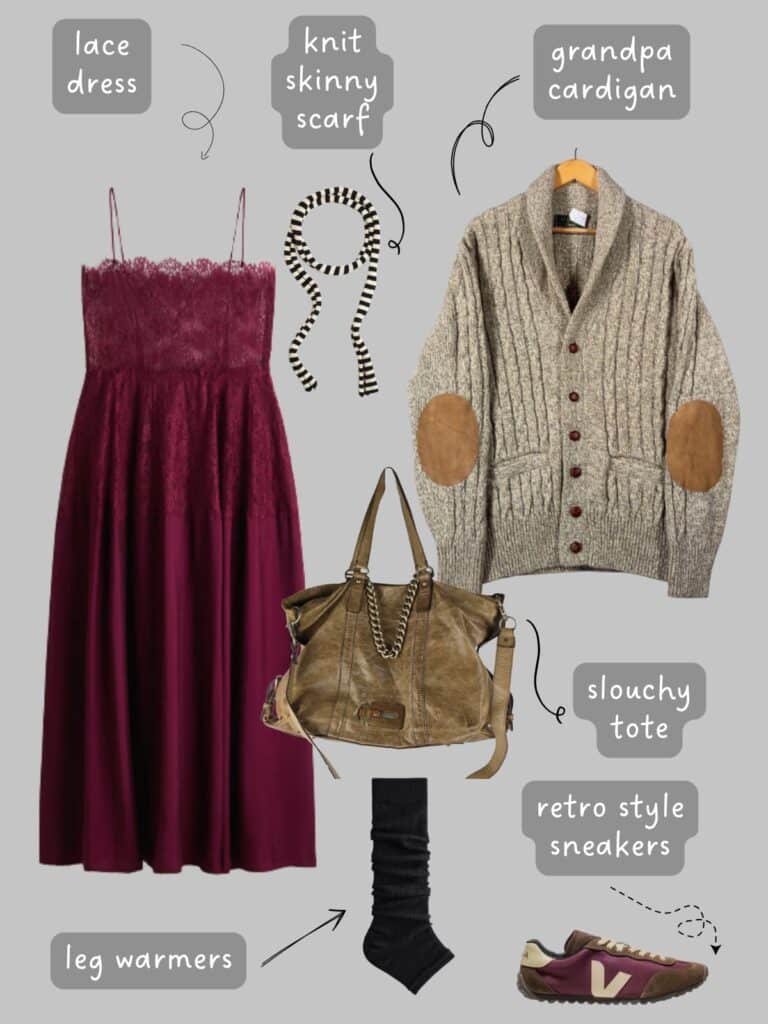
The lace dress carries its own history of expectation. A dress like this is usually assigned an occasion and told to wait quietly for it. We all have these dresses in waiting.
Here, it is allowed to have a more complicated life. It can disappear beneath the camel coat, be steadied by a patched grandpa cardigan or grounded with the burgundy-and-brown sneakers.
Layered over a fitted velvet mock neck, it moves away from delicacy and toward something moodier and more deliberate. The dress is still romantic, but it is no longer auditioning to be admired.
This distinction matters. The Understudy does not reject beauty because beauty has been used against women. She just refuses to make beauty her full-time employment.
The Clothes Worn While the Work Is Happening
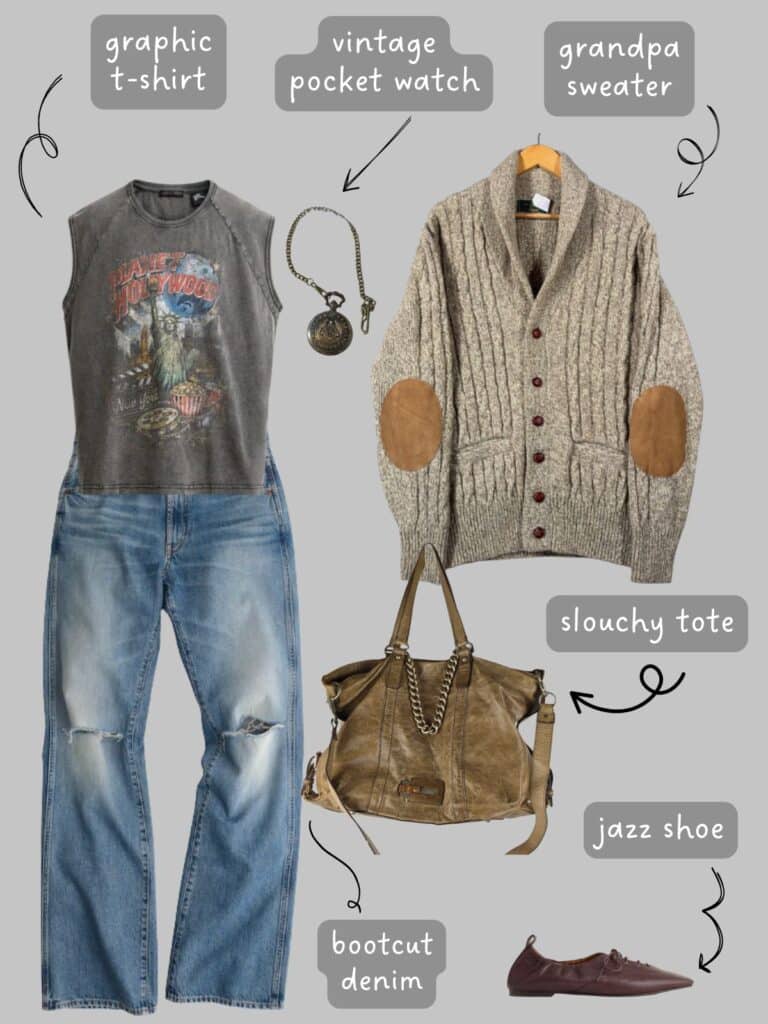
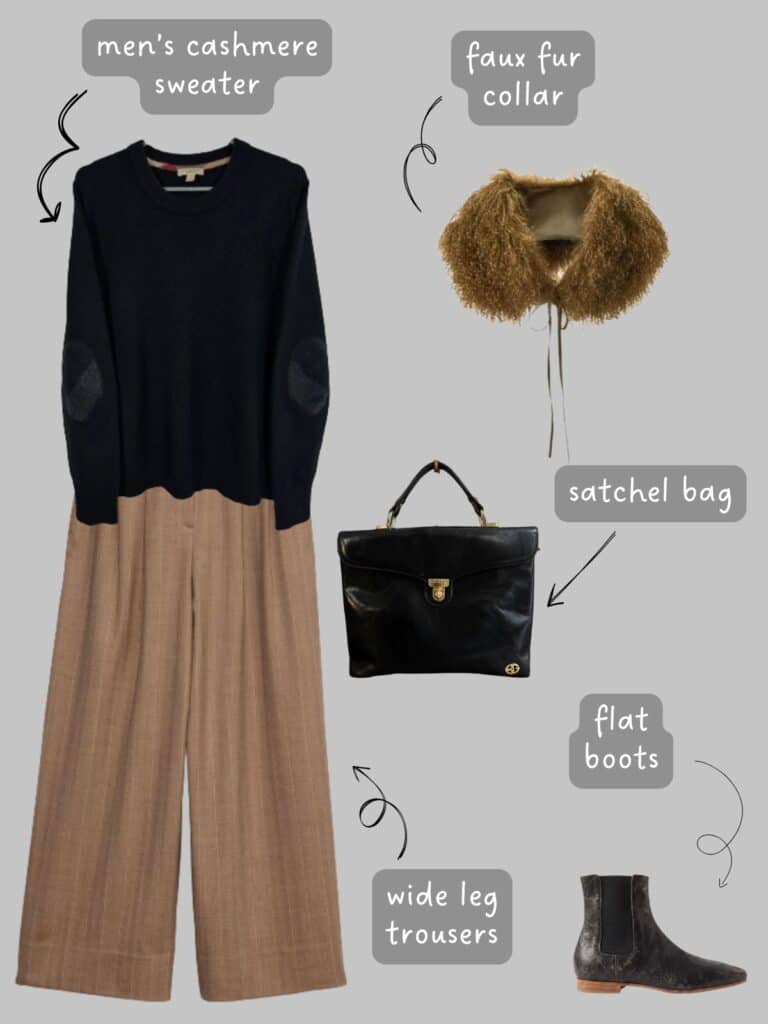
Every theatrical wardrobe needs the pieces that never appear beneath the lights. The soft grey plunging V-neck knit, the elbow-patched cardigan, the black leg warmers, and the distressed jeans create the capsule’s rehearsal language.
They are comfortable without being blank, worn without appearing neglected. Their texture tells us that this woman has been doing something before we arrived.
The paint-spattered black jeans are especially important. They look as though she may have helped build the scenery after discovering that everyone else was mostly holding clipboards.
They do not exist to be the sensible bottom that obediently matches every top. They bring evidence, friction and a little dirt into the story.
The faded blue jeans perform a similar job more quietly. They let the velvet jacket, romantic blouse or theatrical collar enter ordinary life without turning Tuesday afternoon into a concept shoot.
This capsule may have a narrative, but the person wearing it still has errands, appointments and groceries to carry home. Apparently, even women who have outgrown the production need to buy milk.
The cardigan and black sweater contribute a different kind of authority. Elbow patches can veer toward costume when everything around them is equally academic, but here they feel practical and accumulated.
The oatmeal cable knit has the warmth of a garment kept in a drafty dressing room; the black sweater is more anonymous and severe.
Both can soften the lace dress, settle the graphic tee or sit beneath the camel coat in layers that look assembled through use rather than planned in a single enthusiastic shopping session.
Midlife Style After the Casting Notice Changes
Women are taught to understand visibility as a form of power, then given a version of visibility that depends heavily on youth.
When that attention begins to shift, the experience can be genuinely disorienting.
It would be dishonest to pretend otherwise. There can be grief in realising that the world is responding to you differently, especially when you have spent decades absorbing the message that being looked at is one of the primary ways a woman knows she is still present.
But attention and authority are not the same thing.
The freedom of midlife is not that you suddenly stop caring what anyone thinks and begin wearing a series of enormous hats while speaking exclusively in devastating one-liners.
That sounds enjoyable, but most transformations are less cinematic.
The change is often incremental. You notice that a rule no longer applies because you have stopped applying it.
You wear the dramatic jacket during the day. You keep the comfortable shoes on with the dress. You allow your body to take up its current amount of space without treating it as a temporary administrative error.
The Understudy dresses from that place.
Her wardrobe is not trying to restore her to a former role. The lace does not make her girlish; the distressed denim does not make her young; the camel coat does not make her appropriately mature. Each piece has been released from its casting.
This is why the capsule can hold a romantic ivory blouse with extravagant cuffs, a sleeveless tourist tee, a velvet mock neck and a deep V grey knit without forcing them into a single conventional aesthetic.
They represent different selves, but not false ones. A woman in her forties has already been many people.
Expecting her wardrobe to tell one clean story would require considerable editing and, frankly, the loss of most of the better scenes.
The Shoes Know Which Scene They Are In
The footwear gives the wardrobe its rhythm. The pointed black lace-up boots are the performance pair: elegant, historical and just severe enough to suggest that their wearer has notes.
The simple black ankle boots are for the working hours, capable of disappearing beneath jeans or bringing the lace dress back to earth.
The soft burgundy lace-ups resemble rehearsal shoes without becoming literal ballet slippers. They look collapsible, private and slightly eccentric, as though they were found beneath a chair after everyone else had left.
Then there are the burgundy-and-brown sneakers.
They are essential precisely because they decline the mood. Their colours connect to the velvet, lace, camel and worn leather elsewhere in the wardrobe, but their purpose is refreshingly ordinary.
They belong with the distressed jeans and cardigans, naturally, yet they become most expressive beside the wide trousers, tuxedo jacket or lace dress. The expected shoe is perfectly obvious.
The Understudy has selected another one.
That choice is self-direction, not rebellion staged for an audience.
Accessories from the Costume Room
The accessories should feel discovered rather than coordinated. A brown leather belt with a simple brass buckle looks like something that has served several roles.
The striped knitted skinny scarf introduces graphic disruption and a faintly bohemian note, while the shaggy detachable collar can transform the camel coat, tuxedo jacket or plain cardigan with the speed of a costume change.
The vintage pocket watch is the personality piece. Was it her grandfather’s, or did she spy it in a vintage shop and need to have it? This one is actually Dungeons and Dragons, which tells even more of a story about the wearer.
The structured black leather satchel bag is particularly good for this character. It suggests scripts, contracts, notebooks and competent private business.
Against the worn jeans or sneakers, it loses its seriousness and becomes the bag of a woman who remembers everything.
The remaining bags can extend the narrative in opposite directions: one softened leather or heavy canvas carryall for the working life, and one small vintage evening bag in velvet, satin, tapestry, beads or tarnished metal for the world beyond it.
One holds the spare shoes. The other barely holds a key. Both are necessary.
These details prevent the capsule from becoming a collection of basics decorated with one dramatic item. Every accessory can alter the role of the clothes around it.
The shaggy collar changes the coat. The striped scarf breaks up the sober tailoring. The evening bag makes distressed denim feel intentional. Nothing is merely finishing the outfit; it is changing the scene.
Personal Style Does Not Require a Final Role
We often discuss finding personal style as though it were a casting process. After enough experimentation, we imagine, the correct identity will reveal itself.
We will discover our three adjectives, buy the corresponding trousers and finally stop being confused in fitting rooms. From then on, every purchase will support the role, and our wardrobes will proceed with the efficiency of a very tasteful regional theatre.
Real style is rarely that resolved. It is made from former selves, inherited pieces, practical compromises, sudden attractions and garments we bought for lives that did not happen.
It changes when bodies, budgets and circumstances change. It contains contradictions because people do.
The Understudy makes those contradictions visible. Her wardrobe is romantic and masculine, formal and worn, theatrical and ordinary.
She can appear to be leaving rehearsal, arriving at a performance or avoiding both in favour of a bookstore. She does not need to decide which version is the authentic one.
Authenticity is not a single role performed consistently. It is the freedom to move among them without being told to or having to ask permission first.
Claiming that freedom in midlife is hugely impactful.
By forty, most women have gathered enough evidence to know that a finished identity was always a fiction.
We have changed careers, bodies, relationships, politics, ambitions and definitions of a good life. We have outlived versions of ourselves we once considered permanent.
The unresolved wardrobe is not proof that we have failed to find ourselves, but proof that we are still alive.
Perhaps She Has Outgrown the Production
The Understudy is not a woman waiting for someone to become ill or have an emergency so she can finally have her moment.
She is not standing obediently in the wings, grateful to have remained in the building. That interpretation still gives all the power to the casting director.
She is a woman who has reached the age at which society assumes her most important scenes have already happened.
From her new position, however, she can see the artificiality of the arrangement.
Youth was never the same thing as relevance. Visibility was never the same thing as power. Being chosen was never the same thing as having authority over your own life.
Maybe she will step beneath the lights when the opportunity arrives. She knows the role, after all. But she may change the lines. She may wear the wrong shoes. She may discover that the character everyone considered secondary has the only interesting point of view.
Or perhaps she will take the velvet jacket, put on the sneakers and leave through the stage door before anyone remembers to stop her.
Perhaps she has not lost the leading role. Perhaps she has just outgrown the production.
The Understudy Fall Outfit Ideas
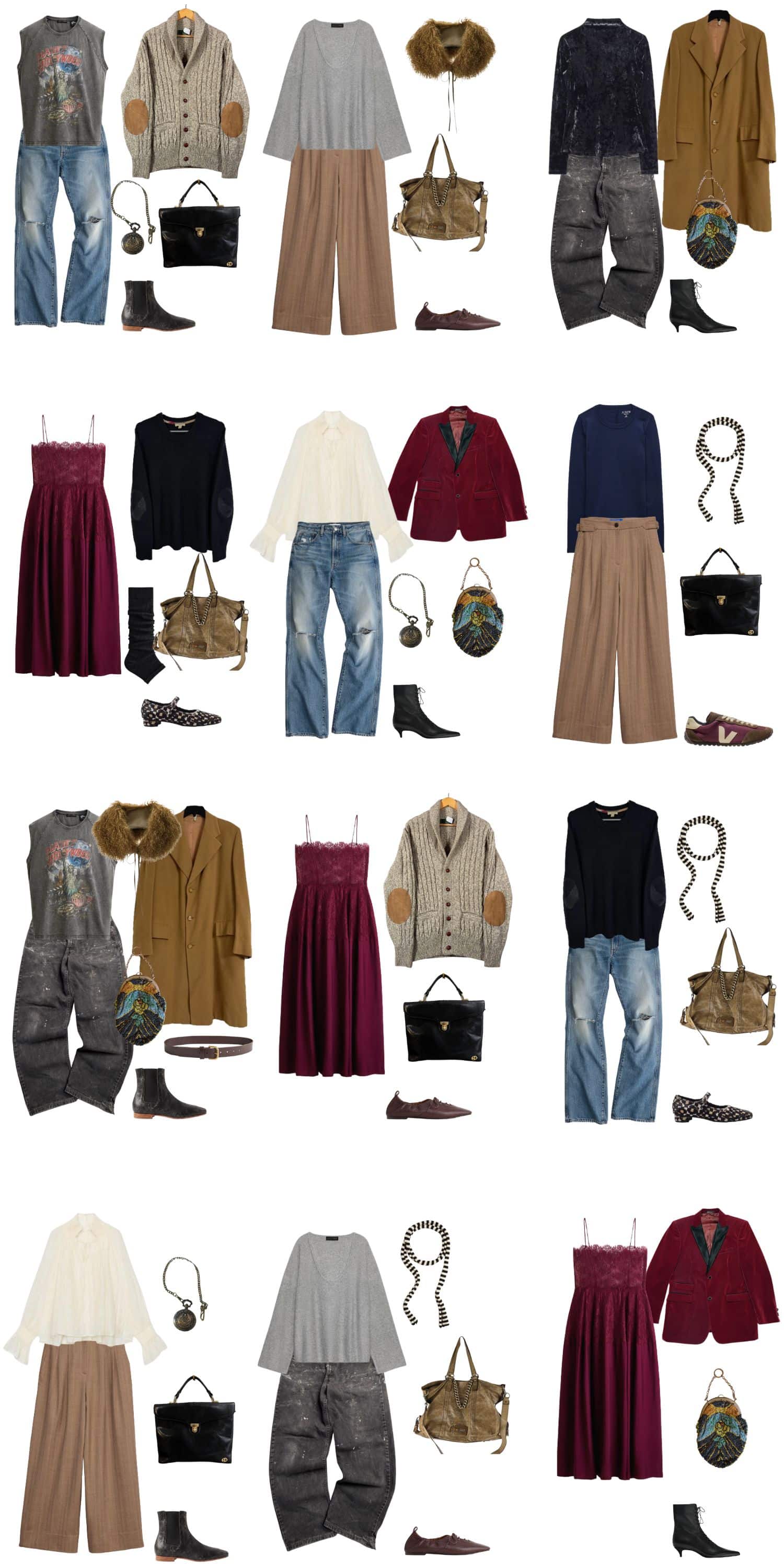
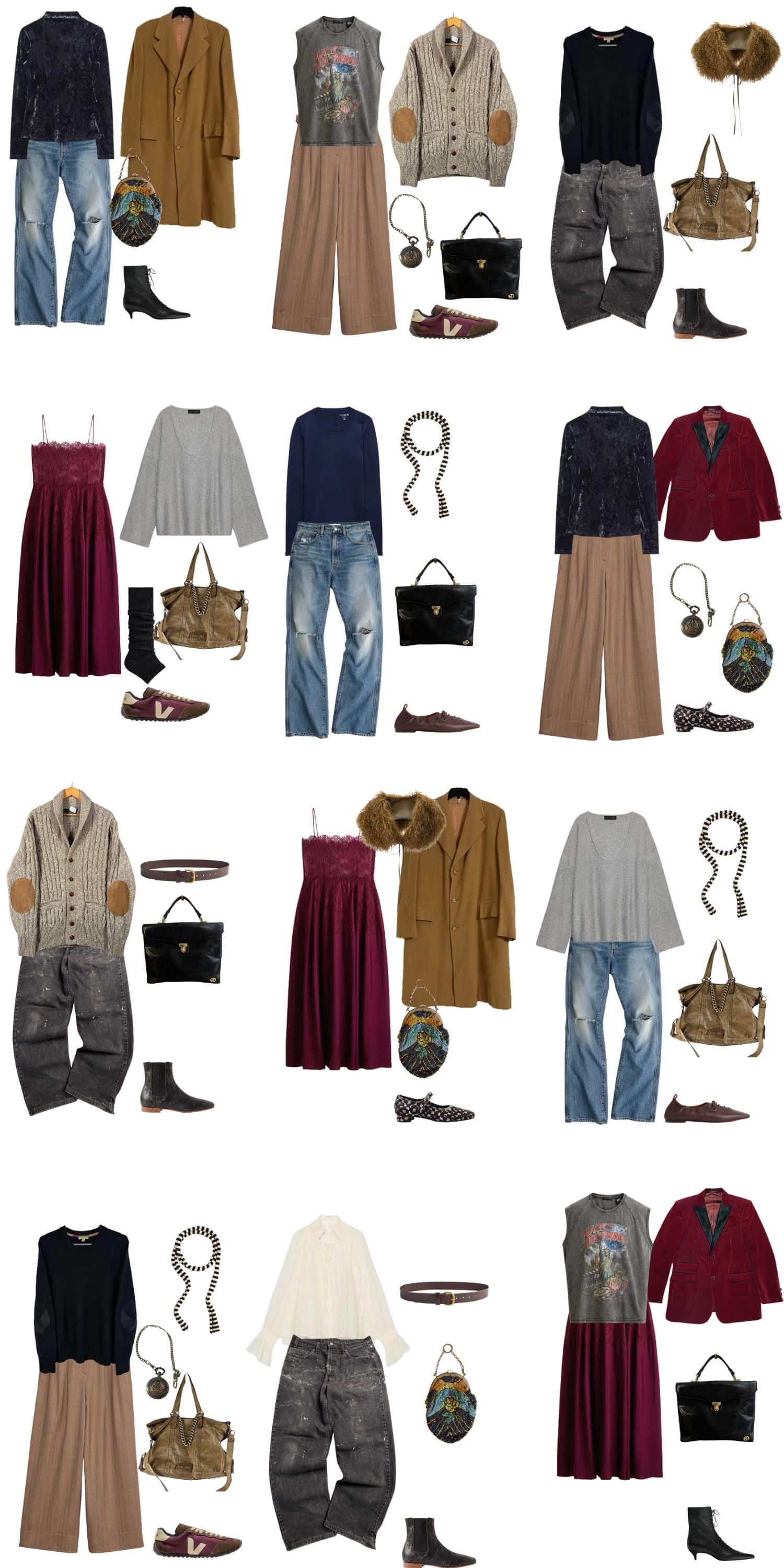
Graphic Shirt | Bootleg Denim | Heeled Boots | Black Satchel Bag | Camel Coat | Mary Janes | Velvet Smoking Jacket | Sneakers | Antique Beaded Bag | Burgundy Dress | Black Sweater | Grey V-neck Sweater | Faux Fur Collar | Lace Blouse | Grandpa Cardigan | Striped Knit Skinny Scarf | Brown Belt | Velvet Mockneck | Paint Splatter Jeans | Leg Warmers | Navy Blue Long Sleeve | Wide Leg Pants | Tan Slouchy Bag | Vintage Pocket Watch | Jazz Shoes | Flat Black Boots
SHOP THE UK LINKS
This post contains affiliate links. By using my links to shop I may receive a small commission (at no cost to you). Thanks for supporting what I do