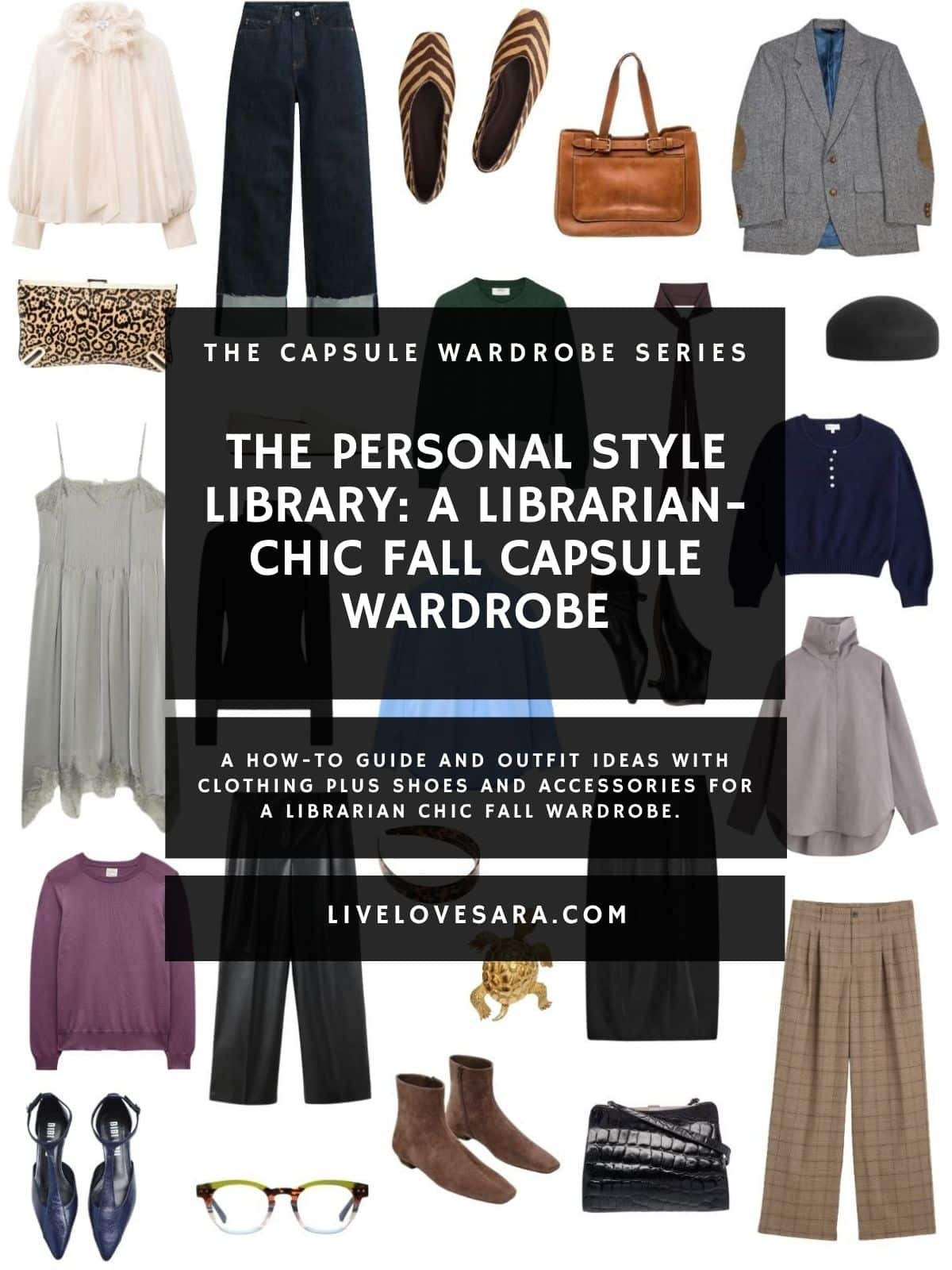
TL;DR
Librarian chic might be having a fashion moment, but the most interesting thing about it is the philosophy behind the library itself: collect slowly, keep what matters, return to old favourites, make room for strange discoveries, and stop assuming everything needs to be replaced simply because it’s no longer new. This fall capsule takes the visual language of librarian style and uses it as a starting point rather than a costume, building a wardrobe that feels intelligent, personal, slightly eccentric, and collected over time.
Before I start, I want to give you a bit of background on how this came about. There was a period of my life when I thought I might become a librarian.
Technically (way back in 1999), I wanted to work in a museum, which is what I went to college for originally, but my program required me to take some library courses along the way.
I had no idea that those two degrees had that much crossover, but after taking the courses, it made sense.
Somewhere between cataloguing systems, archives, preservation, and learning how information gets organised so that another human being can actually find it again, I realised that library work appealed to me too and was a viable alternative to museums.
I actually would still love to, but it doesn’t feel like an attainable goal right now. And I am not getting any younger, nor do we have the finances to go back to school. Thanks, Doug Ford, for fucking with OSAP.
So, there is an alternate version of my life where I work in a library or a slightly chaotic independent bookstore, wear excellent cardigans, recommend obscure books to people who might or might not have asked, and quietly judge anyone who dog-ears a borrowed book.
Which sounds quite nice.
So when librarian chic started making its way back into the fashion conversation, ie, trending for fall. I knew I was going to be susceptible to it.
Fall helps. Fall is practically propaganda for anyone who likes books.
The first cool morning arrives, and I want to wear relaxed wool trousers, old leather, enormous sweaters, and carry around several novels.
Please note that these are actual physical copies because we are collecting books now, ever since the news circulated that they were cutting them up to be fed into the ai machine.
Keeping physical copies is one small way we can fight back.
I will also optimistically hope that I have time to read them, but even if I don’t, I am still carrying around the fucking book.
Beyond the usual seasonal fantasy, there is also something about librarian chic that feels right.
The fashion version of librarian chic is inevitably going to be sold to us as another aesthetic to adopt.
But the actual philosophy of a library suggests we should do almost exactly the opposite.
Librarian Chic Is Having a Moment. You Don’t Have to Become a Librarian.
We don’t want to fall into another whole trendy aesthetic trap because there is always another aesthetic waiting around the corner.
Some of them are fun. But sometimes I wonder whether we have forgotten that it is possible to wear a sweater without first assigning ourselves a fictional occupation.
Librarian chic could easily fall into the same trap.
You could reduce it to a shopping list: cardigan, pleated skirt, loafers, glasses, tweed blazer, sensible handbag.
Buy those things, and apparently you have acquired an aesthetic. Except that isn’t really personal style. It’s costume design.
There is nothing wrong with enjoying an aesthetic or borrowing from one. Clothes are supposed to be enjoyable. I am certainly not going to stand between anyone and a beautiful tweed jacket.
Hell, there is tweed in this wardrobe.
But I think the better question is not, How do I dress like a librarian? But maybe try, what can the idea of a library teach me about building a wardrobe?
The answers to these questions will give you different outputs.
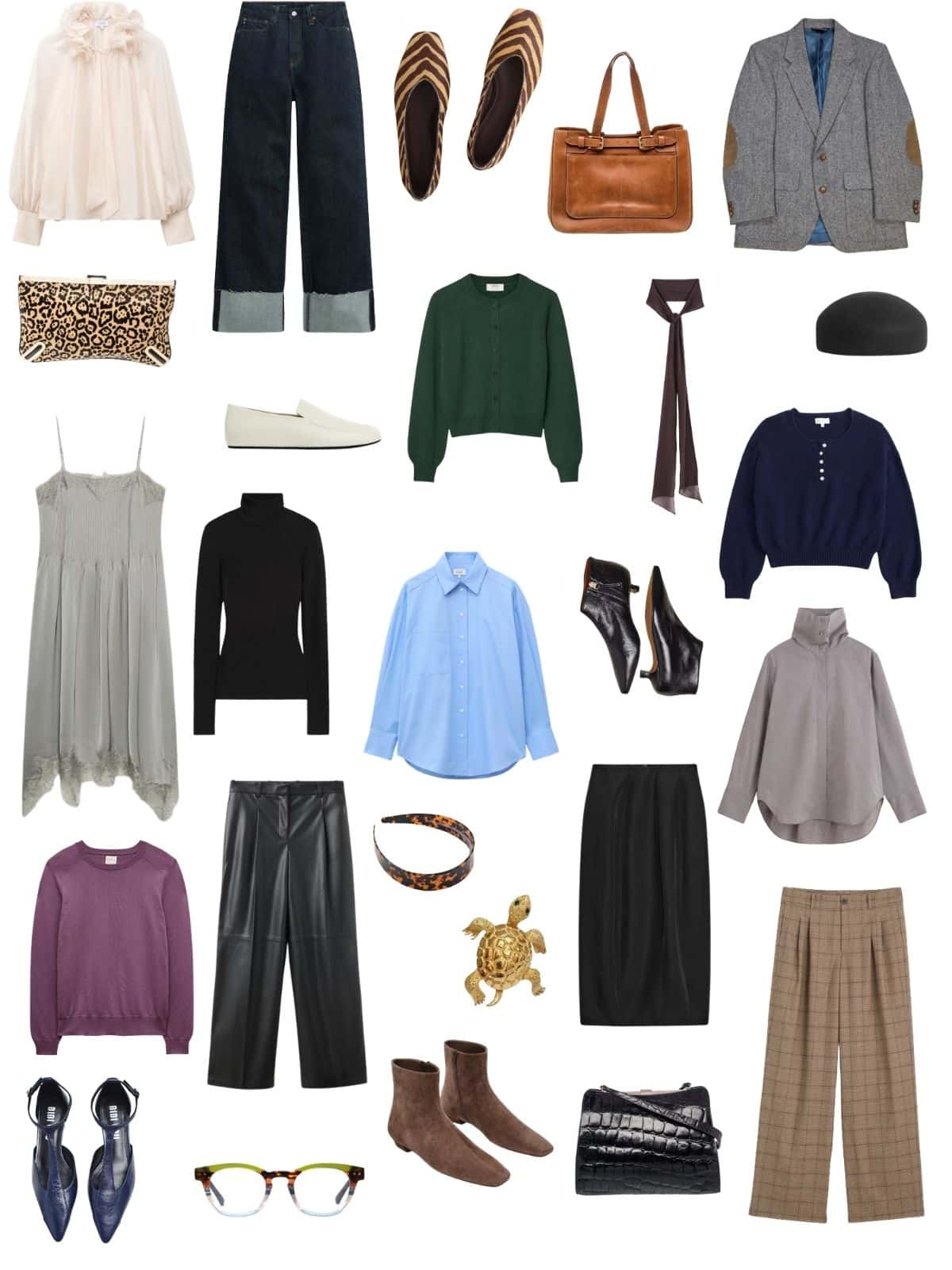
Ruffle Neck Blouse | Dark Denim | Animal Print Flats | Cognac Bag | Tweed Blazer | Sculpted Hat | Navy Blue Sweater | Skinny Scarf | Green Cardigan | White Loafers | Animal Print Clutch | Camisole Dress | Turtleneck | Blue Button Up | Black Booties | Funnel Neck Button Up | Barrel Skirt | Turtle Brooch | Headband | Leather Trousers | Purple Sweater | Navy Kitten Heels | Glasses | Brown Boots | Black Bag | Brown Check Trousers

Build a Wardrobe Like a Library, Not a Store
A store is designed around turnover, and a library is designed around keeping things.
That difference feels increasingly radical.
Fashion has trained us to think in seasons. New arrivals replace old arrivals. Trends become microtrends. Something you bought six months ago can be declared outdated despite remaining completely functional and, presumably, the same object it was when everyone desperately wanted it.
A library doesn’t operate that way.
A book published fifty years ago doesn’t have to compete with this week’s releases for to remain on the shelf.
Something old can sit beside something new. A classic can coexist with an obscure contemporary novel, a strange little reference book, a battered paperback, and something you picked up because you liked the cover.
Its value isn’t determined entirely by novelty, so imagine approaching your wardrobe the same way.
The blazer you’ve owned for fifteen years doesn’t need replacing because oversized blazers became fashionable and then slightly less fashionable and will undoubtedly become fashionable again before I’ve finished writing this sentence.
Your old boots can stay. The weird vintage blouse can stay. The men’s shirt you found secondhand that fits you better than anything from the women’s department can stay.
And the trousers you have worn four hundred times should probably stay as well.
A wardrobe doesn’t need constant turnover to remain interesting. Sometimes all it needs is better cataloguing.
Your Personal Style Is a Reference Section
One of the strange things about contemporary fashion is how frequently we’re encouraged to start over.
- Find your style.
- Reinvent your style.
- Discover your new aesthetic.
- Build your dream wardrobe.
- Start your capsule.
- Clean everything out.
- Begin again.
But most people with genuinely interesting personal style aren’t beginning again every six months. They’re referencing themselves.
They know what they return to.
Maybe you’ve been wearing men’s trousers since 1997. Maybe you’ve always loved striped shirts. Maybe you inexplicably acquire green handbags.
Or maybe every autumn you become convinced you need another enormous coat despite already owning enough outerwear to survive several different climates.
These repetitions aren’t failures of imagination, but instead see them as clues.
Personal style isn’t necessarily something waiting for you in the future once you finally buy the correct wardrobe. Much of it is already behind you.
It’s in old photographs. Former favourite outfits. Things you regret getting rid of. Things you bought ten years ago and still reach for. Clothes inherited from someone else. Vintage pieces that introduced you to an era or designer you’d never considered before.
Your wardrobe is already creating an archive, you just need to learn how to read it.
The Fall Wardrobe as an Archive
This is where librarian chic starts becoming genuinely useful rather than simply decorative.
Instead of asking what you’re supposed to buy for fall, look at what is already in circulation.
What comes back every year? What disappears into the wardrobe and never gets checked out?
What has earned permanent-reference status? What category seems strangely underrepresented? And what are you keeping purely because you feel guilty getting rid of it?
This isn’t minimalism. A library doesn’t contain twelve books because twelve books are enough.
It’s about intentional accumulation, and the distinction matters.
For at least the last decade, we have been told that responsible wardrobes must be tiny, perfectly coordinated capsules in tasteful neutral palettes.
But there is another way to consume thoughtfully: keep things for a very long time.
Own the weird coat. Keep the sentimental scarf. Buy the vintage skirt that isn’t particularly versatile but makes your heart beat slightly faster.
Repair the boots. Wear the sweater until the elbows become a structural concern.
Thoughtful dressing doesn’t require eliminating personality in the name of efficiency. It is just about becoming more selective with what deserves space on your shelf.
The Actual Clothes: What Does Modern Librarian Chic Look Like?
Now, having spent several paragraphs arguing that librarian chic shouldn’t become another shopping checklist, I would like to discuss tweed.
I contain multitudes.
The visual vocabulary of librarian style works so beautifully for fall because the fabrics themselves carry history. Tweed, wool, corduroy, leather, plaid, brushed cotton, silk, and fine knits feel better once they’ve been worn.
Can you feel my excitement when I listed those? I love dressing in fall.
This is not an aesthetic that requires everything to look immaculate; I actually think it gets more interesting when it doesn’t.
A slightly oversized men’s blazer can replace the perfectly fitted academic jacket. A soft cardigan can be buttoned over a blouse or worn underneath a coat.
Wool trousers can be wide and slightly puddled instead of straight-leg and ankle-length. A long or mid length skirt can be paired with chunky shoes instead of delicate ones.
The clothes should look like they belong to someone who has been accumulating them rather than someone whose entire wardrobe arrived yesterday.
Think charcoal, chocolate brown, camel, black, cream, olive, oxblood, navy, and deep burgundy as a foundation. Then allow something stranger into the stacks: mustard socks, a red shoe, a patterned scarf, an odd brooch, a bright bag, a sheer blouse, a slightly ridiculous belt.
Because librarian chic doesn’t have to mean quiet. Libraries contain some extremely weird things.
Your wardrobe is allowed to as well.
A Librarian-Chic Fall Capsule Without the Costume
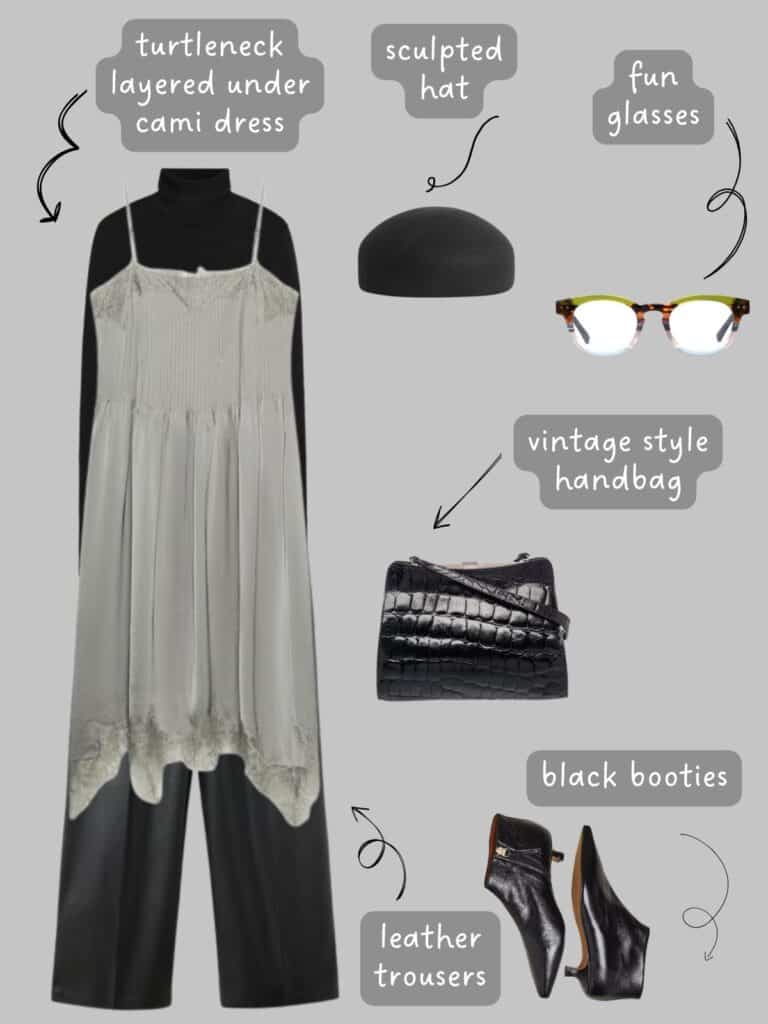
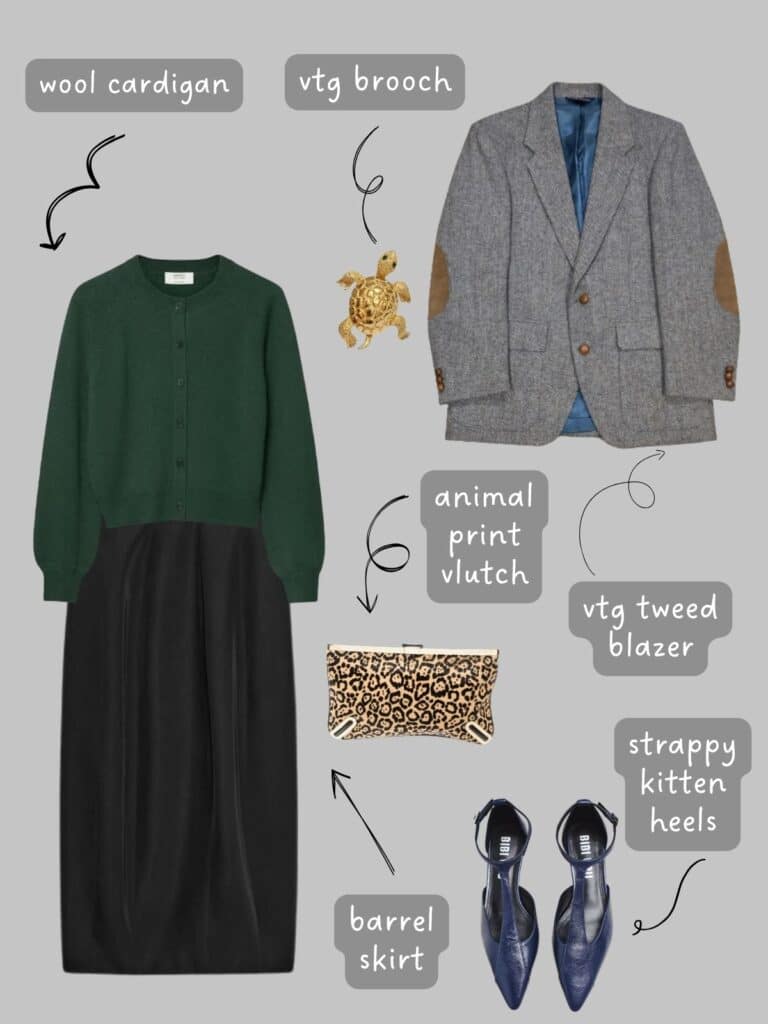
If I were building this particular fall capsule, I’d start with a few specific pieces, but I wouldn’t treat them as commandments. They’re categories worth looking for in your existing wardrobe first.
A good foundation might include a tweed or wool blazer, a cardigan, a knit, a men’s-inspired button-down, a slightly romantic blouse, wide wool trousers, a relaxed pair of everyday trousers or dark jeans, a skirt, perhaps something pleated or plaid, an interesting dress or long tunic, maybe a sweater vest, a practical fall jacket or trench, or a substantial coat.
This list is just suggestions, and what matters is the tension between them.
Too many obviously “academic” pieces worn together and suddenly we’re in costume.
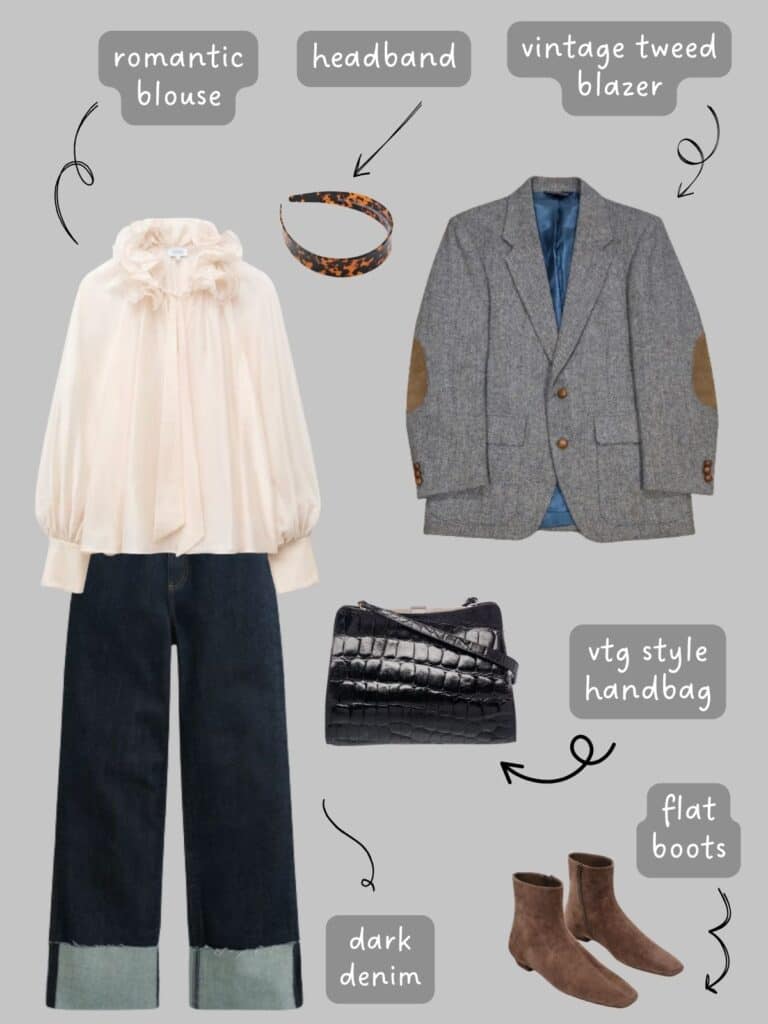
So break things up. Wear the tweed blazer with faded denim. Put the romantic blouse under an enormous cardigan.
Wear men’s trousers with a fitted knit. Pair the pleated skirt with something oversized.
Let the sensible coat sit over a slightly odd outfit.
That’s where personal style enters.
The Shoes Should Look Like They’ve Been Somewhere
Librarian chic is an excellent excuse for good fall shoes, which is reason enough to support the movement.
Loafers are obvious but not mandatory. An oxford works as well if that is your preference.
If you opt for loafers, they don’t have to be pristine penny loafers. Chunky loafers, men’s loafers, vintage pairs, square toes, strange colours, and slightly battered leather all work.
I’d also consider lace-up shoes, Mary Janes, tall boots, ankle boots, and one shoe that feels slightly wrong.
The wrong shoe is important.
Maybe it’s a sneaker with the wool trousers. Maybe it’s a bright Mary Jane underneath a serious skirt. Maybe it’s a heavy boot with something delicate.
Wrong will vary based on personal taste.
An outfit where everything belongs perfectly to the same aesthetic can look beautiful. But an outfit where one thing doesn’t quite belong can look like you.
Bags, Scarves, Brooches and Other Things Found in the Stacks
Accessories are where I would let this capsule become eccentric.
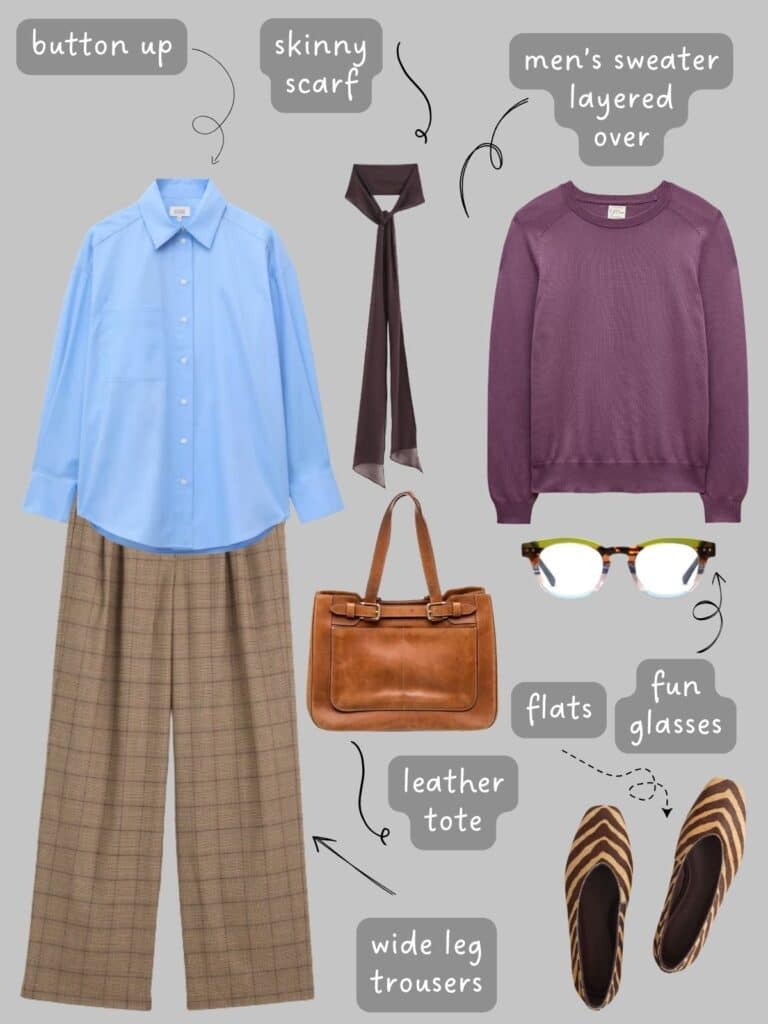
An old leather satchel is wonderful, obviously, but so is an unexpectedly modern bag against traditional clothes. A structured top-handle bag, slouchy leather tote, strange vintage purse, or colourful shoulder bag can stop the wardrobe from becoming too literal.
Scarves are practically compulsory, but again, they don’t need to behave themselves. Silk, wool, paisley, stripes, something inherited, something thrifted, something that looks vaguely like it came from the gift shop of a European museum in 1987.
Brooches suddenly make sense here too.
So do watches, belts, interesting glasses, mismatched jewellery, signet rings, old necklaces, and things that seem to have acquired a mysterious backstory whether they actually have one or not.
These are the wardrobe equivalent of marginalia. They tell you who owned the book.
Why Secondhand Shopping Fits Librarian Chic So Well
There may be no aesthetic better suited to secondhand shopping.
Not because you need vintage clothes to achieve it, but because librarian chic actually benefits from inconsistency.
A brand-new matching set can look lovely, but a jacket from one decade, trousers from another, a contemporary knit, old leather shoes, and a bag found at a thrift store create something that can’t be replicated by buying the mannequin.
And that’s the point.
Secondhand shopping removes you from the current season.
You aren’t restricted to whatever silhouette, colour, or fabric retailers decided everyone should want this month. You’re shopping across decades.
It’s basically interlibrary loan for clothes. Except you don’t have to give anything back.
The thrift store allows a 1990s blazer, a 1970s skirt, a contemporary men’s shirt, and a pair of shoes from who knows when to exist on the same rack.
That’s how wardrobes start developing texture.
Not Everything in the Collection Needs to Be Important
One thing I love about the library metaphor is that it leaves room for ordinary clothes.
Personal style conversations sometimes make every purchase sound incredibly consequential.
- Investment piece
- Forever piece
- Wardrobe hero
- Iconic staple
Sometimes a sweater is just a sweater.
Libraries contain masterpieces, but they also contain repair manuals, cookbooks, outdated travel guides, paperback mysteries and books somebody checked out because they needed to know how to fix a toilet.
A wardrobe needs mundane things too.
- The black trousers that work
- The cotton shirt
- The boring sweater
- The shoes you can walk in
Not everything needs to express the deepest recesses of your identity. The practical pieces are what allow the strange ones to exist.
Deaccessioning: The Clothes That Can Leave
Libraries don’t keep absolutely everything forever either.
Occasionally things are removed because they’re damaged, redundant, outdated, or simply no longer useful to the collection.
Wardrobes need this too.
But there’s a difference between removing something because it genuinely no longer serves you and removing it because the internet declared it dated.
Before getting rid of something, ask a better question than: Is this still in style?
Ask whether you still like it.
- Whether it fits your life
- Whether you would choose it again
- Whether it connects to anything else in your wardrobe
- Whether seeing it makes you want to wear it
Sometimes the answer will be no, and that’s fine.
Personal style isn’t about preserving everything you’ve ever owned like a fashion archaeological site.
It’s about knowing the difference between something you’ve outgrown and something you’ve merely been told to stop liking.
Back-to-School Without Reinventing Yourself
Maybe that’s why this idea feels particularly good for fall. Back-to-school season has always carried the promise of reinvention.
New notebooks. New shoes. New timetable. New year.
Perhaps this time you will become the person who uses a planner consistently.
History suggests otherwise, but hope springs eternal.
But regardless, it was all so very exciting. Maybe it was also because we went back to school shopping, and that shopping trip laid out what your wardrobe was going to be like for the rest of the year, so you needed to make sure you made good choices.
Because fashion taps into the same impulse every September. A new season arrives, and suddenly we’re supposed to reconsider everything.
But adulthood gives us the luxury of approaching that feeling differently.
You Don’t Need Another Aesthetic. You Need a Better Archive.
So yes, I am embracing librarian chic this fall.
I want the tweed.
I want the oxfords.
I want the cardigans, wool trousers, enormous coats, old leather bags, strange brooches, so maybe I give off the impression that I might know exactly where to find the book you’re looking for if you happen to bump into me in a library or bookstore.
But I think that I’m less interested in becoming a librarian aesthetic than I am in borrowing the librarian’s approach.
- Keep what is useful
- Preserve what matters
- Learn from what came before
- Make space for new discoveries
- Don’t confuse newness with value
And don’t throw out a perfectly good classic simply because it has been sitting on the shelf for a while.
The best wardrobes, like the best libraries, aren’t built all at once. They’re accumulated.
Librarian Chic Fall Outfit
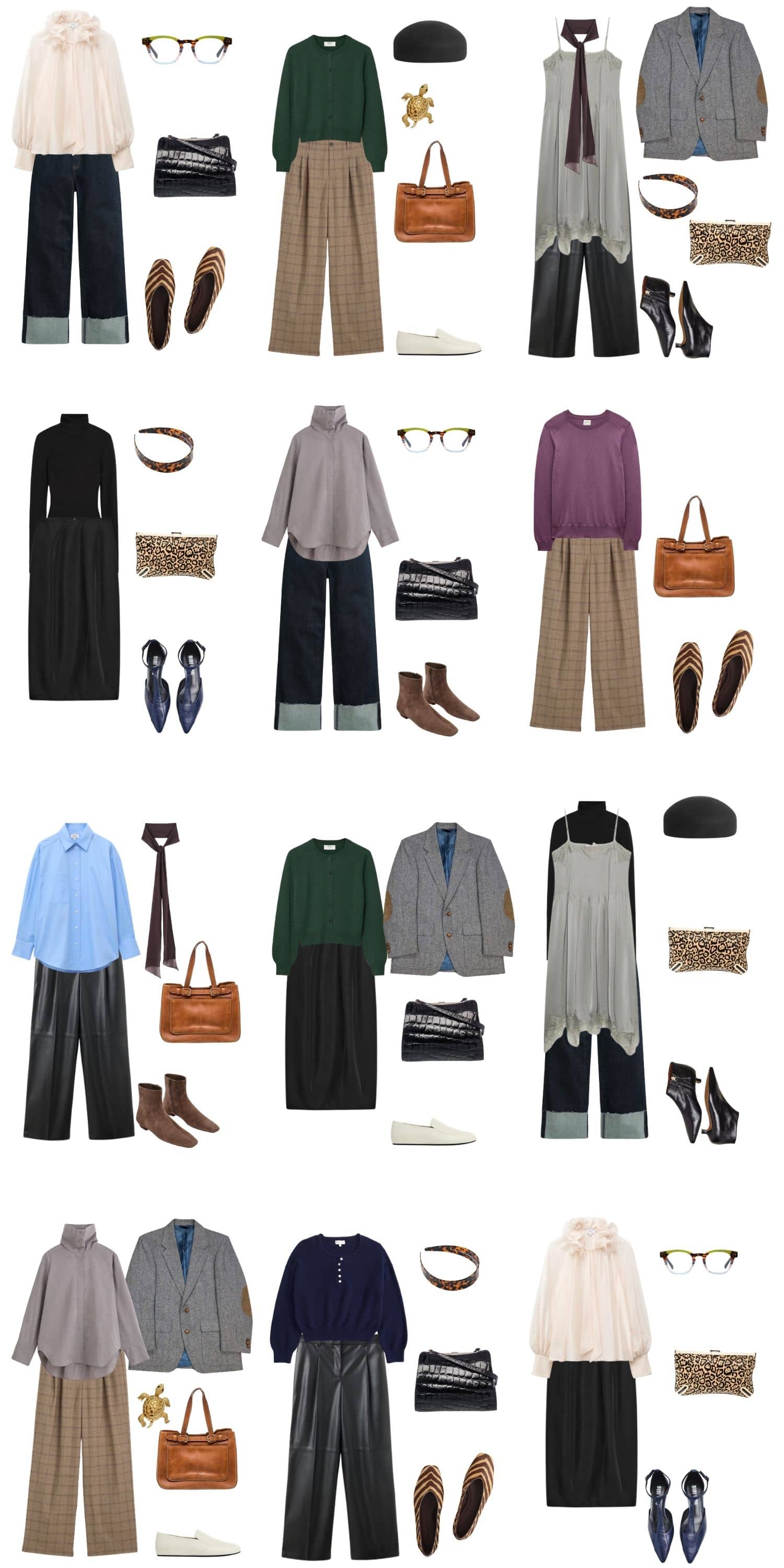
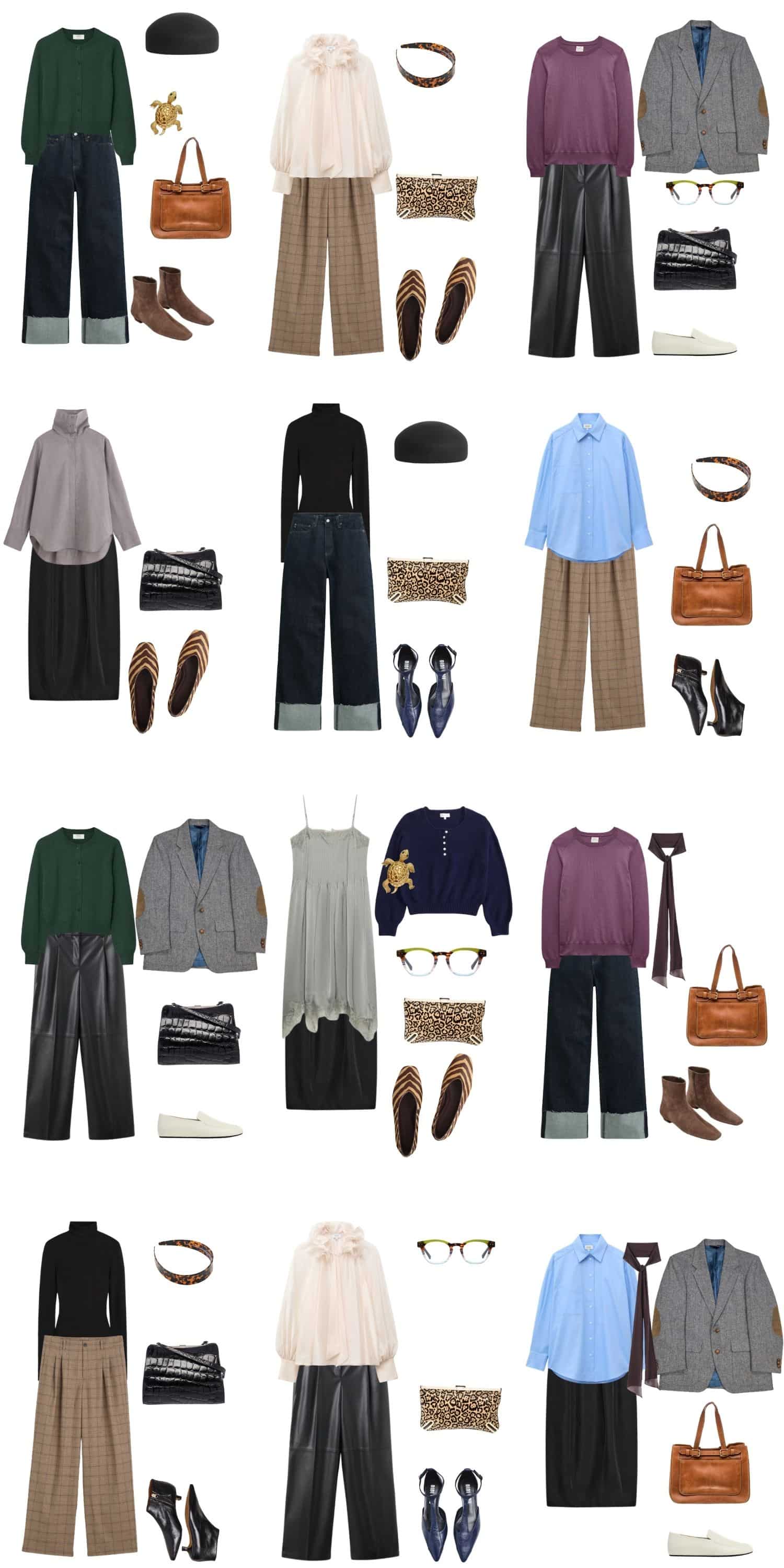
Ruffle Neck Blouse | Dark Denim | Animal Print Flats | Cognac Bag | Tweed Blazer | Sculpted Hat | Navy Blue Sweater | Skinny Scarf | Green Cardigan | White Loafers | Animal Print Clutch | Camisole Dress | Turtleneck | Blue Button Up | Black Booties | Funnel Neck Button Up | Barrel Skirt | Turtle Brooch | Headband | Leather Trousers | Purple Sweater | Navy Kitten Heels | Glasses | Brown Boots | Black Bag | Brown Check Trousers
SHOP THE UK LINKS
This post contains affiliate links. By using my links to shop I may receive a small commission (at no cost to you). Thanks for supporting what I do