
TL;DR
A summer capsule built around the beatnik aesthetic with sleeveless black tops, cigarette pants, stripes, a slip dress, vintage denim, slouchy bags, dark sunglasses, and hats. The palette is black, off-white, olive green, brown, tan, and navy. The energy is poetry reader. The argument is that intellectual dressing resurfaces every time mainstream aesthetics become too loud, and right now they are very loud.
We are now on the other side of spring, where the days are getting hotter and my existential dread of the heat and humidity is definitely here and making me grumpy.
I have never been one to embrace the heat, and looking at a rack of neon bikini sets and printed linen coordinates does not make me feel excitement; it makes me feel despair.
Every summer, fashion seems to assume that we are all living the same life.
Apparently, we are spending our days wandering through lavender fields in a white linen dress, carrying a basket of peaches, and smiling at absolutely nothing.
I don’t know who these women are.
Personally, I spend most of summer trying to avoid direct sunlight while wondering why every store suddenly believes I want to dress like the tablecloth at an Italian restaurant.
This is why I kept coming back to the idea of the beatnik. Not the black turtleneck in 35-degree weather version. The spirit of it.
The beatniks were never interested in fitting in. They weren’t trying to become the best possible version of themselves.
They weren’t creating vision boards. They weren’t waking up at 5 a.m. to journal their gratitude while drinking mushroom coffee.
They were artists, writers, intellectuals, and generally the sort of people who looked at mainstream culture and thought, “No thank you.”
I find that energy relatable.
The beatnik aesthetic, if we are being historically generous with the term, did not emerge because people in 1950s Paris and Greenwich Village were simply very into black.
It emerged because a significant portion of the creative class had decided, more or less collectively, that mainstream culture had become aggressively unbearable, and that dressing like a minor character in an existentialist novel was a reasonable response to this.
They were not wrong. They were also frequently wearing berets unironically, which we will not be revisiting.
Black clothing, striped shirts, simple silhouettes, secondhand pieces, and an overall appearance that suggested they were more interested in ideas than appearances.
Whether that was entirely true is another discussion.
But the aesthetic remains compelling because it wasn’t built around trends. It was built around identity.
And in a world where trends now seem to have a life expectancy shorter than a carton of milk, that feels surprisingly refreshing.
The modern beatnik isn’t necessarily a poet living in a tiny apartment with a typewriter.
She might be a woman in her forties who has become increasingly suspicious of anything described as “must-have.”
She might own three black linen shirts and feel absolutely no guilt about it.
She may spend more money at used bookstores than at Sephora.
She may have reached the stage of life where dressing for herself has become significantly more interesting than dressing for approval.
If any of this sounds familiar, welcome. Pull up a chair.
Let’s build a summer wardrobe.
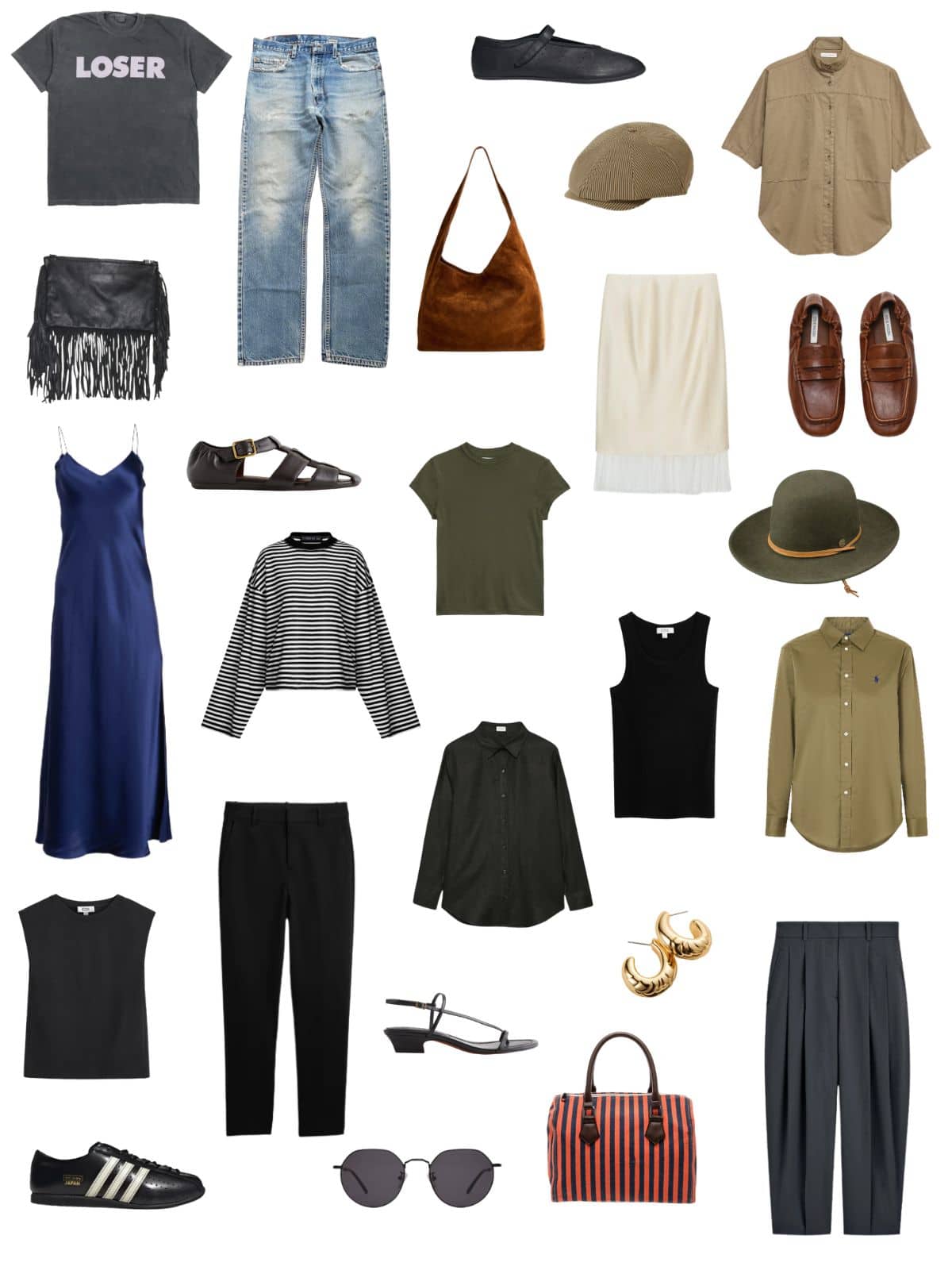
Loser T-shirt | Vintage Levis | Brown Suede Bag | Black Sneakerinas | Tan Cap | Khaki Short Sleeve Button Up | Brown Loafers | Olive Green Hat | Cream Midi Skirt | Green T-shirt | Fisherman Sandals | Fringe Clutch | Navy Slip Dress | Striped Shirt | Black Linen Button Up | Black Tank | Green Button Up | Grey Trousers | Earrings | Striped Bag | Round Sunglasses | Heeled Sandals | Cigarette Pants | Sleeveless T-shirt | Sneakers

The Philosophy: Dressing Like You Have an Inner Life
One of the reasons I struggle with summer fashion is that it often feels very surface-level.
Fall fashion tells stories. Winter fashion has mood. Spring fashion has possibility.
Summer fashion sometimes feels like someone took all the interesting parts away and replaced them with sandals, and I hate sandals.
Instead of focusing on looking cheerful, let’s focus on looking thoughtful.
Or asking “What do I actually enjoy wearing?”, instead of “what is trendy?”
So let’s try to embrace character instead of chasing perfection.
A wrinkled linen shirt, a worn leather bag, a pair of old loafers that have seen some things…all of these have character.
This capsule is not polished in the traditional sense. It is interesting. And sometimes those are not the same thing.
Why It Keeps Coming Back
Creative and intellectual dressing resurfaces reliably during periods of cultural saturation, when there is simply too much of everything, when aesthetics have been algorithmically flattened into content, when every season produces a new micro-trend that lives for approximately eleven days before being archived.
The beatnik impulse is fundamentally anti-abundance.
It does not want more options. It wants the right things that you can wear to a café where someone is reading Simone de Beauvoir loudly enough that you can tell they want you to notice.
We are, by most measures, in one of those periods.
The visual landscape is exhausting in a way that is difficult to articulate without sounding pretentious, which the beatnik sensibility has always been comfortable with.
The Summer Problem (And How To Solve It)
The traditional beatnik uniform has a logistics issue in July. A wool turtleneck in 32 degrees is a commitment that goes beyond aesthetic philosophy into something closer to performance art, and not the good kind.
The modern adaptation is practical without being a compromise.
It’s for the woman who spends Saturday morning browsing used bookstores instead of buying another viral Amazon dress.
So when the heat comes around, we have to change things a bit. The silhouette stays. The weight changes.
The Colour Palette: Espresso, Paperbacks, and Slight Existential Fatigue
Most summer colour palettes start with coral, turquoise, sunshine yellow, or some variation of “Mediterranean vacation.”
This one starts with black. Not harsh black.
Soft black. Faded black. The black of a favourite band T-shirt that has been washed too many times.
Alongside that, I would add cream, charcoal, olive green, tobacco brown, navy, and the occasional stripe.
Think less tropical cocktail and more independent bookstore.
Less Amalfi Coast and more “accidentally spent four hours browsing the philosophy section.” Which actually sounds like a type of vacation to me.
The Wardrobe
What you actually need:
An oversized linen button-up is practically mandatory. Preferably one that looks slightly rumpled no matter what you do. Accept this. It is part of its charm.
Two black tops, one with a clean neckline, one with something slightly more interesting happening structurally. Maybe one of those being a fitted black ribbed tank that works both tucked into the cigarette pants and under an open shirt, because versatility is not a betrayal of the aesthetic.
A pair of well-fitting black cigarette pants. One pair of trousers with a wider silhouette in off-white, ecru or grey, for the days when full black reads more sauna than statement.
A classic striped top, the one item on this list that requires no justification and has required no justification since approximately 1955.
A simple long dress that works alone in the heat, over a fitted turtleneck in September when you are feeling optimistic about autumn, or under an open linen shirt when you cannot commit to either.
A midi skirt provides an alternative to shorts for those of us who remain unconvinced that shorts are the answer to every summer outfit problem.
Something with enough drape to move but enough structure to not look like you lost a fight with your laundry.
For occasions that require slightly more effort like a dinner, an opening, a work thing that has not yet been cancelled, a simple skirt or a clean slip dress does the job without introducing new colours or requiring new shoes.
The beatnik wardrobe scales up through proportion and fabric rather than formality. A silk or satin-finish top with the cigarette pants reads evening without reading costume.
Footwear beyond the leather sandals which you need: a low block-heeled sandal in black or tan for the evenings, mary janes and/or ballet flats, and pair of simple sneakers for the days when the leather flats need a rest, and you need to cover more ground than is aesthetically ideal.
For a variation, maybe try something college professor-ish like an oxford/brogue or more modern and summer-worthy, a jazz shoe.
If you need a layer, then choose one of the button-downs for something simple and easy to carry. But if you want something more structured, go for an oversized blazer, which you probably already have.
It polishes the look and keeps the theme going.
Accessories are minimal and intentional. Dark sunglasses, always, this is not negotiable. And a slouchy suede or leather bag that slings over the shoulder that you can carry your books and whatever else you might need.
The Modern Beatnik does not require much jewellery. What it requires is evidence of a personality.
- A canvas tote filled with books.
- A vintage watch.
- An old camera.
- A notebook covered in scribbles.
The goal is not to look expensive. The goal is to look occupied.
Juliette Gréco did not accessorise heavily, and neither should you. Anyway, it’s too bloody hot to accessorise a lot. Just thinking about it makes me sweat.
This capsule covers the farmer’s market, the office in July, the dinner you agreed to three weeks ago, the gallery opening, the weekend away, and the afternoon when you have no plans and would like to sit somewhere with a book and not be spoken to.
That is, genuinely, most of what summer requires.
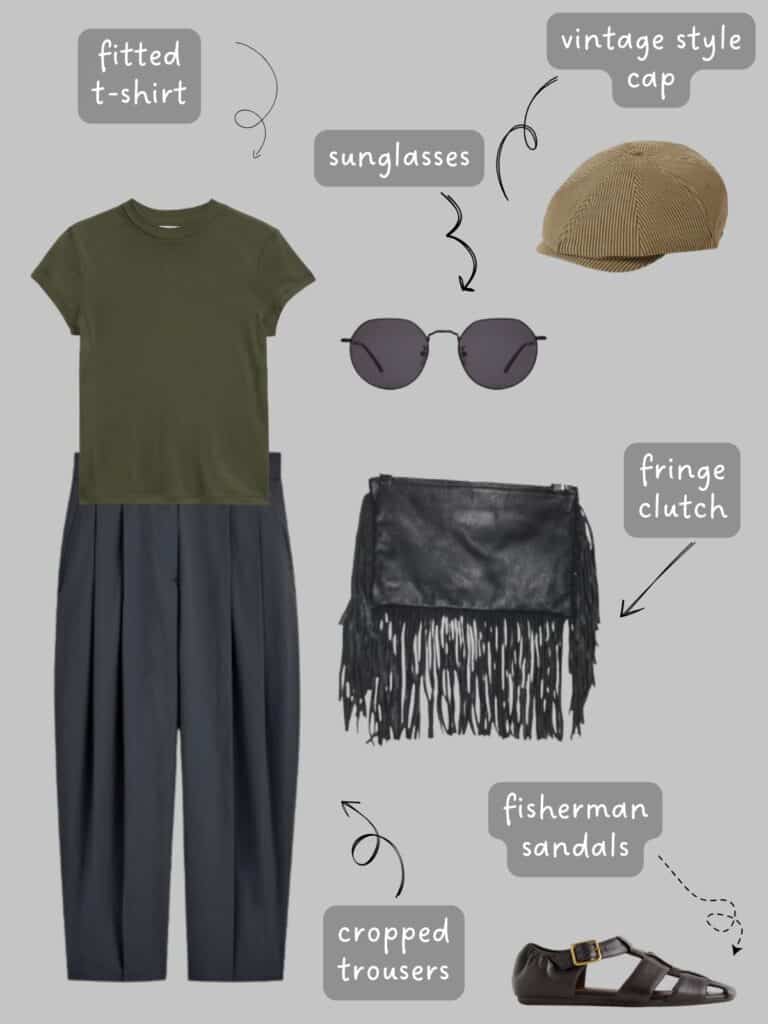
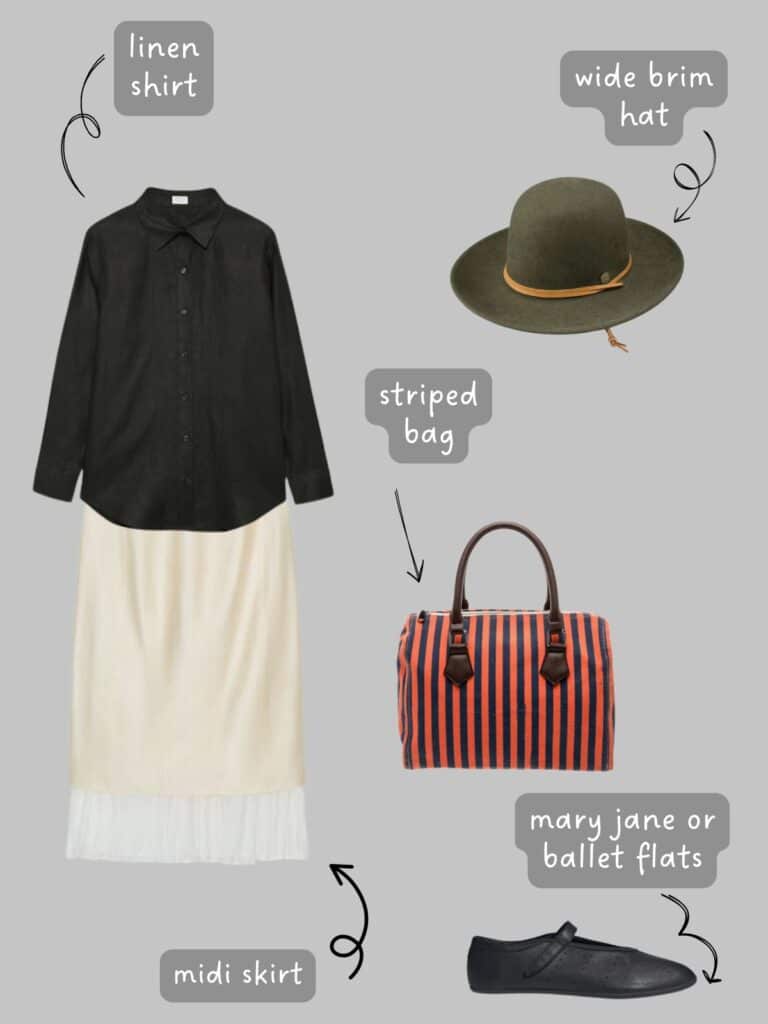
Designer Inspiration
If this aesthetic existed somewhere between designer collections and real life, it might look like Yohji Yamamoto on a coffee run. Rei Kawakubo simplifying things for a long weekend.
Martin Margiela shopping at a flea market. Patti Smith borrowing someone’s oversized blazer. Or even Fran Lebowitz being deeply unimpressed by summer.
The modern beatnik does not perform intensity.
The look works best when treated as a starting point rather than a costume. You are not going to a theme party. You are going to the farmer’s market, or a meeting, or a gallery opening you are not entirely sure you wanted to attend.
The clothes should feel like yours, worn in, considered without appearing to have been considered.
Many of us are just trying to survive a humid Tuesday while carrying library books and an iced coffee.
And I thought there should be a capsule wardrobe for that.
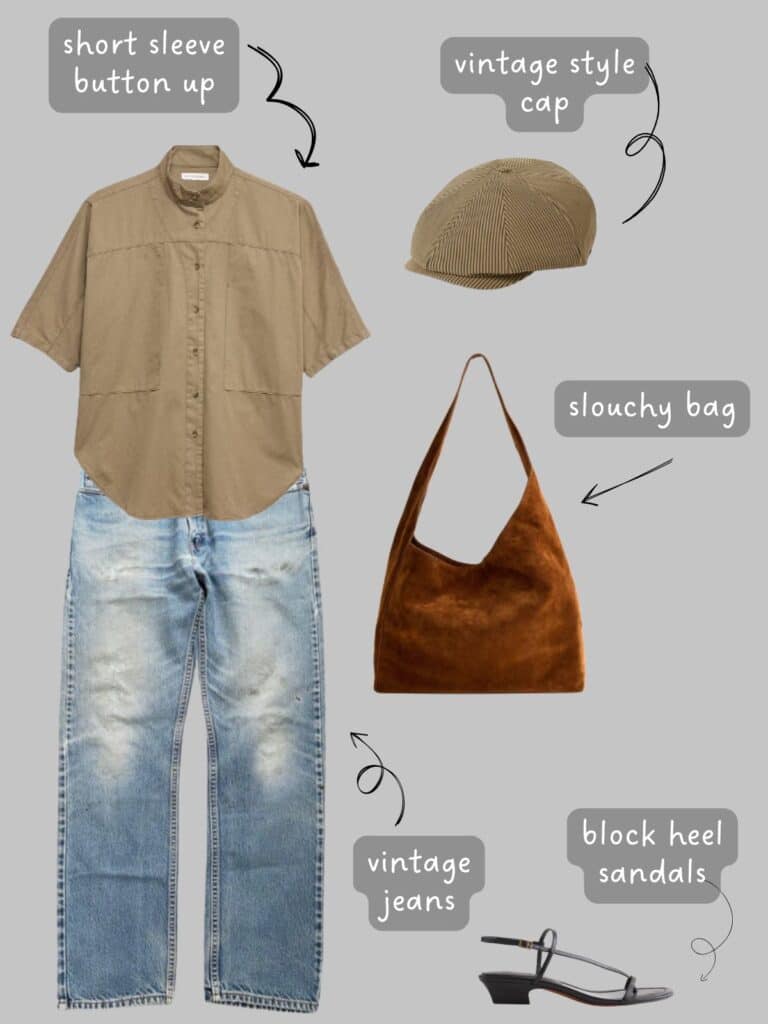
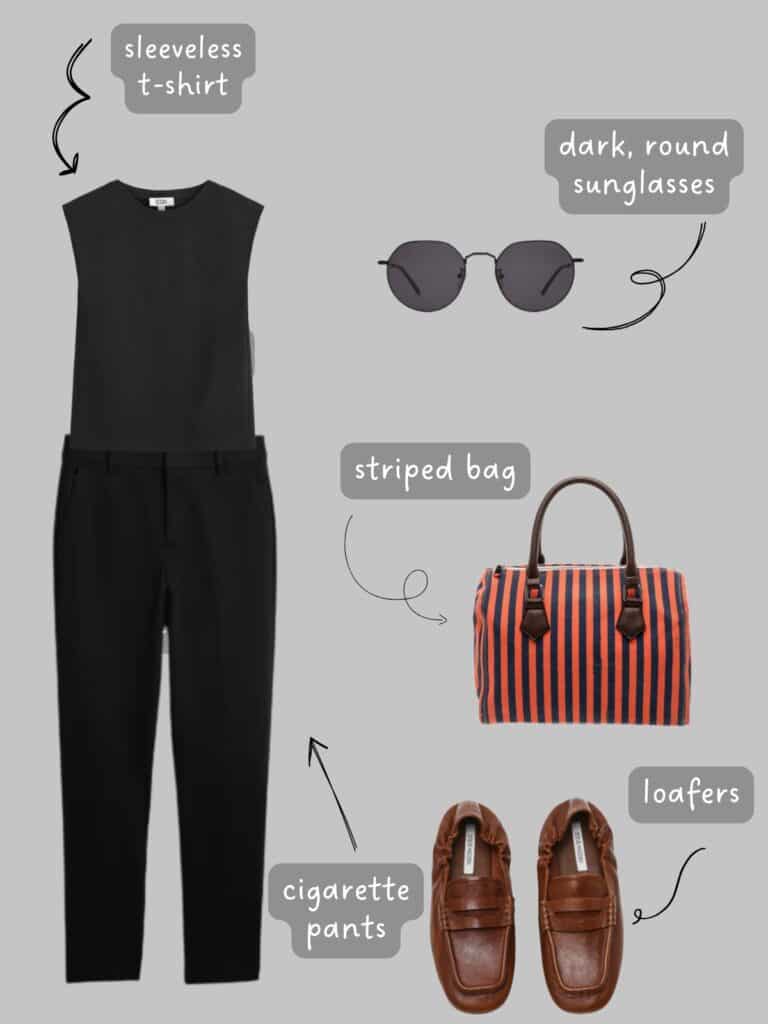
Modern Beatnik Summer Outfit Ideas
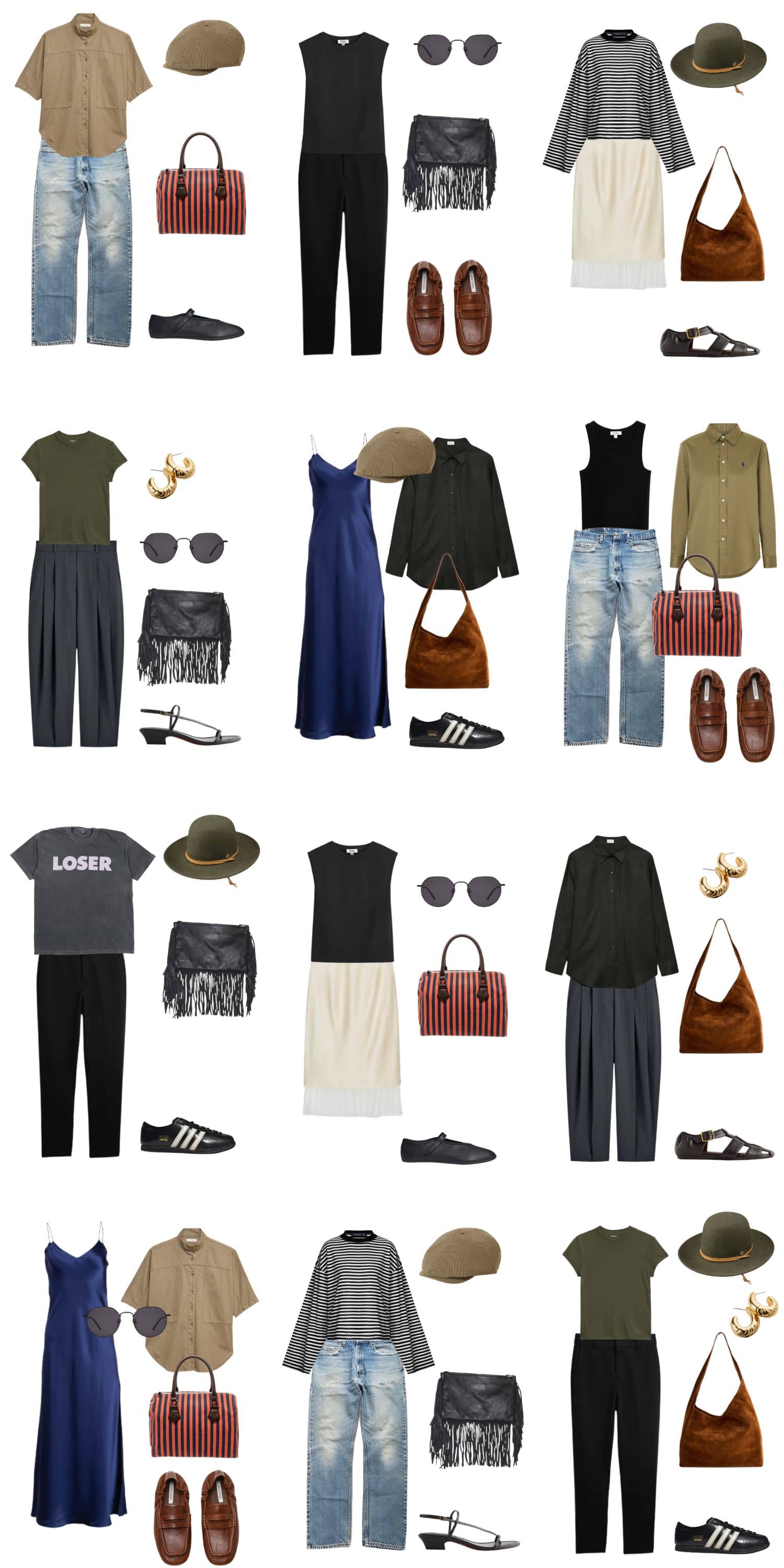
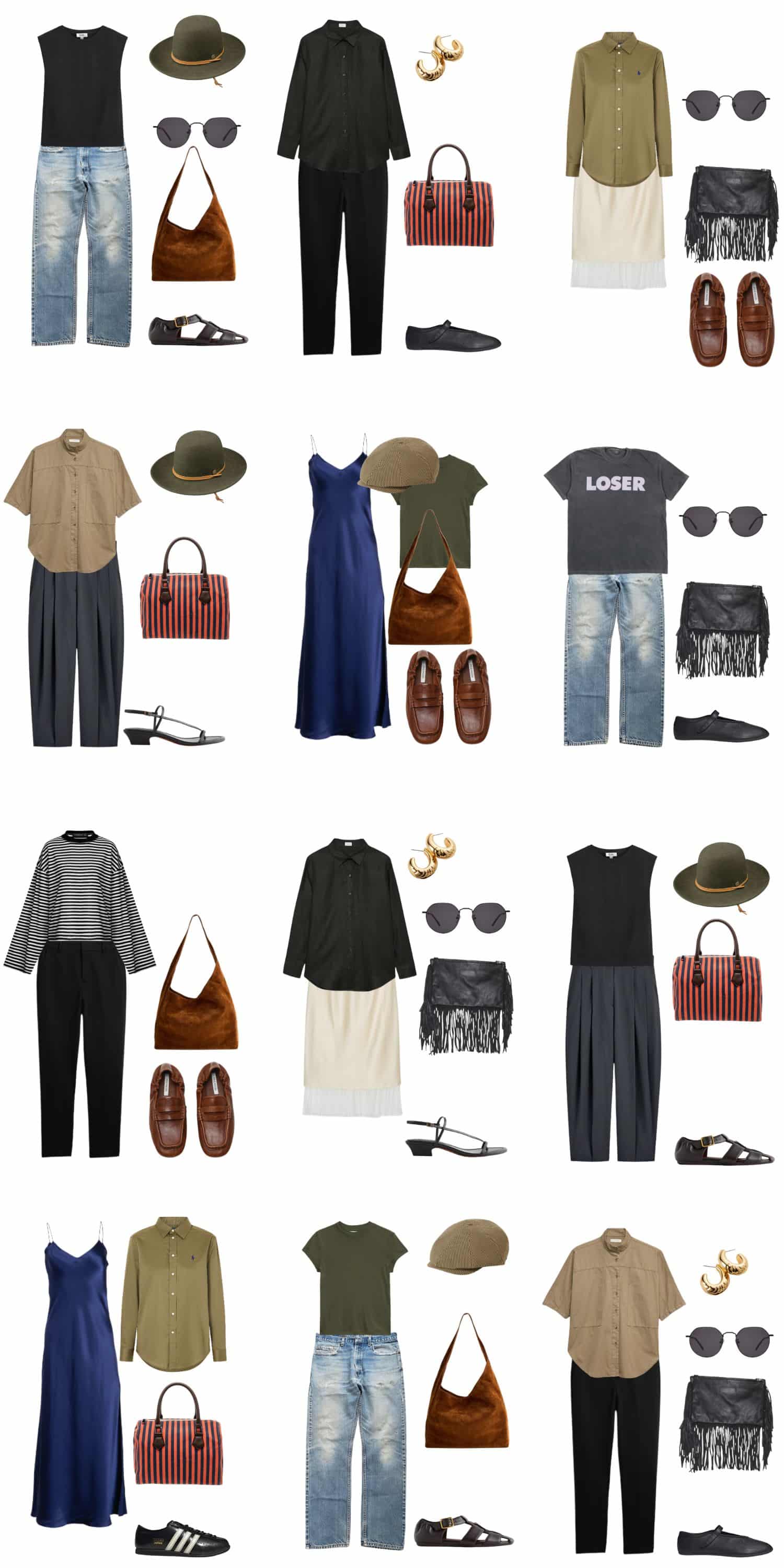
Loser T-shirt | Vintage Levis | Brown Suede Bag | Black Sneakerinas | Tan Cap | Khaki Short Sleeve Button Up | Brown Loafers | Olive Green Hat | Cream Midi Skirt | Green T-shirt | Fisherman Sandals | Fringe Clutch | Navy Slip Dress | Striped Shirt | Black Linen Button Up | Black Tank | Green Button Up | Grey Trousers | Earrings | Striped Bag | Round Sunglasses | Heeled Sandals | Cigarette Pants | Sleeveless T-shirt | Sneakers
SHOP THE UK LINKS
This post contains affiliate links. By using my links to shop I may receive a small commission (at no cost to you). Thanks for supporting what I do 


Sara,
I love this wardrobe idea for the sixty year old retired woman who has lived a life! She has enough stories to entertain you for months but don’t fuck with her as she knows what she wants.
Love your content! Always learning! I’ll be embracing this one for sure.
Jo
Thank you! It was fun to create.
I must echo Jo’s comment as an almost 70 yr old who rebelliouly will not go quietly into that dark night of polyester elastic waist capris and tee shirts with artsy floral prints for my hot weather survival wardrobe. This post echoes my mood so well! please bring back the beatnik in the cooler months!
Thank you! I’ll try to remember to add it to the fall/winter list. I think it will be even more fun for cooler weather.
Love this post so much! Great descriptions, humorously written, impeccably styled!