TL;DR
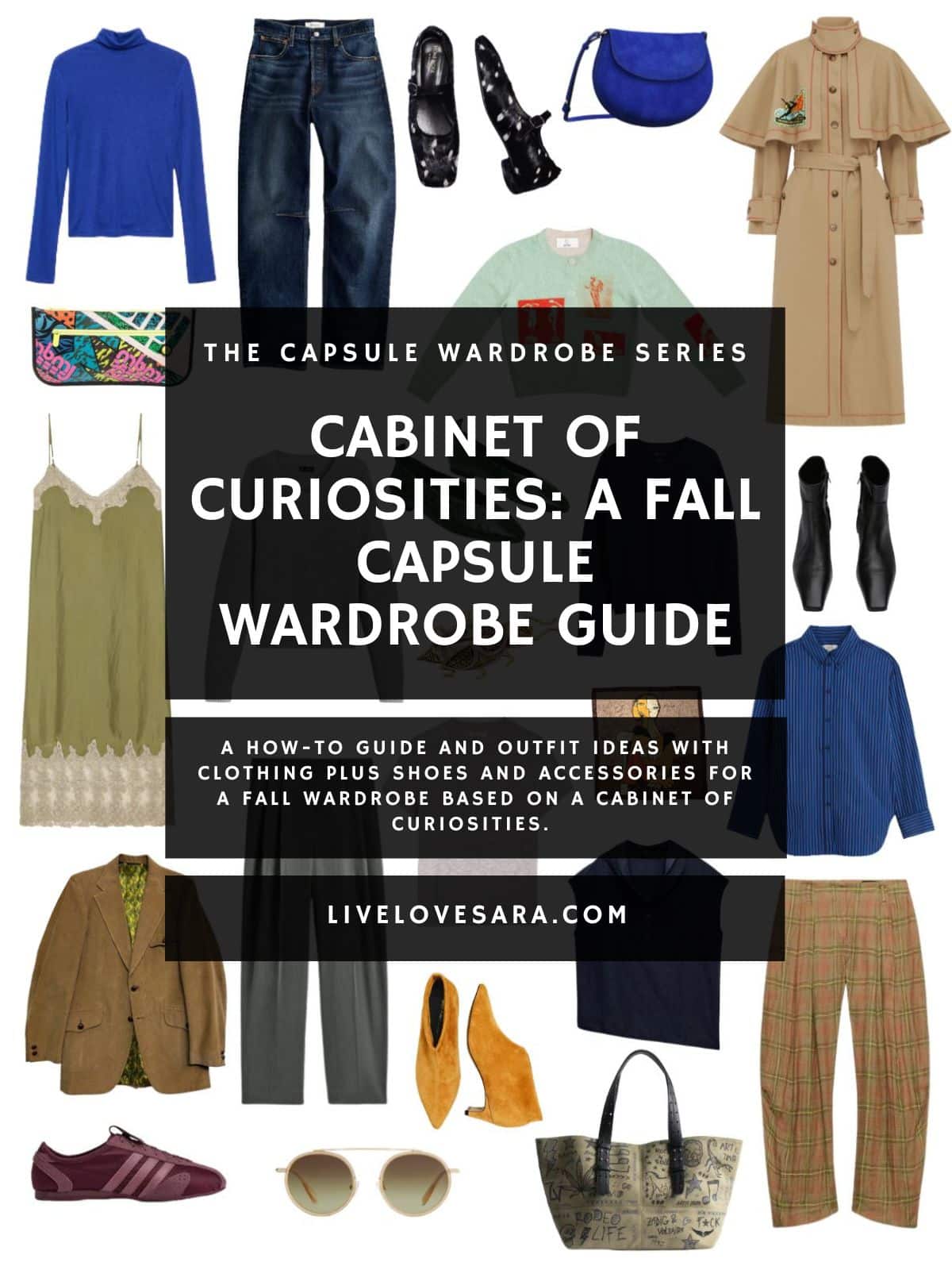
Fashion loves to tell us to build a cohesive wardrobe. A Cabinet of Curiosities wardrobe argues for something else entirely: collecting clothes because they fascinate you. An embroidered trench. Emerald flats. A cobalt shirt that feels just a little too blue to exist. Rather than chasing trends or perfect coordination, this fall capsule celebrates craftsmanship, texture, and the kind of pieces that reward a second look.
Before Pinterest Mood Boards, There Were Cabinets of Curiosities
I am actually really excited about this one. It is based on my favourite things: art, museums, and collecting. This wardrobe is definitely a high-low mix. Not designer-level high, more like mid-range high.
In order to get what was in my head, these are the pieces that I chose, but as always, this can be done on a budget with a little work and a keen eye.
It began when I saw the trench and thought, “You will be my muse this week”. It reminds me of an expedition coat with what looks like a naturalist’s specimen badge stitched on it.
And now here we are.
Cabinets of curiosities predate museums as we know them. Before institutions decided what deserved a plaque and a velvet rope, private collectors, often amateurs, filled rooms with fossils, taxidermy, foreign textiles, mechanical oddities, and objects nobody had a category for yet.
The charm of the format was its lack of hierarchy.
A sixteenth-century collector might place a seashell beside an ancient coin, next to a preserved hummingbird, alongside a scientific instrument that nobody knew the purpose of.
Fossils sat beside paintings. Coral shared a shelf with carved ivory.
A jewelled beetle sat next to a narwhal tusk, which sat next to a piece of bone, and the room made its own strange sense because one person had decided, object by object, that each thing belonged.
Things weren’t collected because they matched, but because they inspired the same reaction.
Something along the lines of…“Well, isn’t that extraordinary?”
The point wasn’t perfection; it was fascination, which is actually the antithesis of how capsule wardrobes seem to be presented.
You know, except by me (kidding, kind of) because I try really hard to make it not the case.
Because if I am being honest, which I usually am to my own detriment, the modern internet would have looked at one of these collections and suggested removing three-quarters of it to create a more cohesive colour palette.
Yes, we really have got that boring. Somewhere along the way we lost our whimsy.
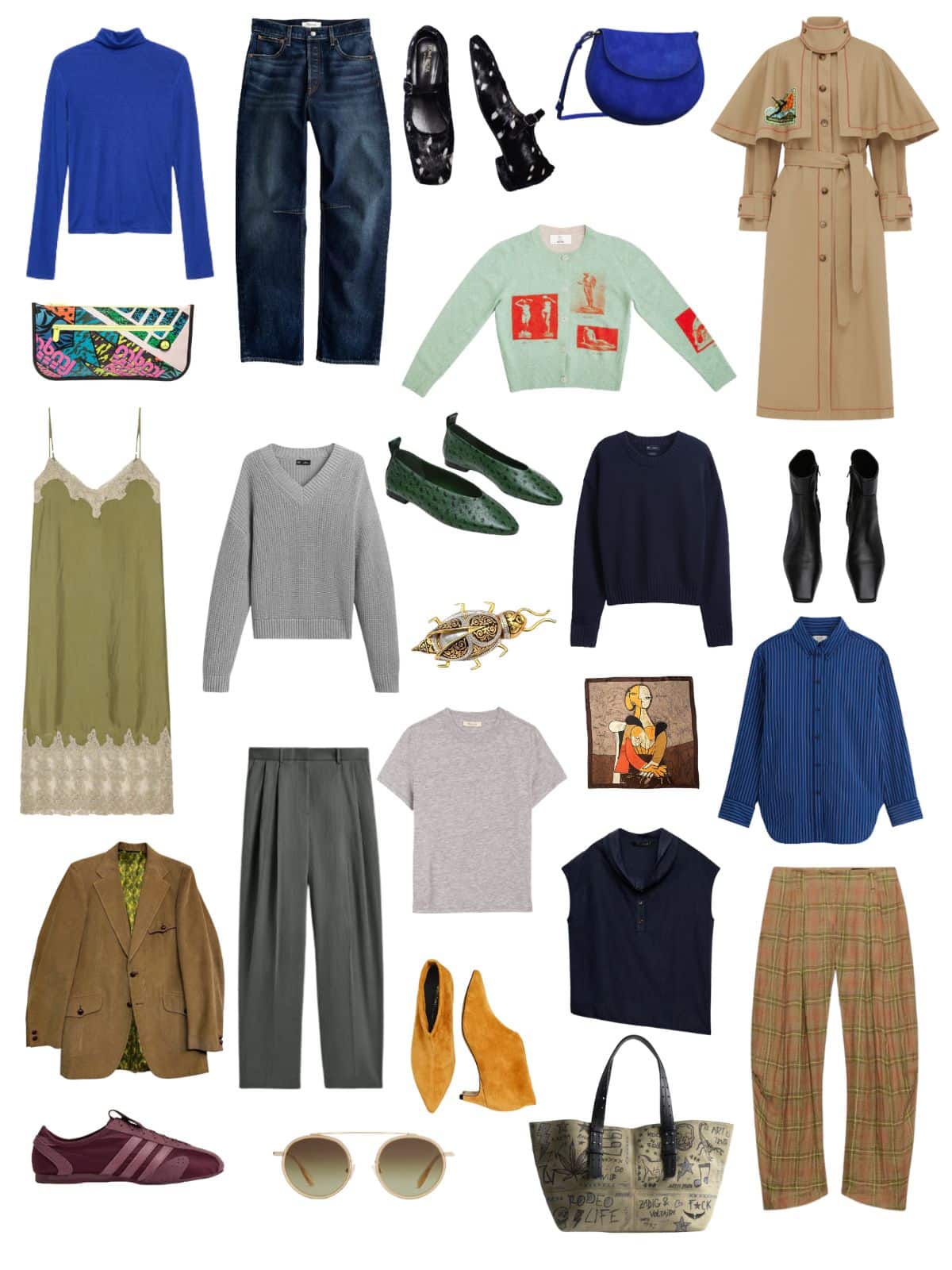
Cobalt Blue Turtleneck | Dark Denim | Spotted Mary Janes | Blue Bag | Trench Coat | Statue Cardigan | Green Flats | Colourful Clutch | Green Slip Dress | Grey Sweater | Beetle Brooch | Navy Blue Sweater | Black Boots | Blue Striped Button Up | Silk Scarf | Grey T-shirt | Grey Trousers | Corduroy Blazer | Sneakers | Sunglasses | Camel Booties | Navy Blue Sleeveless | Canvas Drawing Tote | Plaid Trousers

We Have Somehow Made “Interesting” Feel Like a Problem
It is like we have reached a point where there is a pressure in fashion to explain every purchase.
- Does it go with everything?
- Can you style it five ways?
- Will you wear it thirty times?
- Is it timeless?
Which actually are all sensible questions.
BUT, and that is a big but…they’re also spectacularly efficient at talking you out of anything delightful.
Some of the best pieces in a wardrobe fail every practical test imaginable. I know this because I own many of these kinds of pieces. I go by gut, not logic.
The embroidered coat that only comes out a handful of times each autumn.
The emerald flats that don’t technically match anything, and you second-guess that you should have bought them in black instead. But you are glad you didn’t because they improve the whole outfit every time you wear them.
The turtleneck is a blue so saturated it looks like the deep blue you find in old botanical illustrations where artists exaggerated colour slightly because they were trying to capture wonder rather than any actual photographic accuracy.
I saw the cobalt turtleneck in the store the other day. I actually spotted it from across the store while I was in an entirely different area, which I am impressed by because I have terrible eyesight.
But I saw it and beelined toward it, and it is perfect. Just what I am looking to add to my fall wardrobe. Very lightweight and soft, almost sheer but not.
So when it comes to your wardrobe, sensibility always has its place, but so should fascination.
The Pieces, As Specimens
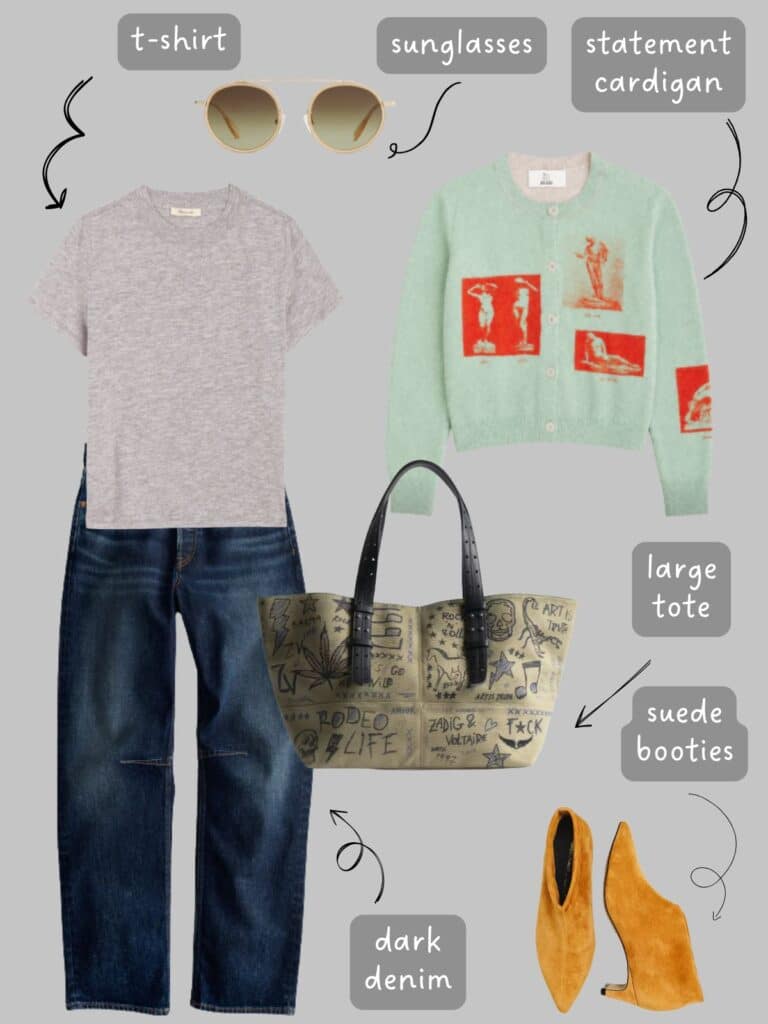
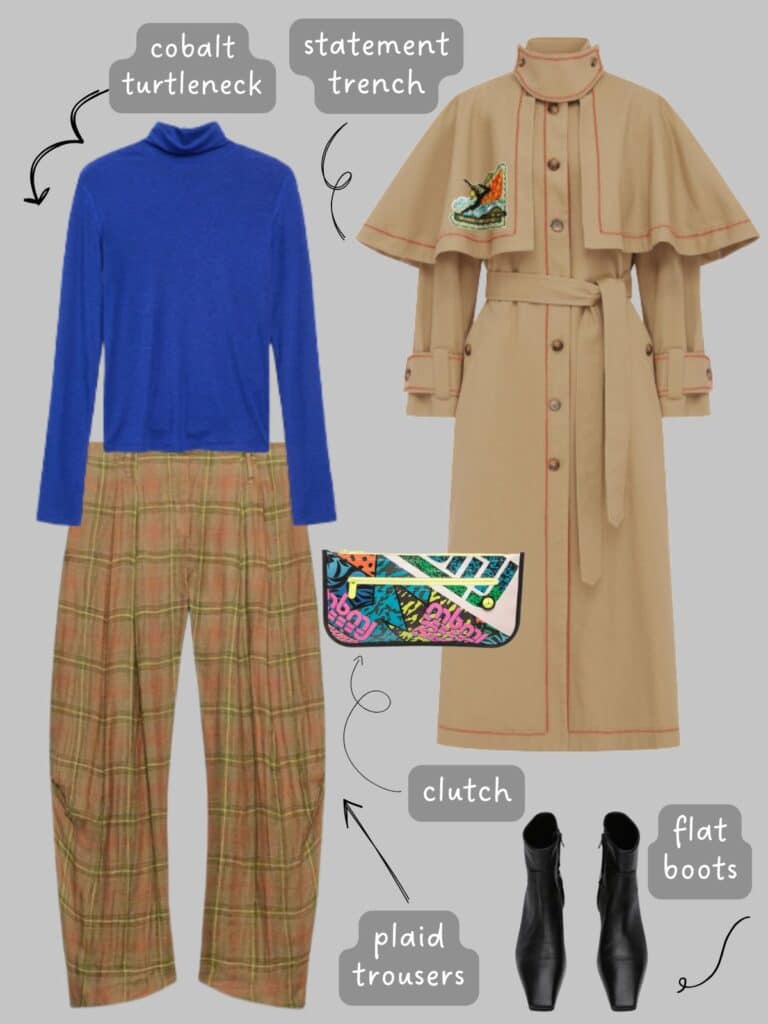
The trench, labelled. A camel canvas coat with an almost Victorian style caped shoulder, a stand collar, and contrast topstitching in a beautiful colour.
Over the heart area, an embroidered patch: This is the label on the drawer, the thing that tells you what’s inside before you’ve opened anything else. Every cabinet needs one object that explains the rest without saying a word. This is that object.
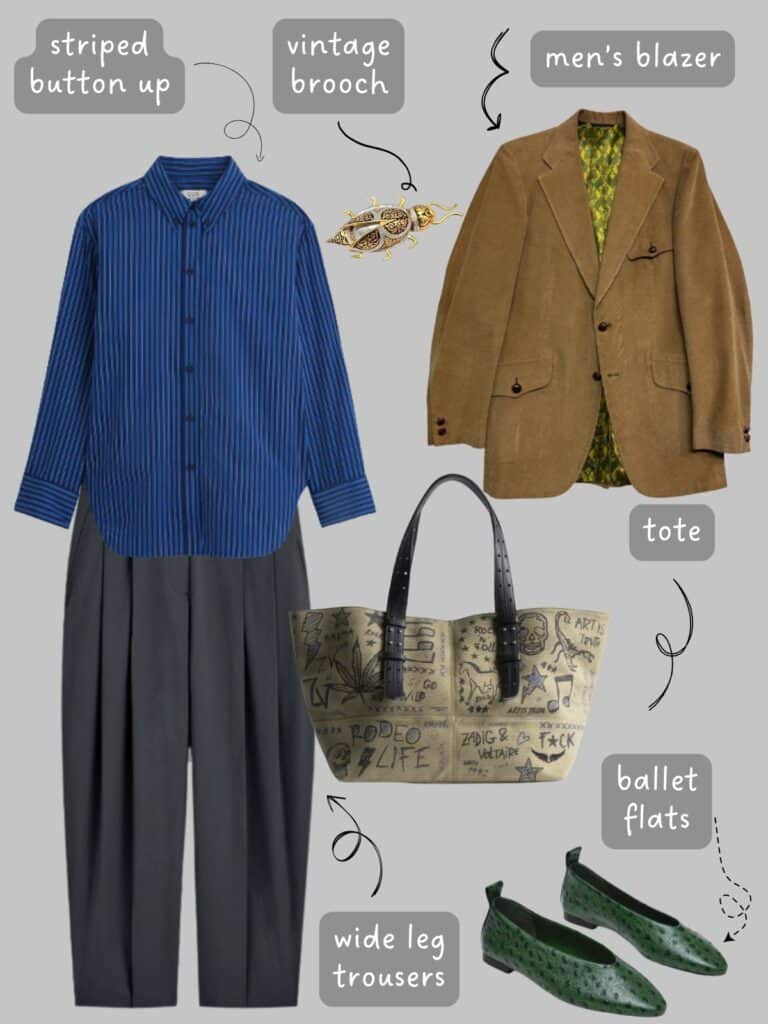
Two specimens under glass. A pair of pony hair Mary Janes that are spotted, and a pair of ostrich-embossed flats in a deep, almost bottle green. Both with texture and are somewhat wild, yet they are in two of the most feminine and girly silhouettes that exist.
That contrast is the whole point. A naturalist doesn’t tame. She catalogues it, labels it, and files it somewhere orderly. These shoes have been filed.
The unlabeled object. A camel suede bootie, sculptural and slightly architectural, with a heel that looks more like a design decision than a shoe part. This is the piece that doesn’t fit the taxonomy.
There is no texture play, no patch, nothing obvious. Every real collection has one object like this: something that got kept not because it matched the system, but because it was too good to leave out. Its presence says the collector knew what they wanted, and wasn’t just going through a checklist.
The vitrine colour. A cobalt turtleneck, close-fitting, striking. Against all this camel and texture, it reads like the deep blue lighting inside a museum case, the thing that makes the objects around it pop.
The base layer. A navy-and-cobalt striped shirt, crisp, slightly oversized. This is the plain paper lining the drawer. It is unshowy, structural, doing quiet work underneath everything else so the louder pieces have somewhere stable to sit.
The field notes. A canvas tote covered edge to edge in hand-drawn-looking script and symbols like stars, a skull, a scorpion, scrawled words layered over each other like margin notes on a page.
It’s manufactured, not actually handmade, but it reads exactly like a notebook cover that’s been doodled on for a decade. This is the piece you carry the rest of the collection in. It is the working object, not the display object.
The literal specimen. A beetle brooch in gold and silver, filigreed and jewelled, pinned rather than worn like real jewellery. If the trench’s patch is the label on the drawer, this is the actual thing inside the drawer: an insect, preserved and gilded, exactly the kind of object a cabinet of curiosities was built to hold in the first place.
Wear it like you found it, not like you bought it.
The gallery wall, worn. A pistachio cardigan printed with classical statuary in a rust-red block print, like postcards from a museum gift shop that got knit into a sweater. Soft where the trench is structured, sweet where the beetle brooch is sharp. This is the piece that says the cabinet isn’t only insects and hides; it’s also art history, but something you can also wear on a Tuesday.
The artefact, worn as cloth. A silk scarf printed with a Picasso-style cubist portrait in warm browns, rust, and cream. This does the same work as the statue cardigan, an art object flattened into wearable form but with more weight and formality.
Tied at the neck, knotted on a bag handle, or woven through belt loops, it’s the most overt “museum piece” in the capsule, and it earns that place by being genuinely beautiful rather than just referential.
The instrument. A pair of round, gold-framed sunglasses with a browline bar across the top and gradient lenses that are cut close enough to the face and structured enough in the bridge that they read less like fashion eyewear and more like field optics.
The naturalist’s actual tool. Everything else in this cabinet was found and catalogued; these are what she used to look.
Building the Capsule
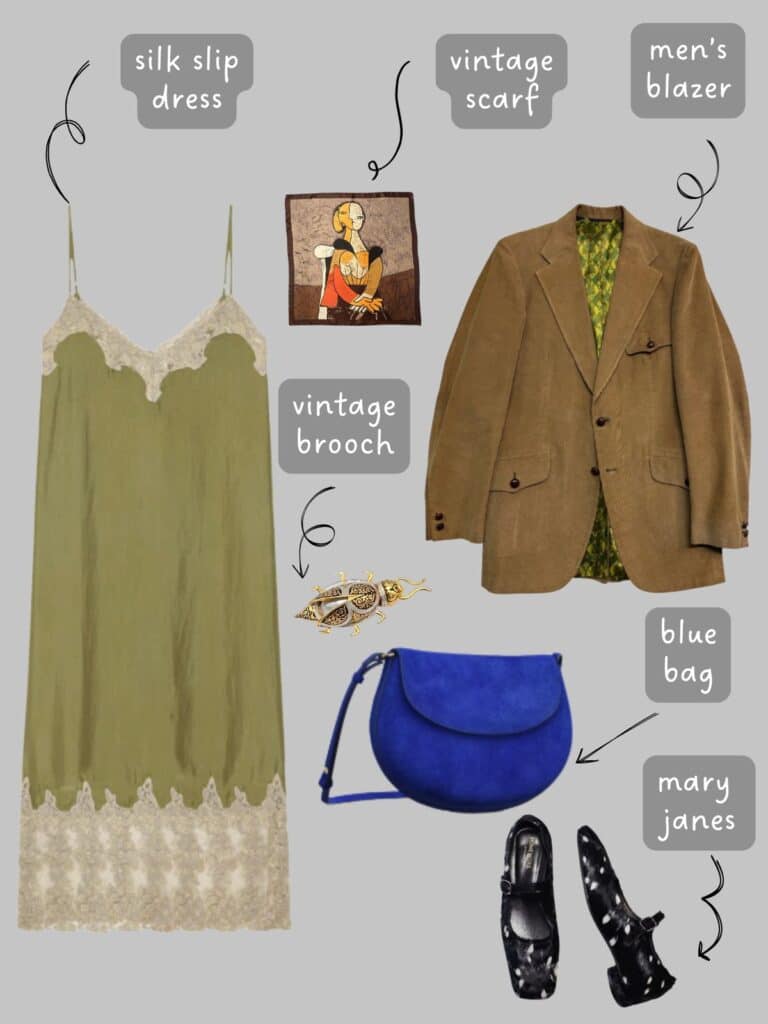
You don’t need forty pieces to fill a cabinet well. You just need a handful of objects with real conviction, plus enough plain paper to file them properly. Fill in around these with what a real closet already tends to have in the fall rotation.
Add for structure:
A dark wash jean or trousers in ink or true black. Something that reads more “archive” than beat-up denim. Save those worn in jeans for the more casual configurations.
A heavy knit cotton sweater with a v-neck in a colour that looks like a storm cloud.
A classic black boot with a strong, elongated toe.
Add for texture, without overcrowding the shoes:
A corduroy in cognac or olive, pants, skirt, or a men’s blazer. Corduroy is doing a lot of the “collected object” work here without needing an actual animal print.
Something in silk that refuses to behave like polyester pretending to be silk. We want actual silk for this wardrobe.
A shoulder bag in a suede or leather that pulls its colour from somewhere in this wardrobe. I went with the cobalt.
Add for the archive-drawer colour story: A Colour Palette Collected From Nature
Not pumpkin spice or “latte dressing.” and definitely not fifty-seven variations of oatmeal.
Instead, imagine walking through a natural history museum.
- Kingfisher blue.
- Moss green.
- Fox brown.
- Bone.
- Weathered bronze.
- Ink black.
- Lichen grey.
- Mushroom taupe.
- Oxblood.
Cobalt as the single cool accent. Repeat it once more beyond the turtleneck, so it doesn’t feel like an outlier (the handbag).
Bottle green from the ostrich flats as a secondary accent, in a knit or a blazer, so the shoe doesn’t stand alone.
Where to Find the Rest
This capsule leans thrift-friendly almost by design because cabinets of curiosities were never built from anything brand new. A few places worth a slow walk-through rather than a quick scan:
Menswear racks for a wool coat, cardigan and corduroy. Men’s clothes tend to be cut roomier and age better than womenswear equivalents, and the buttons are often already more interesting.
Costume jewellery counters for anything beetle, insect, or specimen-adjacent like a small enamel pin or brooch can do the same “labelling” work as the trench’s patch, worn on a coat lapel or bag strap.
Vintage leather goods for the bag, a scuffed document case or small satchel often reads more “archive” than anything bought new, and the wear only helps the story.
Dressing Like Someone Who Notices Things
I don’t think this wardrobe belongs to someone trying to impress anybody. If anything, she is the kind of person who gets distracted easily.
She notices mushrooms growing through cracks in the pavement, or stops to identify birds she hears but can’t necessarily see.
She visits museum gift shops with a lot of enthusiasm. She might own books that contain words like lichen and mycology even though they have nothing to do with her regular life or profession.
My kids like to joke that I have a book for everything. They say they want to learn something, or want more information about something, and I walk over to the bookshelves and pull one out.
This woman we are talking about has definitely picked up a rock for no reason other than she thought it looked cool and then later forgot it was in her coat pocket.
To me this is, admittedly, not necessarily the most efficient way to live. However, it is an excellent way to build a wardrobe.
Shopping Like a Collector Instead of a Consumer
Collectors don’t usually ask whether they need another fossil. They ask whether they’ve ever seen one quite like this before.
The same approach works surprisingly well in second-hand shops.
Walk past the rows of perfectly sensible navy blazers. Pick up the one with unusual buttons. Look inside jackets for extraordinary linings. Check the hems for beautiful tailoring. Turn garments inside out. Read old labels. Notice stitching.
Fashion has become remarkably good at encouraging us to shop faster, but curiosity forces us to slow down.
And coincidentally, that’s also how you find the good stuff.
Your Wardrobe Doesn’t Need More Rules
It probably needs more wonder or whimsy.
Not every purchase has to be justified with cost-per-wear calculations. Sometimes something earns its place simply because it’s beautifully made.
Or oddly coloured. Or because someone embroidered something onto a trench coat and you can’t get it out of your head.
The original Cabinets of Curiosities were never finished because there was always one more shell to find. One more map to acquire. Or one more strange object waiting to be discovered.
Which I like to think of in terms of wardrobes. Not a perfectly completed collection, but as an ongoing record of everything that has ever made you stop, look a little closer, and think,
“Well, isn’t that extraordinary?”
Fall Outfit Ideas
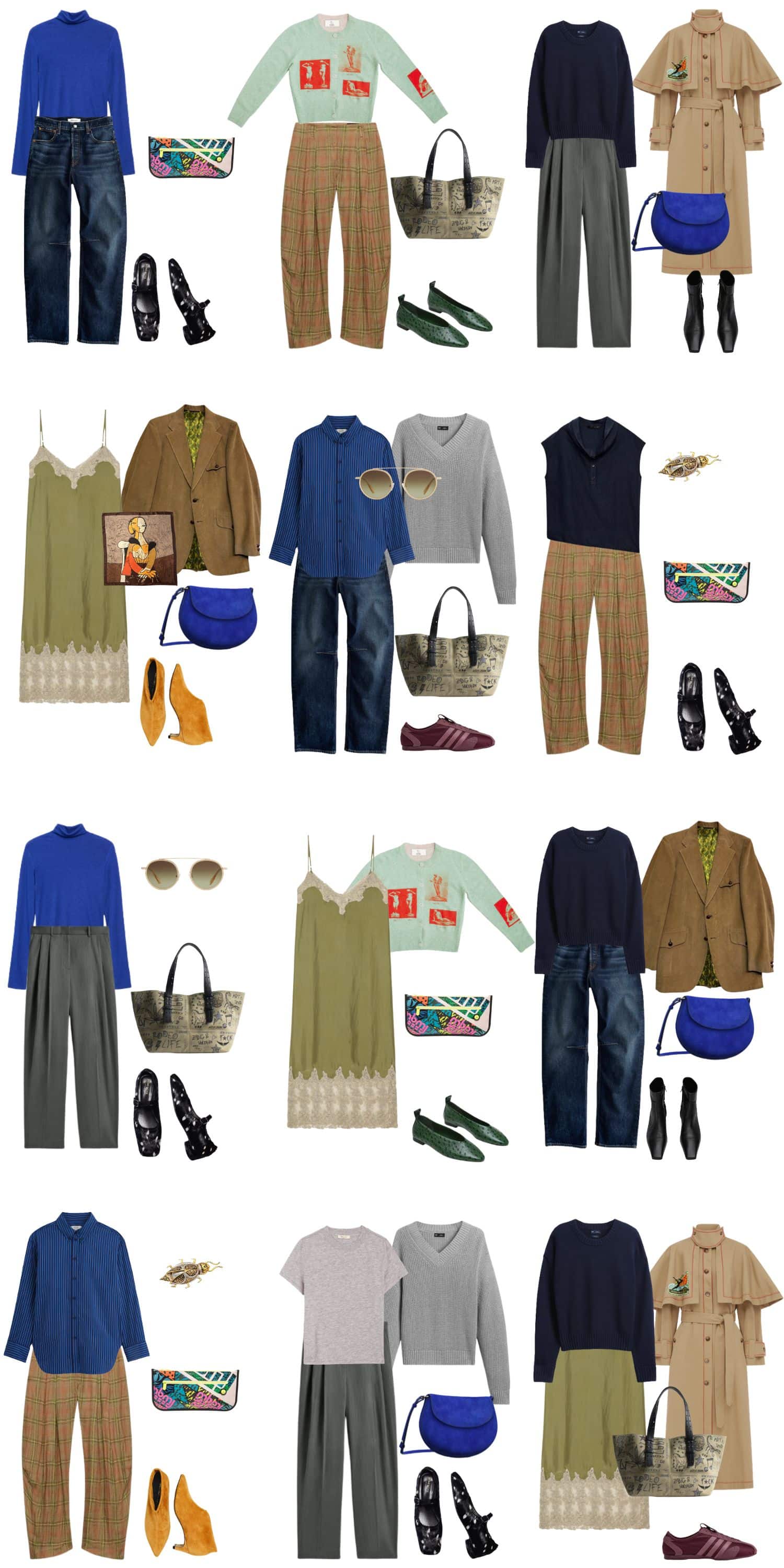
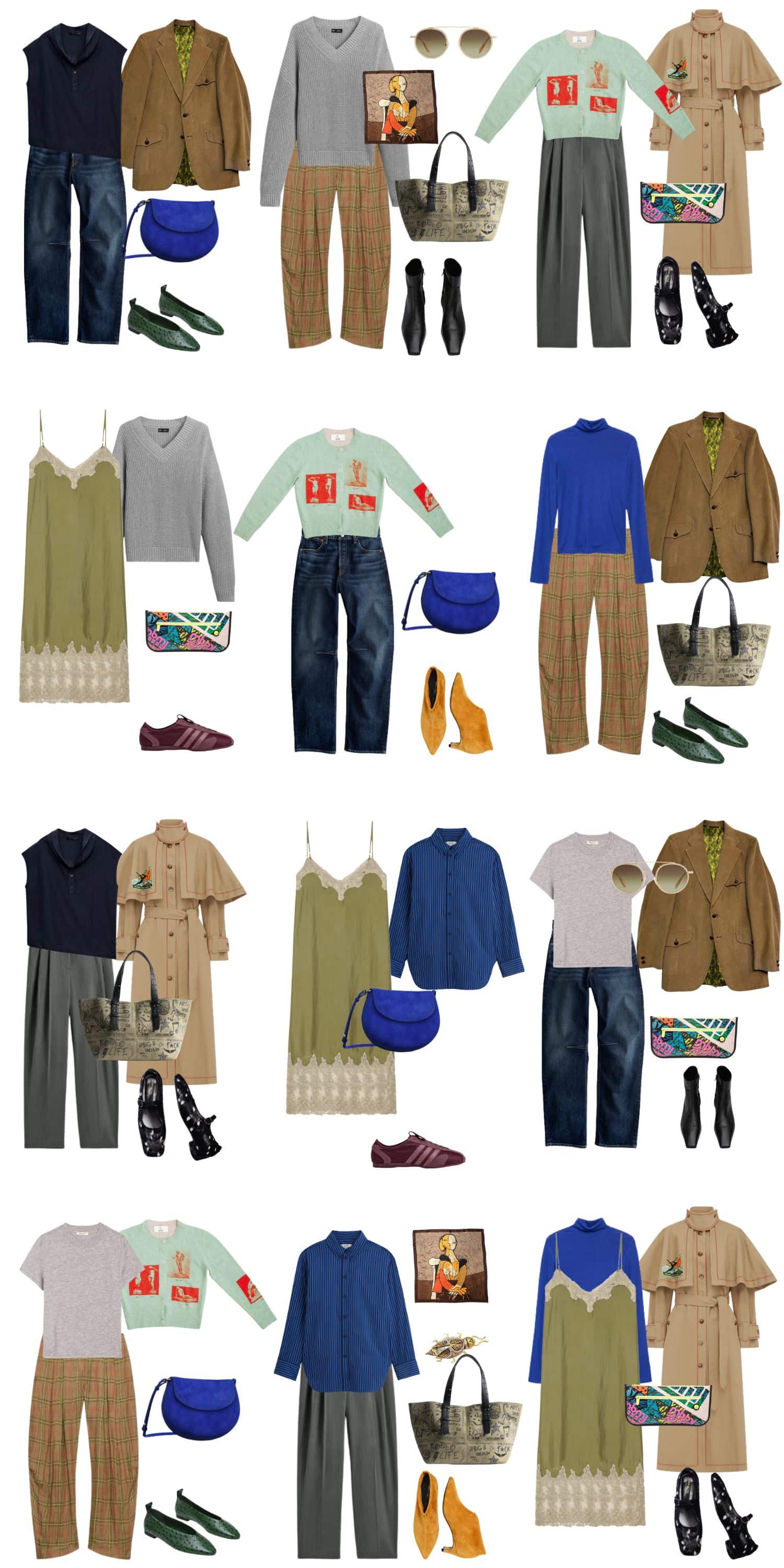
Cobalt Blue Turtleneck | Dark Denim | Spotted Mary Janes | Blue Bag | Trench Coat | Statue Cardigan | Green Flats | Colourful Clutch | Green Slip Dress | Grey Sweater | Beetle Brooch | Navy Blue Sweater | Black Boots | Blue Striped Button Up | Silk Scarf | Grey T-shirt | Grey Trousers | Corduroy Blazer | Sneakers | Sunglasses | Camel Booties | Navy Blue Sleeveless | Canvas Drawing Tote | Plaid Trousers
SHOP THE UK LINKS
This post contains affiliate links. By using my links to shop I may receive a small commission (at no cost to you). Thanks for supporting what I do 



What a beautiful and romantic way of thinking of dressing/styling!
Thank you Jen, I found inspiration in random areas this week and this was the result. I appreciate the kind words.
That was a lot of fun to read! And such a thoughtful way to consider ones wardrobe. I really enjoyed this edition (and will now use this philosophy). I really hope you use this idea again! Thank you Sara! Xx
Thanks Charmayne, I think this might have been my favourite one that I’ve written so far.
This was such a fun read! So thoughtful.
Maybe my favorite post you’ve ever done. My house is this way too! And I choose now to see everything through the collector’s curious lens! I just love you.
Brilliant!
I’ve been reading for years and this is my favorite post yet! Thank you for creating such an intentional space for creative personal style and second hand fashion.
Love this!
This is where I was with my clothing 30 years ago. Before I went down the neutral wardrobe rabbit hole. I so enjoyed all the color! We do need more whimsy. Thanks!
Like so many others here, this may be my new favorite post (and I have printed up MANY before). I let go of my object de verve years ago for a necessary (for me) “dress no longer hiding” plunge. Recently, I had been feeling the tug for the irreverent and quirky but it felt very different from before— and you gave it to me! Embrace the lens of collector (which I am in so many others ways). And when I went to my closet I discovered these pieces were already there! Those items “I got it anyways!” Hiding in plain sight that snuck in my chill/classic selections. I’m SO happy!! And I did finally get that Hades sweater highlighted here; you’ve included it before and i just couldn’t get it out of my head, now I know why 🙂